
The Teacher Who Won $1 Million for Turning India’s Slums into Open-Air Classrooms
Formal / News Style Innovative educator recognized globally for bringing learning to underserved communities Ranjitsinh Disale transforms slum neighborhoods into hubs of education 🔹 Neutral & Informative Award-winning teacher uses outdoor classrooms and digital tools to reach marginalized children From streets to learning spaces: How one teacher is redefining education in India 🔹 Impactful Bringing classrooms to the children: A teacher’s mission changes lives in India’s slums


An innovative Indian educator has captured global attention after winning a $1 million international teaching award for transforming some of India’s most underprivileged neighborhoods into open-air classrooms. Ranjitsinh Disale, a primary school teacher from Maharashtra, was recognized for his pioneering efforts to bring education directly into slum communities where poverty, migration, and social barriers had kept thousands of children out of school.
Disale received the prestigious Global Teacher Prize, honoring educators who demonstrate exceptional impact and innovation. His work has been praised for blending community engagement, digital learning, and grassroots problem-solving to tackle long-standing educational inequality.
Classrooms Without Walls
In areas where schools were distant or overcrowded, Disale created outdoor learning spaces in narrow lanes, open fields, and community courtyards. Armed with portable teaching materials and a smartphone, he conducted lessons for children who could not attend formal schools due to family obligations or lack of documentation.
“These children were invisible to the system,” Disale said during the award ceremony. “So I decided to make the system visible to them by bringing education to their doorstep.”
His approach focused on flexibility. Lessons were scheduled around work hours for children who helped their families earn a living, and teaching methods were adapted for multilingual communities. Simple tools such as digital QR codes linked students to video lessons and reading materials, allowing them to continue learning even when teachers were not physically present.
Breaking Social Barriers
One of the most remarkable aspects of Disale’s work has been his success in encouraging girls’ education in conservative and marginalized communities. In regions where early marriage and social restrictions prevented girls from attending school, he negotiated directly with families and community leaders.
Through awareness campaigns and community meetings, he demonstrated how education could improve health, income, and long-term security. As a result, enrollment among girls in his target areas rose dramatically, and several villages reported zero dropouts for multiple years.
Local parents said the teacher’s dedication changed their perception of schooling. “We used to think education was not for our children,” one mother explained. “Now we see it as their future.”
Technology as an Equalizer
Disale’s model relies heavily on low-cost technology. He developed QR-coded textbooks that allowed students to scan pages using basic mobile phones and access recorded lessons. This proved especially useful during the COVID-19 pandemic, when schools across India were shut for months.
By combining outdoor teaching with digital content, he ensured learning continuity even in the absence of classrooms. Education officials have since explored scaling his methods to other regions with limited infrastructure.
Global Recognition
The Global Teacher Prize jury praised Disale for “turning obstacles into opportunities” and for creating an education system that works beyond traditional school walls. Judges highlighted the sustainability of his methods and their potential to be replicated in slums and remote areas worldwide.
Education experts say his achievement sends a powerful message about the role of teachers in social transformation. “This is not just about one classroom,” said an education policy analyst. “It’s about reimagining how and where education can happen.”
Impact Beyond the Prize
Disale has pledged to use a significant portion of his prize money to expand his initiatives and fund educational programs for disadvantaged children. He has also committed to sharing his teaching techniques with educators across India and abroad through workshops and online platforms.
Rather than viewing the award as a personal triumph, he described it as recognition of teachers everywhere who work in difficult conditions. “This prize belongs to every teacher who refuses to give up on a child,” he said.
A Model for the Future
As India continues to grapple with educational inequality, Disale’s work offers a blueprint for community-based solutions. His open-air classrooms demonstrate that education does not require expensive buildings, only commitment, creativity, and trust from the community.
In turning slums into spaces of learning, Ranjitsinh Disale has shown that innovation can flourish even in the most challenging environments. His story is a reminder that sometimes the most powerful classrooms are not enclosed by walls, but by hope.
About the Creator
Fiaz Ahmed
I am Fiaz Ahmed. I am a passionate writer. I love covering trending topics and breaking news. With a sharp eye for what’s happening around the world, and crafts timely and engaging stories that keep readers informed and updated.
Keep reading
More stories from Fiaz Ahmed and writers in Education and other communities.
Over 250,000 Korean Cultural Artifacts Located Overseas: Heritage Agency
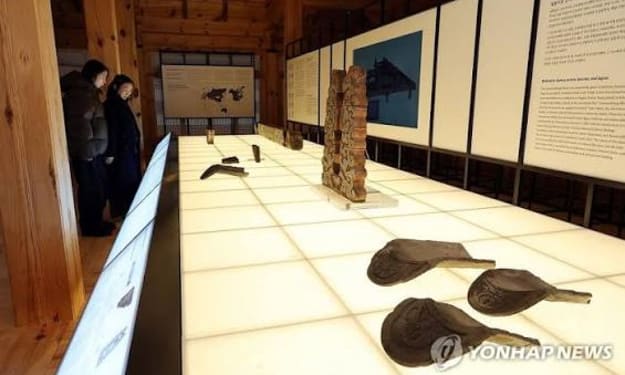
South Korea’s Cultural Heritage Administration (CHA) has reported that more than 250,000 Korean cultural artifacts are currently held outside the country, highlighting ongoing challenges related to heritage preservation, repatriation, and international cooperation. The announcement underscores the widespread dispersal of Korean cultural property across museums, private collections, and archaeological holdings worldwide. Scope of Korean Cultural Dispersal According to the CHA, the artifacts range from ancient pottery, calligraphy, and Buddhist statues to royal court objects and historical manuscripts. Many of these items were taken during periods of foreign occupation, colonial rule, or illicit trade, while others were legally acquired by international museums or collectors. The CHA emphasized that the dispersed nature of these artifacts complicates efforts to document, protect, and eventually repatriate them to South Korea. “Korean cultural heritage represents our national identity and history,” said a CHA spokesperson. “While many artifacts are preserved overseas, their absence from the homeland diminishes opportunities for Koreans to engage with their own cultural legacy.” Efforts Toward Repatriation South Korea has been actively pursuing repatriation initiatives for decades. These efforts include diplomatic negotiations, legal claims, and cooperative agreements with foreign institutions. Notable successes include the return of significant royal court artifacts from Japan and the United States in recent years. The CHA has established specialized task forces to track the location and ownership of Korean artifacts abroad. This includes digitizing records, collaborating with foreign museums, and conducting provenance research to strengthen claims for repatriation. International Challenges Repatriation, however, is a complex and often contentious process. Many foreign institutions argue that artifacts acquired legally cannot be reclaimed, while others cite cultural exchange and conservation benefits. Additionally, political considerations can influence negotiations, especially when dealing with countries that have historical claims or disputes with Korea. Experts also note the challenge of verifying authenticity and tracing provenance for items scattered over multiple centuries and locations. “It’s not just about asking for objects back,” said a cultural heritage scholar. “It requires thorough documentation, international legal frameworks, and cooperative relationships with the institutions holding these items.” Cultural and Educational Impact The dispersal of artifacts has implications beyond legal and diplomatic concerns. Cultural scholars argue that access to original works is critical for education, research, and public awareness. Museums and universities in Korea have long relied on replicas or digital images of key artifacts, limiting the depth of study available to students and researchers. By advocating for repatriation and international loans, South Korea aims to ensure that both domestic and international audiences can engage with the nation’s rich cultural history. The CHA also promotes temporary exhibitions abroad to raise awareness about Korea’s artistic and historical achievements. Strategic Plans and Digital Initiatives To address these challenges, the CHA is investing in digital heritage projects, including the creation of an online repository cataloging all known Korean artifacts worldwide. This platform allows scholars, policymakers, and the public to access detailed information about the artifacts’ history, condition, and current location. The agency has also proposed international agreements to facilitate temporary exhibitions, collaborative research, and long-term loans, fostering a cooperative approach rather than confrontational claims. This strategy aims to strengthen South Korea’s influence in global heritage circles while maximizing access to its cultural treasures. Looking Ahead The announcement of over 250,000 overseas artifacts serves as a reminder of both Korea’s rich historical legacy and the challenges of preserving and reclaiming it. Officials stress that continued international cooperation, legal advocacy, and public engagement are essential to ensure that Korean cultural heritage can be appreciated by future generations. “The preservation and return of cultural artifacts are not just a national priority—they are part of the global responsibility to protect humanity’s shared heritage,” the CHA said. “We will continue to work diligently with international partners to recover and safeguard these treasures.” The report also reinforces the need for awareness campaigns to highlight the significance of cultural heritage and the ongoing efforts to repatriate key artifacts.
By Fiaz Ahmed 2 days ago in Education
Blooket: A Deep Analytical Study of Gamified Learning and Its Role in Modern Education
Introduction: The Shift Toward Interactive Digital Learning Education has experienced a profound transformation in recent decades. The integration of technology into classrooms has redefined how knowledge is delivered, assessed, and reinforced. Traditional methods—lectures, worksheets, and paper-based tests—are increasingly being supplemented by digital tools designed to enhance engagement and participation.
By Backlinks Cart3 days ago in Education
How to Understand Aging Minds: A Practical Guide to Cognitive Changes, Emotional Well-Being and Personality
Aging is one of the most natural and universal experiences of human life—yet it remains one of the least understood. As bodies change with time, so do minds. Memory may shift. Emotions may deepen or become more sensitive. Personality traits may soften, strengthen, or reveal new layers. These changes are not signs of decline alone; they are part of a complex psychological evolution that deserves understanding, respect, and compassion.
By Akash Mano4 days ago in Education



Comments (1)
WOW