
Why Scan-to-BIM Is Transforming Historic Building Restoration?
A Modern Approach to Preserving the Past With Digital Accuracy

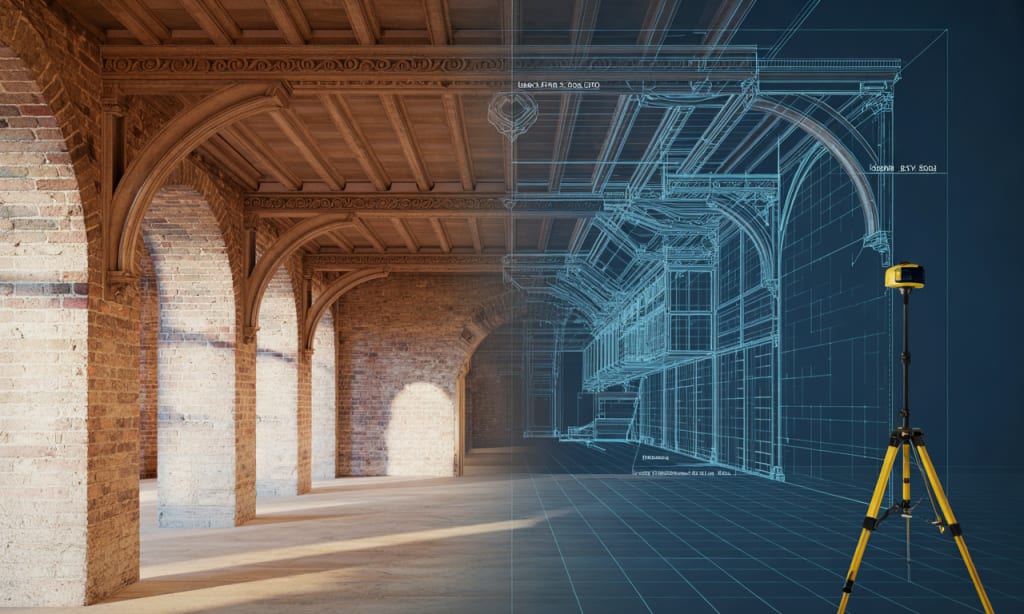
Restoring historic buildings is one of the most delicate responsibilities in the architecture, engineering, and construction (AEC) industry. Every stone, column, arch, and decorative detail carries cultural, architectural, and ancestral value. Traditional surveying methods often fall short when dealing with aging structures, inaccessible areas, or intricate ornamentation.
This is where Scan-to-BIM (Building Information Modeling) is reshaping the future of heritage conservation. By merging high-precision 3D laser scanning with intelligent BIM workflows, restoration teams can preserve historical authenticity while streamlining project timelines and minimizing risks.
In this guide, we dive into exactly why Scan-to-BIM is transforming heritage restoration, supported by industry-driven insights and real-world applications.
1. Accurate Documentation Is the Foundation of Preservation
Historic buildings often lack updated drawings—or worse, have none at all. Decades of renovations, structural shifts, weather erosion, and undocumented changes make traditional measurements unreliable.
Scan-to-BIM solves this critical challenge.
Using 3D laser scanners (like Leica RTC360, BLK360, or Faro scanners), professionals capture millions of data points per second, creating a precise digital replica of the structure.
This ensures:
- True as-is geometry
- Complete coverage of complex details
- Millimeter-level accuracy
- Instant verification of deviations and deterioration
For heritage architects and conservators, accurate documentation is not just helpful—it’s essential for responsible restoration.
2. Enhanced Decision-Making Through Intelligent BIM Models
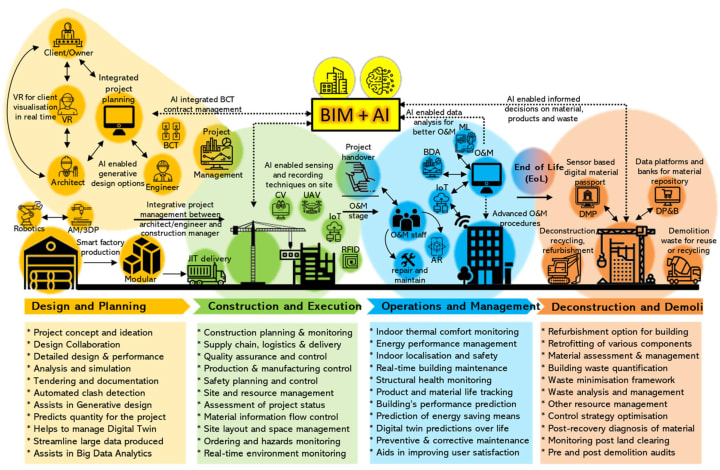
The real transformation happens when point cloud data is converted into a heritage-sensitive BIM model.
Unlike 2D drawings, BIM delivers:
- 3D visualization of the entire structure
- Layered information on materials, conditions, and construction methods
- Clash detection for restoration interventions
- Ability to simulate structural loads and future risks
Project teams can study structural weaknesses, moisture penetration patterns, material decay, and deformation—all before touching the site.
This reduces uncertainties and ensures the planned restoration aligns with conservation principles.
3. Preservation of Architectural Details and Ornamentation
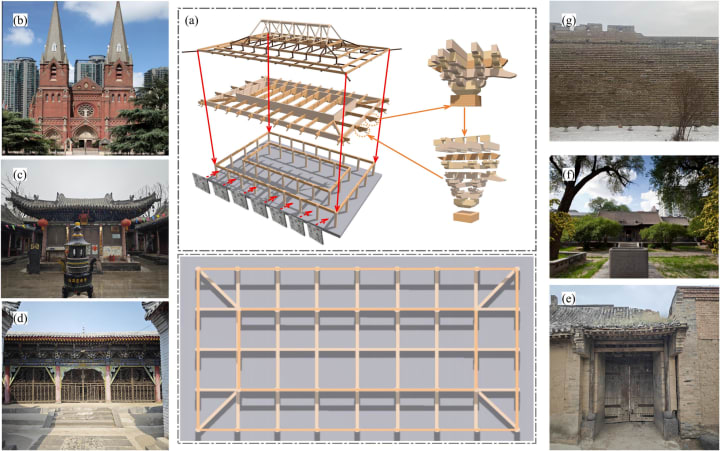
Historic structures often include intricate moldings, arches, carvings, and decorative elements that are nearly impossible to measure manually without risk.
Laser scanning captures even the smallest details, preserving craftsmanship that might otherwise be lost.
Restoration modelers can then recreate these details using:
- Parametric BIM families
- High-resolution mesh models
- Hybrid modeling for non-linear geometries
This digital archive becomes invaluable for future maintenance or reconstruction needs.
4. Reduced On-Site Risk in Fragile Structures
Many heritage buildings have unsafe zones due to:
- Structural instability
- Cracks or leaning walls
- Detaching ceiling elements
- Restricted access areas
Scanning allows teams to capture complete building geometry without physical contact.
Technicians can collect data from a safe distance while still achieving 360° coverage. This significantly reduces human risk and ensures preservation teams can work confidently with accurate information.
5. Faster Project Timelines and Cost Efficiency
Historic preservation projects often struggle with delays due to missing information, measurement errors, and unforeseen site conditions.
Scan-to-BIM eliminates these bottlenecks:
- Faster documentation
- Fewer site visits
- Accurate material quantity estimation
- Minimized rework and discrepancies
Improved coordination with contractors and preservation agencies
With a precise BIM model available early, restoration planning becomes smoother and more predictable.
6. Improved Collaboration With Government & Heritage Authorities
Approval agencies—including historic preservation boards, cultural ministries, and local zoning departments—often require:
- Authenticity reports
- Before-and-after documentation
- Damage assessment visuals
- Conservation strategy plans
A Scan-to-BIM model provides high-quality visual documentation that helps communicate proposed interventions clearly.
Authorities appreciate:
- Transparent decision-making
- High-fidelity digital records
- Works that align with preservation codes
- This often accelerates approval processes.
- 7. Creating a Digital Twin for Future Generations
Perhaps the most powerful impact of Scan-to-BIM is the creation of a digital twin—a permanent, accurate digital record of the heritage asset.
This digital archive supports:
- Long-term maintenance
- Disaster recovery (e.g., fire, flood, earthquakes)
- Structural performance monitoring
- Future renovation projects
- Educational and cultural documentation
With aging structures increasingly at risk, digital twins are becoming a global best practice.
Final Thoughts
Historic building restoration demands precision, respect, and foresight. Scan-to-BIM empowers AEC professionals to protect heritage structures with unmatched accuracy and efficiency. From capturing intricate architectural details to enabling safer construction planning and long-term digital preservation, this technology is redefining how we understand and restore the past.
As heritage conservation becomes more data-driven, Scan-to-BIM will continue to play a central role in shaping sustainable, informed, and culturally responsible restoration workflows.
Further Reading
About the Creator
Matt Sharon
A professional content writer. Having years of experience in Technology, health, finance, and construction and real estate field. Writing is my passion and I love to play with words Confidently.
Keep reading
More stories from Matt Sharon and writers in Education and other communities.
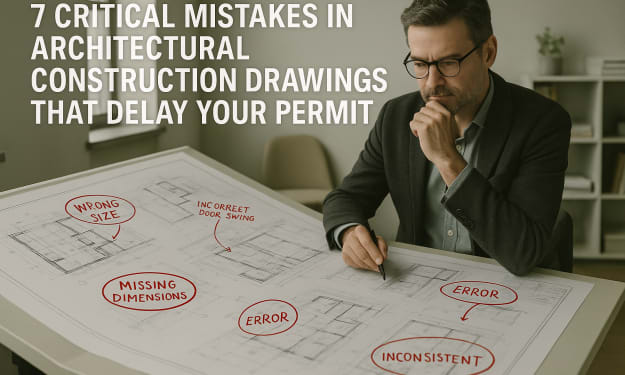
7 Critical Mistakes in Architectural Construction Drawings That Delay Your Permit
Permit delays are one of the most frustrating bottlenecks in construction projects. While some delays are unavoidable, many stem from preventable errors in architectural construction drawings. These mistakes can set your project back weeks or even months, inflating costs and straining client relationships.
By Matt Sharon3 months ago in Education
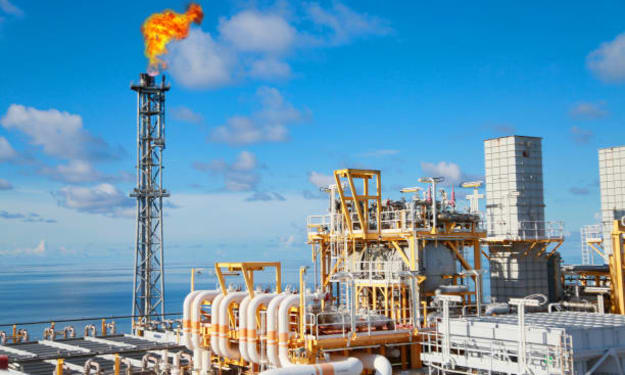
Why Oil and Gas EPC Is Transforming Energy Project Development?
The energy industry is being transformed by new technology, higher efficiency and safety demands, and environmental constraints. One of the most important changes is the further spread of the Engineering, Procurement and Construction (EPC) service model in oil and gas construction. EPC solutions, which were once limited to larger, complex projects, are now being deployed much more broadly as companies seek integrated solutions to streamline processes, reduce risk, and improve outcomes.
By Akshay Kumar4 days ago in Education


Comments
There are no comments for this story
Be the first to respond and start the conversation.