
Why the Moon Has Phases: The Science Behind Lunar Cycles and Changing Moonlight
Why does the Moon have phases? From the delicate crescent hanging low at dusk to the brilliant Full Moon illuminating the night sky, lunar phases have fascinated humanity for thousands of years. Ancient cultures built calendars around them. Farmers timed planting cycles by them. Poets and philosophers found symbolism in their rhythm. Yet the reason behind the Moon’s changing appearance is not mystical—it is astronomical. The phases of the Moon are a predictable result of celestial motion, sunlight, and geometry.

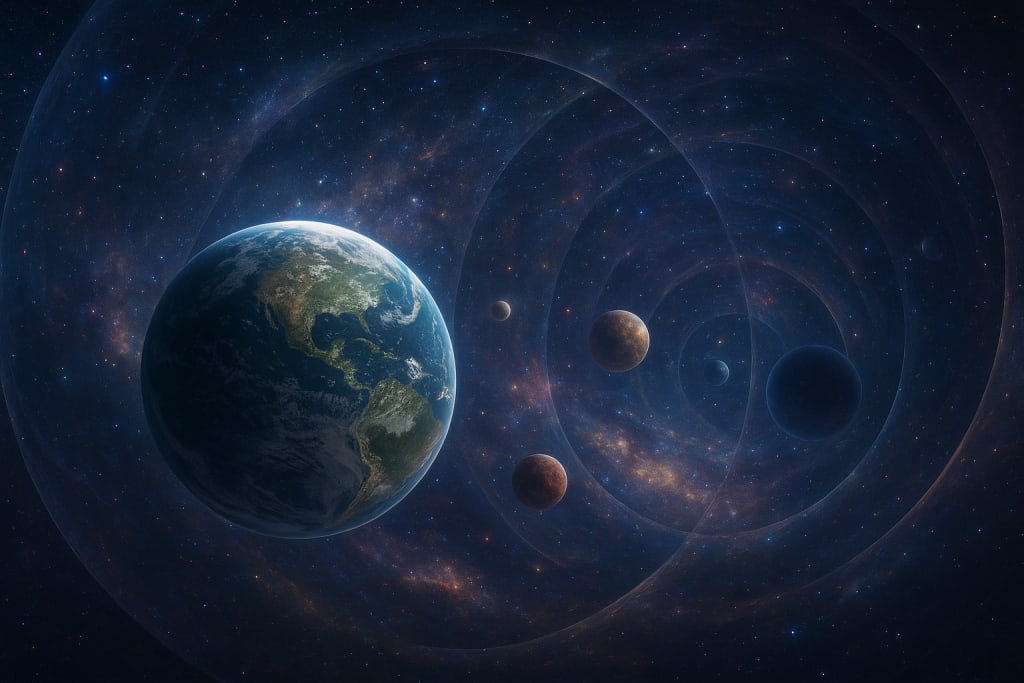
The Moon Does Not Change Shape
One of the most common misunderstandings is that the Moon physically changes shape. It does not.
The Moon is always half illuminated by the Sun. Just like Earth, half of the Moon is experiencing daylight at any given moment. The phases occur because, from Earth, we see different portions of that illuminated half as the Moon orbits our planet.
The changing shape is simply our perspective shifting.
________________________________________
The Earth–Moon–Sun Relationship
To understand why the Moon has phases, we must consider the geometry between three objects:
• The Sun
• The Earth
• The Moon
The Moon orbits Earth approximately once every 27.3 days (sidereal month), but the full cycle of phases—called the synodic month—takes about 29.5 days.
This difference occurs because Earth is also moving around the Sun. As the Moon orbits Earth, the angle between the Sun, Earth, and Moon constantly changes. That shifting angle determines how much of the Moon’s sunlit surface we see.
________________________________________
The Eight Main Phases of the Moon
The lunar cycle consists of eight primary phases. Each phase corresponds to a specific position of the Moon in its orbit.
1. New Moon
During a New Moon, the Moon is positioned between Earth and the Sun. The sunlit side faces away from us, so the Moon appears dark.
We cannot see the Moon because the illuminated half is facing the Sun, not Earth.
________________________________________
2. Waxing Crescent
As the Moon moves slightly along its orbit, a small sliver of the illuminated side becomes visible. This is the Waxing Crescent.
“Waxing” means growing. The visible illuminated portion increases each night.
________________________________________
3. First Quarter
About one week after New Moon, we see half of the Moon illuminated. This is called the First Quarter phase.
Although it appears as half a circle, the Moon is actually one-quarter of the way through its orbital cycle.
________________________________________
4. Waxing Gibbous
The illuminated portion continues to grow. More than half is visible, but it is not yet full. This phase is Waxing Gibbous.
“Gibbous” means bulging.
________________________________________
5. Full Moon
When Earth is positioned between the Sun and the Moon, we see the entire illuminated half. This is the Full Moon.
The Sun’s light fully reflects toward Earth, making it appear bright and round.
________________________________________
6. Waning Gibbous
After the Full Moon, the illuminated portion begins shrinking. This is the Waning Gibbous phase.
“Waning” means decreasing.
________________________________________
7. Third Quarter (Last Quarter)
About three weeks into the cycle, we again see half of the Moon illuminated—but this time the opposite half compared to the First Quarter.
________________________________________
8. Waning Crescent
The illuminated portion continues shrinking until only a thin crescent remains before returning to New Moon.
Then the cycle begins again.
________________________________________
Why Eclipses Do Not Happen Every Month
If the Moon passes between Earth and the Sun during New Moon, and Earth lies between the Sun and Moon during Full Moon, why don’t we have solar and lunar eclipses every month?
The answer lies in orbital tilt.
The Moon’s orbit is tilted about 5 degrees relative to Earth’s orbit around the Sun. Most of the time, the Moon passes slightly above or below the direct Earth-Sun alignment.
Only when the alignment is precise do eclipses occur.
________________________________________
The Role of Sunlight
The Sun is the sole source of the Moon’s visible light.
Unlike stars, the Moon does not produce its own light. It reflects sunlight off its surface.
The brightness of each phase depends on:
• The angle of sunlight hitting the Moon
• The reflectivity (albedo) of the lunar surface
• The Moon’s position relative to Earth
The Full Moon appears brightest because we see the entire illuminated hemisphere.
________________________________________
Historical Interpretations of Lunar Phases
Before modern astronomy, civilizations developed various explanations for lunar phases.
Ancient Greek philosopher Aristotle correctly suggested that lunar phases were caused by sunlight reflecting off the Moon.
Later, Galileo Galilei used a telescope to observe lunar mountains and craters, confirming that the Moon was a physical world similar to Earth.
In the 17th century, Isaac Newton explained orbital mechanics mathematically, showing how gravity governs the Earth-Moon relationship.
These discoveries transformed lunar phases from mystery to predictable science.
________________________________________
The Lunar Cycle and Timekeeping
The lunar cycle has shaped calendars across cultures.
Many ancient calendars were lunar or lunisolar, tracking months by Moon phases. Even today, Islamic and Jewish calendars rely on lunar cycles.
The word “month” itself derives from “Moon.”
Understanding lunar phases is not just astronomical—it is cultural.
________________________________________
Tides and the Moon’s Influence
While lunar phases are caused by light and geometry, the Moon also affects Earth through gravity.
The gravitational pull of the Moon causes ocean tides. During New and Full Moons, when the Sun, Earth, and Moon align, we experience stronger tides called spring tides.
During Quarter phases, tides are weaker (neap tides).
Though tides are not caused by phases themselves, they are linked to the same alignment geometry.
________________________________________
Common Myths About Moon Phases
Myth 1: Earth’s Shadow Causes Phases
Incorrect. Earth’s shadow only causes lunar eclipses, not regular phases.
Phases are caused by viewing angle, not shadow.
________________________________________
Myth 2: The Moon Is Only Visible at Night
Not true. The Moon is often visible during the day, especially during Crescent and Quarter phases.
________________________________________
Myth 3: The Moon Spins
The Moon rotates once per orbit around Earth. This synchronous rotation is why we always see the same side.
________________________________________
Why Understanding Lunar Phases Matters
Studying lunar phases helps explain broader astronomical concepts:
• Orbital mechanics
• Light reflection
• Celestial alignment
• Planetary motion
The Moon serves as an accessible example of how cosmic geometry shapes what we see from Earth.
It is a small-scale demonstration of universal physics.
________________________________________
The Moon in Modern Exploration
The Moon is once again a focus of scientific exploration.
Organizations like NASA plan missions under programs such as Artemis to return humans to the lunar surface.
Understanding lunar cycles is essential for planning landings, energy management, and observation.
Even as we advance technologically, the Moon’s phases remain fundamental knowledge.
________________________________________
A Dance of Light and Motion
Ultimately, the Moon has phases because:
1. The Moon orbits Earth.
2. The Sun illuminates half of the Moon at all times.
3. Our viewing angle changes as the Moon moves.
This elegant system produces a predictable 29.5-day cycle.
No mystery.
No shape-shifting.
Just light and motion interacting in space.
________________________________________
Conclusion: The Beauty of Predictable Change
Why does the Moon have phases?
Because we are watching a cosmic dance between Earth, Moon, and Sun.
Each phase marks a precise position in orbit.
Each crescent reflects sunlight from a different angle.
Each Full Moon reminds us of our place within a dynamic celestial system.
The lunar cycle is one of the most visible and accessible astronomical phenomena available to us. It connects ancient observers with modern science, linking cultural history with orbital physics.
The next time you look at a crescent Moon or a glowing Full Moon, remember:
Nothing about the Moon has changed.
Only your perspective has.
And in that shifting perspective lies one of the simplest—and most beautiful—demonstrations of how the universe works.
About the Creator
Keep reading
More stories from shahkar jalal and writers in Education and other communities.
What Makes Some Stars Visible to the Naked Eye
Understanding Star Visibility Not every star in the sky is equally visible. A star’s visibility depends on its apparent magnitude, which is a measure of how bright it appears from Earth. Apparent magnitude is influenced by two main factors:
By shahkar jalala day ago in Education
The Rise of Digital Therapeutics in Portugal A Market Poised for Explosive Growth 2026-2034
The healthcare landscape in Portugal is undergoing a transformative shift, driven by the rise of digital therapeutics. As part of a broader trend of global digital healthcare innovation, Portugal's digital therapeutics market is projected to experience remarkable growth in the coming years. With its digital healthcare infrastructure expanding, favorable regulatory frameworks, and increasing integration of AI-driven personalized treatments, Portugal is poised to become a key player in the digital therapeutics space. By 2025, the market size will reach USD 39.0 million, and by 2034, it’s expected to soar to USD 313.2 million—a staggering compound annual growth rate (CAGR) of 26.04% from 2026 to 2034.
By Neeraj kumarabout 12 hours ago in Education
Understanding FSC 47 Pipe, Tubing, Hose, and Fittings in Aerospace Aviation
Introduction From my experience researching aviation components, I’ve realized how critical pipe, tubing, hose, and fittings are in the aerospace sector. These components form the backbone of aircraft hydraulic, fuel, and pneumatic systems. Without reliable aerospace fluid transfer systems, safe flight operations simply wouldn’t exist.
By Beckett Dowhan7 days ago in Education
Boundless
A geographical map could take you there. To the places I've been, to the sights I've seen, to the landscapes I've climbed. But no compass could point you in the direction of my memories. To the experiences I've lived, to the happiness I've felt, to the wonder I've held so close to my heart.
By Alyssa Mussoa day ago in Writers


Comments
There are no comments for this story
Be the first to respond and start the conversation.