

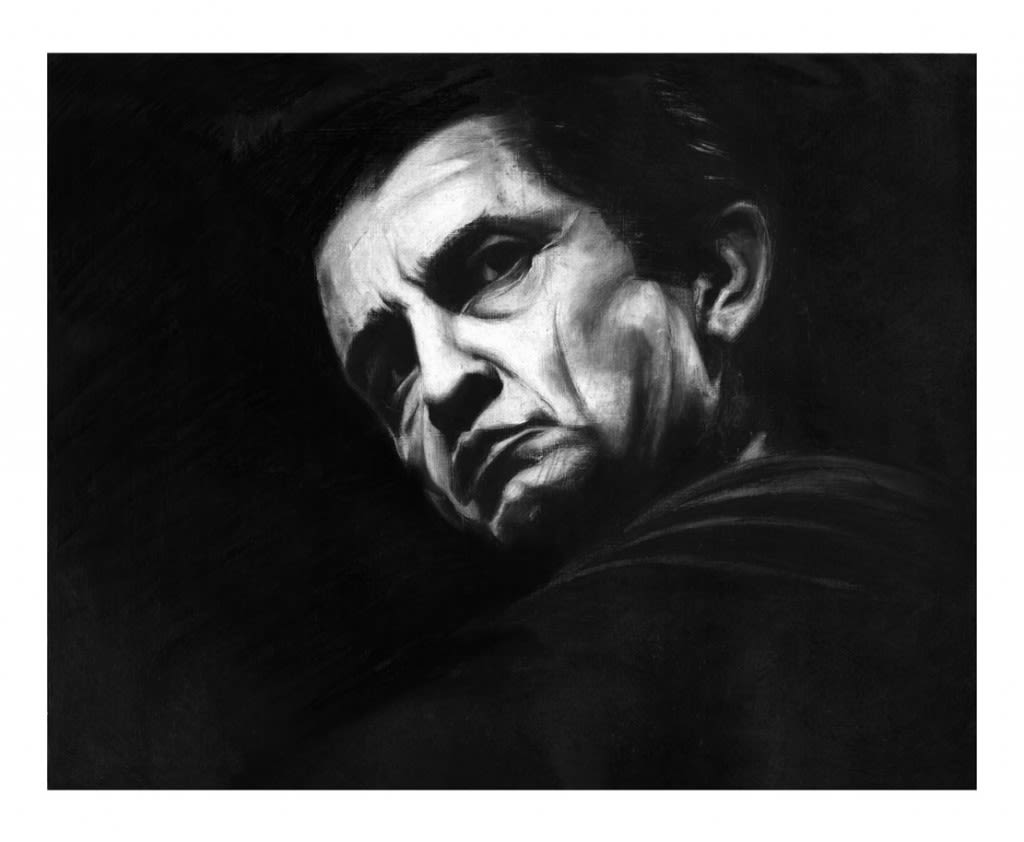
My grandfather was about as open as his buried casket. Languishing in war-torn Vietnam must do that to a person. When I was little, we used to visit him and my grandmother at their house in the desert. Every time we pulled up, we’d almost certainly find him out in the garage, fiddling with some rusted out Camero. He’d incline his head as our car parked in his driveway, before moseying on over to us as we got out. I’d slam my car door as loud as possible, yell “hi grandpa!” before rushing inside to take shelter from the unbearable heat.
He would drift in and out of the house, cautiously refilling his Navy mug with water or Pepsi at the fridge before silently making his way back outside. Sometimes he’d linger, taking a few extra moments to quietly listen to whatever conversation was unfolding. My mom, ever attentive to his presence, would try and grab his ear for a bit of conversation. He’d play along, of course, for about 2 minutes, before walking out the door, mumbling his last reply.
While I never really witnessed it, mom always said he had a quick temper. She claimed it faded as he aged, along with his propensity to drink and smoke himself into oblivion. However, by the time I was born, he was as straight edge as they come, and he liked it that way. His temper subsided not long after, replaced by a general annoyance with the inanity of life in the desert. He’d complain about the weather, his water bill, how long the grocery store took, but he never went back to the bottle.
My mom always tells me stories about how she could smell it on his breath– the way he’d come home, stumbling out of his car to turn on a baseball game. My favorite of her stories has to be of the time he was pulled over five miles from the house, and grandpa, always with his quick wit, managed to talk himself out of a DUI and drive himself the rest of the way home. “You couldn’t do that today!” my mom would exclaim, as she laughed off the old wounds.
She considered herself lucky, though. “Dad was never violent,” she would say, shaking her head. “He never laid a hand on us.” As his grandkid, I couldn’t complain too much. I felt for my mom, but I didn’t have to grow up with the drunk that barely made it home.
Don’t get me wrong, I was still a little bit afraid of him. I spent countless hours after school at his house, my mom dropping me off to take some time for herself. At night, I’d quietly watch TV in the guest room, and he’d open the door to ask me if I’d done my homework. He’d stand there, shirtless, his tattoos mangled by age. “Yep, I finished it,” I’d say. He’d look at me sternly and say “You better not be bullshitting me” before closing the door.
My mom eventually got tired of towing her Forerunner out to the desert, so grandpa started picking me up instead. At first it was awkward– I’d quietly get in his truck, and after barely looking to see if my seatbelt was on, he’d gun it. He wasn’t much for conversation, so we’d sit in silence the whole car ride, listening to his single Johnny Cash CD.
I was too young and insecure about my conversational skills to speak. He was too old to give a damn. One day, he picked me up as usual, but this time, A Boy Named Sue was playing. He knew all the words. He belted them out with more joy than I’d ever seen, and in just the right musical timing, he turned to me with the widest grin and said “My name is Sue! How do you do?” I must’ve looked at him with wild eyes, confused by the free spirit that had suddenly emerged from the grouchy exterior I’d always seen. After that, I was no longer afraid of him.
When he died, his will was fairly standard. His home, which he owned, along with all his possessions, were to be divided up among his kids. After much debate and a couple of shouting matches, my mom got the house and my uncle got the cars, as well as the furniture. After we helped her brother load up all the couches, paintings, and dressers, there was still the lingering issue of the books. His library of scribbles.
There was no shortage of little black notebooks in my grandfather's house. They stacked the walls in his library where books should have been. I confess that I’d read a few before, albeit in secret. Back when I was little and he’d leave to go pick up pizza, I’d watch his car pull away before rushing into the library, a room he’d told me quite a few times to “stay the hell out of.” The lock never quite worked, so I’d jiggle it and apply just a little force, and I was in. I’d hurriedly snatch one of the notebooks, looking over my shoulder to make sure grandma wasn’t near, and I’d flip through the pages. I’d spend as much time in there as I could, my eyes soaking up the text before he got back.
On one occasion, I remember reading “I should have killed that fucker when I’d had the chance, before—” when I heard his car door slam closed. I hurriedly put the book away, forgetting which shelf it was on, and never looked back.
Now here I was, a decade and a half later, in the empty house I’d spent so much time in, wondering what the hell we're gonna do with all these books. I went up to the door and used my tried and true method, and the door opened right up.
I took a moment to soak it all in, then did the one thing I couldn’t stop myself from doing long before. I picked up the nearest book I could find, and began pouring over the intimate writings of a dead man. Writings he spent his whole life keeping from us– from anyone. Inside, he laid bare his secrets, long forgotten passions, and years of trauma. There were stories of love, of life, of the greatest joys he ever experienced. But those were harder to find, drowned out in the sea of those tragic, identical notebooks. My grandfather kept his whole life in those books, everything we could ever want to know about him was contained inside.
Mom saw me in there, reading through his books. “You know he left them all to you, right?”
I looked up. “Do you know what’s in here?”
She shook her head. “I always just assumed it was his planners or something.”
I showed her the page I was reading. “These are his journals. Except, from the looks of it,” I grabbed another book and flipped haphazardly through it. “They aren’t in any order, he didn’t label them.
Mom shrugged. “Well I guess he was always an open book, but you just had to know which book to open.” Mom lit up for a second! “Oh! It wasn’t just the books.” She walked out of the room and came back in with a couple of pages of printer paper. “To _____, I leave you my writings, these paltry notebooks... and quite a bit of treasure, if you can find it.”
His notebooks.
What was I supposed to do with those?
At first I was excited– he left me money! And it was probably inside one of these moleskins. What else could “a bit of treasure” mean? It was going to be a lot of work, combing through these books. Thankfully, mom was there to help. Together, we got to work, flipping through pages and pages of his admittedly shitty handwriting, detailing his most intimate thoughts. I kept looking for something, anything that would clue me into where he left the treasure. My mother was less helpful than I thought she’d be, as she kept stopping to read whole pages from the books. I had already burned through about 25 of these things when she stopped me to show me what he had written about my grandma.
“I saw her soul, and it filled mine with warmth it never had. She was made of star stuff”
I smirked, and wondered if Sagan had somehow stolen from grandpa. She put the books containing his honeymoon and the birth of his kids off to the side, quietly tearing up in a corner every 10 minutes while I continued flipping haphazardly through a dozen copies an hour.
After four hours of endless flipping, I saw that one of the books looked like it had a bookmark peeking out of it. I snatched it off the shelf, opened it, and to my amazement, a check fell out of one of the books. $20,000. I hurriedly grabbed the check, and stared at it with hungry eyes. This was more money than I’d seen in my life. My college was paid for. Or I could buy a car. I could put a downpayment on a home. The possibilities were endless. I remember going to bed happier than I’d ever been. Despite all his apparent carelessness, grandpa had left me something useful.
When mom saw the check, she cried.
I spent the following days looking at restored Cameros, sitting at Grandpa's desk in the library. My financial future secure, I felt safe. But that rush faded pretty quick. Sitting around that room, with all those identical books drowning out the beige walls, it didn’t feel like that check was what he meant by treasure. There has to be a reason he kept me out of this room only to give me everything in it. That word started bouncing around in my mind, like a racquet ball in a cement room. Grandpa was a simple man, and he wouldn’t have said treasure if he meant money.
With some free time and reassurance that I wouldn’t have to get a summer job, I started reading through his journals. I scrounged for the one the check had fallen out of, and was amazed to find what was written on it. There was a note, on the page the check had fallen from. “Cash this when you find the treasure.” I gasped. When I found the check, the words on the page were the last thing on my mind. I’d missed the clue entirely.
I knew I had to keep reading. I picked up a random journal, and it read like this:
“My father was not a good man. His temper was always raging, and his whip flaring—”
I closed the book. This stuff was dark– maybe he did mean the check, after all. I opened another book, this time with the intent to finish it.
“I never escaped the sound of his whip in the night. Alcohol made it quieter, but it always returned stronger the next morning. 40 years dead in the ground and I never stopped feeling his dry fingers on my skin, his grip like iron. His ghost haunts all the pages.”
And sure enough, it did. Every single journal in his house had at least one mention of his father, his tormentor.
“Not an ounce of kindness ever befell me, not from him at least.” “Unlike the films my daughter loves, no one came to my rescue at my greatest hour of need.” I showed my mom that one, and she wept. “I can still hear him cracking his knuckles.”
There was no abuse hotline. No socially acceptable therapy for a “strong man”, besides the bottle. This torrid room of writings, with its million etches of pain, was the only way he knew how to find any release. He felt that he had to carry it all around, lugging his black books of secrets like an albatross around his heart. I felt for him.
I sat on the ground, dozens of black notebooks open all around me, trying to not get my tears on the pages. Mom had given up. She didn’t want to read another word. I breathed in, and flipped to a new page. My eyes spotted that same sentence I’d read so long ago.
“I should have killed that fucker when I’d had the chance, before he caused this family so much harm. I let him rule over me and my kids like a tyrant. Bowing to his needs, his desires, his thirst. I wasted so many good years, I’m not sure if I’ll have any left by the time this is all said and done.”
I thought about how kind he had been all those years, and that it seemed like a waste for grandpa to toil away in here, thinking he wasn’t worth a damn. Mom would disagree, I would disagree.
I kept reading.
“After today, I’m done, and he’s not ruling over me anymore. Today, I’m a grandparent.”
I sat back, and I got it.
Treasure.
About the Creator
Grant Yamada
I'm a writer who likes big ideas. I spend my days obsessing over public policy, politics, technology, and consciousness
Keep reading
More stories from writers in Families and other communities.
Goodbye, Mr. Duvall
It is turning out to be an interesting year. I was in the middle of teaching a class when a pop-up appeared on the screen announcing the death of Mr. Robert Seldon Duvall (yes, that was his full name). I was in the middle of a discussion on the obsession we have with winning when it comes to sports (the Winter Olympics was a theme), and I felt as though things were coming full circle. We had already lost Gene Hackman last year, and along with that titan, it feels though one particular golden age has closed off to be replaced by...?
By Kendall Defoe 5 days ago in Geeks


Comments
There are no comments for this story
Be the first to respond and start the conversation.