Latest Stories
Most recently published stories in Families.
Why Most Households End Up Using Self Storage
Self storage is one of those things most households do not plan for. Very few people move into a home thinking they will need extra space somewhere else. Yet over time, more and more households end up renting a storage unit, often for reasons that feel completely unavoidable.
By Your NZ Local2 days ago in Families
The Inheritance That Wasn’t Written
When the lawyer read the will, everyone leaned forward, expecting numbers, property details, and formal language. Instead, the room fell silent after the first page. There was no list of assets. No division of land. No mention of money. Only a handwritten letter addressed to the family.
By Sudais Zakwan3 days ago in Families
Family Warmth in a Time of Change.
Family Warmth in a Time of Change In the 1980s, marriage often looked like a staircase wide enough for a whole world to gather on it. Not just the bride and groom, not even just their parents, but cousins, neighbors, childhood friends, the aunt who cried before anyone else did, the uncle who tried to look stern and failed, the grandmother who carried history in her posture, and the little ones who didn’t yet understand why this day mattered but felt its electricity anyway.
By Sayed Zewayed3 days ago in Families
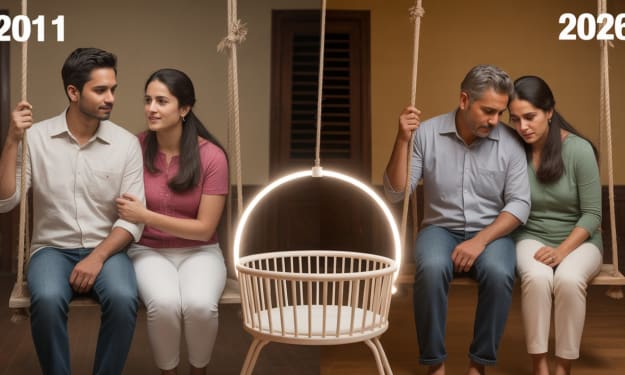
The Silent Rooms: Life Without Children
By Hazrat Umer A True Story of Marriage, Hope, and the Empty Cradle I got married in 2011. It was a year filled with the kind of joy that is hard to put into words. Like every young man, I had dreams. I remember sitting with my wife in our new home, talking about the future. We didn't just talk about our careers or our travels; we talked about the children we would one day hold in our arms. We imagined the sound of tiny feet running down the hallway. We even thought about names. In 2011, the world felt like it was at our feet, and the promise of a big, happy family felt like a certainty.
By Hazrat Umer3 days ago in Families
Why Emotional Intelligence Matters More Than Obedience in Modern Parenting. AI-Generated.
For many parents, obedience has long been considered the ultimate goal of good parenting. A “well-behaved” child was seen as a successful outcome. I used to believe the same thing. If my child listened, followed rules, and stayed quiet in public, I felt I was doing my job correctly. Over time, however, I began to notice something troubling. While my child was obedient, they struggled to express emotions, handle frustration, and communicate needs in healthy ways. This realization led me to question an important assumption: Is obedience really more important than emotional intelligence? Understanding Emotional Intelligence in Children Emotional intelligence is the ability to recognize, understand, and manage emotions—both one’s own and those of others. For children, this skill is foundational. It influences how they handle conflict, build relationships, and cope with stress throughout life. Children with strong emotional intelligence are more likely to: express feelings clearly instead of acting out, regulate emotions during stressful situations, show empathy toward others, develop resilience and confidence. Unlike obedience, emotional intelligence does not come from control or fear. It grows through guidance, modeling, and emotional safety. The Limits of Obedience-Based Parenting Obedience-focused parenting often relies on authority and consequences. While this approach may produce short-term compliance, it can unintentionally suppress emotional development. When children are taught to obey without understanding, they may: follow rules out of fear rather than awareness, struggle to make decisions independently, feel disconnected from their emotions, hide feelings instead of processing them. I realized that my child was learning what to do, but not why they were doing it—or how to manage the emotions behind their behavior. Shifting the Focus: From Control to Guidance The turning point came when I began prioritizing emotional understanding over immediate compliance. Instead of asking, “Why won’t you listen?” I started asking, “What are you feeling right now?” This shift changed everything. When conflicts arose, I slowed down the interaction. I acknowledged emotions before addressing behavior. I made space for conversations instead of commands. The goal was no longer obedience—it was connection and learning. Teaching Skills That Last a Lifetime When parents focus on emotional intelligence, discipline becomes a teaching tool rather than a punishment. Here are some practical changes that helped: Naming emotions aloud to build emotional vocabulary Validating feelings without excusing harmful behavior Setting clear boundaries with calm consistency Encouraging problem-solving instead of blame Over time, my child began responding differently. Emotional outbursts decreased. Communication improved. Most importantly, my child started developing confidence in handling emotions independently. The Mental Health Connection Emotional intelligence plays a critical role in mental health. Children who are supported emotionally are better equipped to manage anxiety, stress, and social challenges. By fostering emotional awareness early, parents help reduce: chronic stress, emotional suppression, feelings of shame or inadequacy. I noticed that as emotional intelligence increased, our home environment became calmer. Conflicts no longer felt like battles. They became opportunities for growth. Respect Builds Cooperation One of the biggest surprises was that cooperation increased—not decreased—when obedience stopped being the primary focus. When children feel respected and understood, they are more willing to cooperate naturally. Respect does not eliminate boundaries. It strengthens them. Children learn that rules exist for safety and well-being, not control. This understanding builds internal motivation rather than external pressure. Rethinking Success in Parenting Parenting success should not be measured by silence or compliance. It should be measured by a child’s ability to: understand emotions, communicate needs, recover from mistakes, build healthy relationships. Emotional intelligence equips children for real life—long after childhood rules no longer apply. Final Thoughts Obedience may create order, but emotional intelligence creates strength. When parents invest in emotional development, they raise children who are not only well-behaved—but emotionally capable, resilient, and compassionate. In a world filled with challenges, emotional intelligence is not optional. It is essential.
By Zia Djamel3 days ago in Families
A True Story from Damascus I was 19 years old.. Content Warning. AI-Generated.
A True Story from Damascus I was 19 years old. October 6, 2013. I was arrested when I was nineteen. Today, I am 32 years old and I have three children. I am their mother, but I do not know who their father is. “Nour” was just a nineteen-year-old girl living on the outskirts of Damascus when spring began to bloom in a different color. She was not interested in politics as much as she was devoted to her university studies and her simple dreams—dreams woven between the scent of jasmine and the sounds of music. But the violent winds of change asked no one about their dreams. On that fateful day, she was doing nothing more than delivering medical and food aid to a besieged area. A purely humanitarian act suddenly turned into a grave accusation. It was a fleeting, blurred moment; she barely understood what was happening before she was violently dragged away and thrown into a cold, dark cell. Nineteen years of age became just a number before the power of silent walls. Nour disappeared. Her name disappeared. Her dreams and the jasmine of Damascus vanished from her life. She became nothing more than a number, a pale shadow in a place that knew no mercy and never saw the light of the sun. Years of loss and darkness—years of imprisonment in Syria—are not merely time passing. They are a history of brutal experiences that reshape a human being from their ashes. Nour resisted forgetting. She resisted despair and tried to cling to a thin thread of her humanity. But the circumstances were stronger. Under constant intimidation, torture, and fear, the sense of time itself began to dissolve. When Nour finally emerged, after years whose true number only God knows, she was a different woman—one carrying invisible scars and a fragmented history that could not be told. She no longer knew anything about life outside those walls. She was now in her thirties and carried with her a heavy, almost impossible secret. The Mystery of Motherhood and a New Life Today, Nour is 32 years old. She is the mother of three children who fill her life with noise and warmth: a six-year-old girl, a four-year-old boy, and a two-year-old toddler. They are her life, the light of her eyes, and everything that still gives her meaning. Yet every day carries a question like a silent dagger that tears at her from within: Who is their father? During the years of detention and loss, Nour lost the ability to determine the identity of her children’s fathers. She does not know which child was the result of which period or which circumstances she endured. Each child is a miracle born from the womb of suffering, and each one carries a fragment of a lost truth. Nour now lives in a country of asylum, desperately trying to build a wall of protection between her children and the past that continues to pursue her. She knows they will not ask today, but she fears tomorrow—the day they will ask the hardest question of all: “Mom, who is my father?” She is a complete mother—loving, sacrificing, and struggling—but she carries the burden of a secret born in a time of war and darkness. Her three children are proof of her survival, yet they are also a silent testimony to the heavy price paid by that girl whose only fault was that spring came to her at the wrong time. And so, life goes on. Nour does not search for answers in the painful past; she searches for the strength to build a future where her children’s laughter overcomes the silence of memories. This is a true story that took place in Syria during the era of the fallen Syrian regime. No artificial intelligence websites were used except for the metaphorical imagery of the story. I hope for your moral support to continue.
By ADAM KARTER3 days ago in Families
How Positive Discipline Transformed My Child’s Emotional World. AI-Generated.
Parenting is often described as a journey of love, patience, and learning. For me, however, it felt more like a constant emotional test. I remember days filled with tension, misunderstandings, and moments where I questioned whether I was truly helping my child grow emotionally—or unintentionally causing harm. Like many parents, I once believed that discipline meant control. I relied on firm rules, consequences, and raised voices when things went wrong. My intention was never to hurt, but to teach. Yet the more I tried to “correct” my child’s behavior, the more distant and reactive they became. Something was clearly missing. That missing piece turned out to be positive discipline. Understanding Behavior as Communication One of the most important lessons I learned is that children don’t misbehave without reason. Behavior is often a form of communication, especially when children lack the language to express complex emotions. Instead of asking, “How do I stop this behavior?” I began asking, “What is my child trying to tell me?” This shift completely changed my parenting approach. I started observing patterns rather than reacting emotionally. I noticed that outbursts often followed moments of overwhelm, tiredness, or frustration. My child wasn’t being difficult—they were struggling. Replacing Punishment with Connection Positive discipline does not mean the absence of rules. It means enforcing boundaries with empathy instead of fear. Here are some changes I implemented: I acknowledged emotions before correcting behavior I spoke calmly, even during emotional moments I explained expectations instead of assuming understanding I focused on problem-solving rather than blame For example, instead of saying, “Stop crying right now,” I learned to say, “I see that you’re upset. Let’s talk about what happened.” This small change had a powerful effect. My child felt seen instead of judged. The Impact on Mental Health Before positive discipline, our home environment felt tense. Emotional reactions escalated quickly, and both of us carried stress long after conflicts ended. Over time, I noticed signs of emotional strain—not just in my child, but in myself. Positive discipline created emotional safety. When children feel safe, their nervous systems can relax. This allowed my child to: express emotions more clearly calm down faster after frustration build confidence in handling challenges For me, it reduced anxiety and parental guilt. I stopped feeling like every mistake was a failure and started viewing them as learning opportunities. Teaching Emotional Regulation, Not Fear Traditional discipline often relies on fear-based compliance. Positive discipline focuses on skill-building. Through everyday interactions, my child learned: how to name emotions how to pause before reacting how to repair mistakes through communication Instead of avoiding punishment, my child began developing genuine self-awareness. This was a major emotional breakthrough. Strengthening the Parent–Child Bond One of the most unexpected outcomes was how much our relationship improved. Trust replaced tension. Conversations became easier. Even difficult moments felt manageable because they no longer threatened our emotional connection. Positive discipline taught me that authority and compassion can coexist. Respect doesn’t come from control—it grows from consistency, empathy, and presence. What I Wish I Had Known Earlier If I could speak to my past self, I would say this: Parenting is not about perfection Children need guidance, not domination Emotional intelligence is just as important as obedience Positive discipline didn’t just change my child’s behavior—it changed how we relate to each other on a deeper emotional level. Final Thoughts for Parents Every child deserves to feel understood. Every parent deserves tools that support both discipline and emotional well-being. Positive discipline offered us a path where growth replaced guilt, and connection replaced conflict. The transformation wasn’t instant, but it was real—and it continues to shape our emotional world every day.
By Zia Djamel3 days ago in Families
What Fathers Uniquely Provide
The Error of Treating Parenting Roles as Functionally Identical Modern parenting theory often begins with the assumption that mothers and fathers are largely interchangeable, differing only in style or temperament. From this view, any deficits in one parent can be compensated for by the other through increased emotional effort, sensitivity, or presence. Parenting becomes a question of intention and quantity rather than function and role. This assumption is appealing because it aligns with cultural preferences for symmetry and fairness, but it collapses under closer examination of developmental outcomes.
By Peter Thwing - Host of the FST Podcast4 days ago in Families
Living Apart From Your Family
My family moved out of the country in 2013. I chose to stay behind with my now–husband because I knew I would never see him again if I had gone with my parents. It was the most difficult decision I’ve ever had to make, but I think it was the right one for me. We are a close family, which made it even more difficult, and the plan was to meet them in the new country after a few years. This is still the plan, but “We’ll meet you there in four or five years” turned into “We’ll meet you there in about ten to twelve years after you left because life kinda sucks and moving is expensive”.
By Violet Wright4 days ago in Families