
The DNA of Love: How Genetic Testing Is Saving Relationships
by Prof. Roberto Grobman

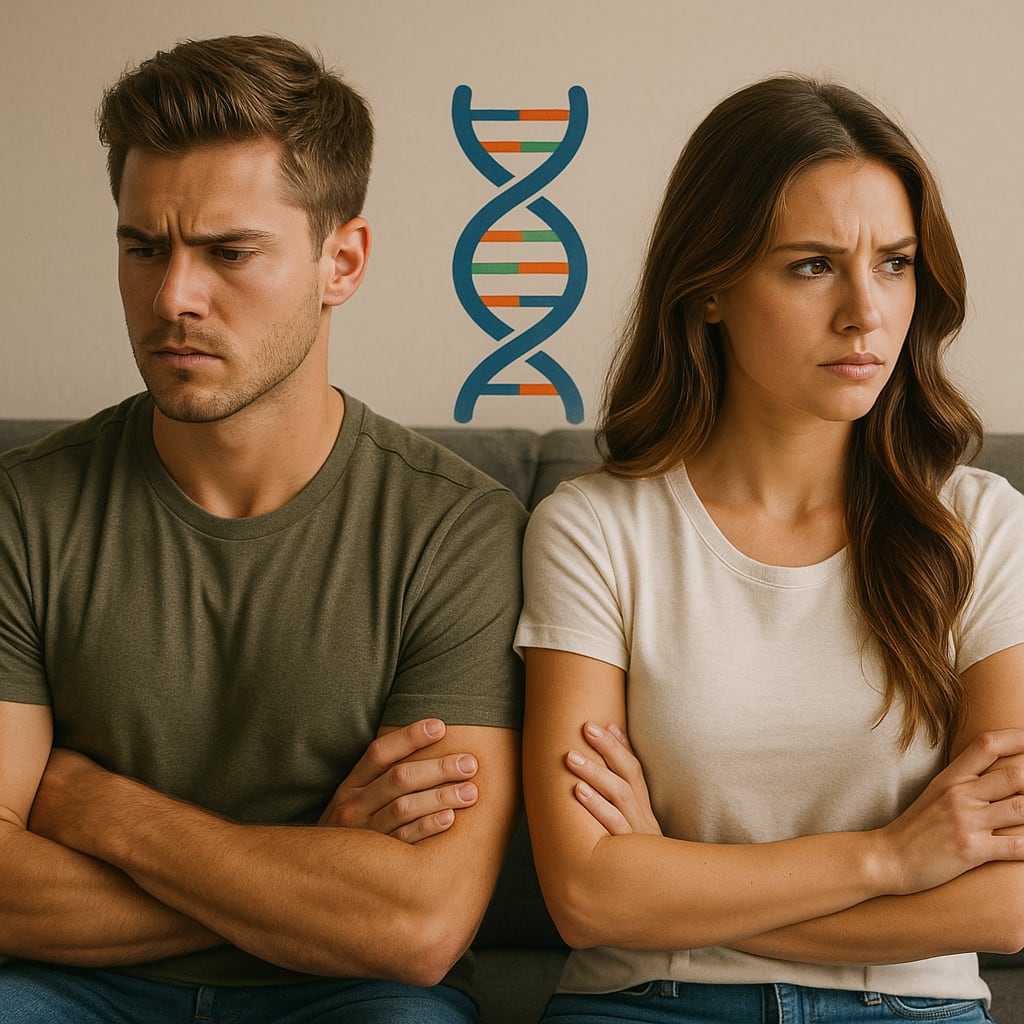
When Juliana and Marcelo got married, they seemed like the perfect match. She was methodical, calm, and structured. He was spontaneous, energetic, and extremely sociable. At first, their differences were charming. But within months, arguments became frequent, and the distance grew.
Juliana thought Marcelo was chaotic and impulsive. Marcelo, on the other hand, felt Juliana was emotionally cold and too rigid.
Traditional therapy helped them talk — but didn’t solve the underlying tension.
That changed when they discovered a new tool: a genetic compatibility test for couples. The concept felt futuristic — DNA revealing how they function emotionally and neurologically — but they were willing to try.
The results changed everything. And possibly saved their marriage.
How Genetics Shapes Relationships
Many people assume love is all about emotion, history, or chemistry. But science tells us that part of our emotional wiring is written into our DNA. Genes involved in serotonin, dopamine, oxytocin, and circadian rhythms shape not just how we feel — but how we communicate, attach, argue, and recover from stress.
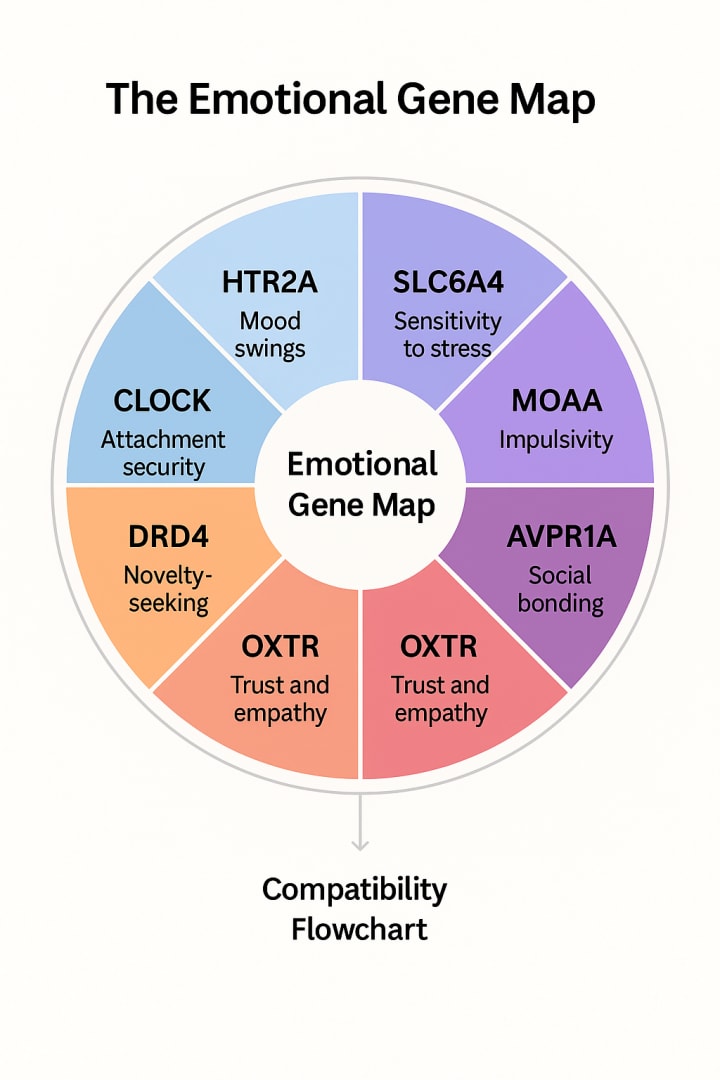
Compatibility Flowchart
In Juliana’s case, her DNA showed she carried the short allele of the SLC6A4 gene, which affects serotonin transport. This made her more sensitive to emotional stress and criticism. She required emotional safety and predictability to feel secure.
Marcelo had variants in the DRD4 and COMT genes, linked to novelty-seeking, impulsivity, and higher dopamine stimulation in social settings. He physically needed stimulation and social interaction to maintain emotional balance.
They also had opposite chronotypes, as shown by differences in the CLOCK and PER3 genes. She was a morning type, functioning best before noon. He was a night owl. This affected everything from their daily routines to intimacy.
The Genes Behind Personality, Mood, and Compatibility
Below are key genes identified in studies that influence personality and relationship dynamics:
SLC6A4 (5-HTTLPR) — Modulates serotonin levels. Short alleles are associated with higher sensitivity to emotional stress and greater reactivity in relationships.
DRD4 — A dopamine receptor gene linked to novelty-seeking, risk-taking behavior, and even infidelity in some studies. Those with certain variants crave stimulation and variety.
OXTR — The oxytocin receptor gene affects empathy, attachment, and emotional bonding. Certain variants may make individuals more emotionally reserved or logical.
COMT — Involved in breaking down dopamine and other neurotransmitters in the prefrontal cortex. Influences emotional regulation and stress response.
MAOA — Regulates serotonin and dopamine metabolism. Low-activity variants are associated with emotional volatility and impulsivity, especially in men.
AVPR1A — A vasopressin receptor gene influencing pair bonding, social behavior, and commitment in long-term relationships.
CLOCK / PER3 — Regulate circadian rhythm. Chronotype differences can cause mismatches in sleep, energy, and sexual timing.
BDNF — Impacts neuroplasticity, learning, and emotional resilience. Certain variants are associated with increased vulnerability to depression or anxiety.
HTR2A — A serotonin receptor gene linked to mood swings, jealousy, and emotional intensity.
More Than Compatibility: A Manual for Emotional Synergy
The modern couple’s genetic report does not dictate who is right or wrong — but rather how each partner is wired to respond emotionally, socially, and behaviorally. The insights are deeply practical.
The test can reveal:
- Emotional processing and empathy levels
- Attachment style tendencies
- Communication and conflict resolution patterns
- Predispositions to anxiety, impulsivity, or avoidance
- Stress recovery mechanisms
- Ideal sleep and intimacy rhythms
Juliana and Marcelo used their results as a relationship map — not a verdict. They created new routines, adjusted communication strategies, and even changed how they structured their evenings. Conflicts no longer felt personal; they were decoded as biological patterns.
As Juliana put it, “It felt like someone translated a language we had both been speaking — but not understanding.”
A New Era of Love
Genetic compatibility testing is not about reducing love to molecules. It’s about enhancing compassion through understanding.
Thousands of couples worldwide are now using this approach to:
- Prevent relationship breakdowns
- Navigate challenges in personality differences
- Strengthen emotional intimacy
- Build a shared language of support and empathy
In a world where 50% of marriages end in divorce, genetic insight is offering couples a new way to reconnect — biologically and emotionally.
Genetic Truths About Love
Did You Know?
- People with the short SLC6A4 allele are more emotionally reactive to criticism and may ruminate more after arguments.
- Carriers of DRD4 7-repeat alleles tend to seek novelty and excitement, making routine relationships feel stale — unless there is shared stimulation.
- Variants in the OXTR gene can influence levels of emotional warmth, trust, and comfort with physical touch.
- Differences in CLOCK genes are among the most common — and most fixable — sources of couple conflict, simply by aligning daily schedules.
- Low activity of MAOA in men is linked to higher emotional reactivity. Understanding this can help couples prevent escalation during disagreements.
- Couples who understand their genetic rhythm of libido, stress, and sleep report higher relationship satisfaction and fewer emotional outbursts.
Prof. Roberto Grobman is a scientist, geneticist, and founder of MedGeneCare, an AI-based health platform combining DNA analysis, mental health profiling, and behavioral insights to personalize medicine and human relationships. His work has supported thousands of physicians and health professionals across 50+ countries.
About the Creator
Keep reading
More stories from Prof Roberto Grobman and writers in Families and other communities.
Cracking the Code: The Genetic Clue That Could Stop ALS
In a sunlit lab in Boston, a vial of DNA quietly spins in a centrifuge. It belongs to Michael, a 33-year-old former paramedic from San Diego. Two years ago, Michael was diagnosed with ALS—Amyotrophic Lateral Sclerosis, the devastating neurodegenerative disease that paralyzed Stephen Hawking and has shattered thousands of lives.
By Prof Roberto Grobman9 months ago in Lifehack


Comments