
Fried Plantains Panamanian Style
How to make your own delicious crunchy "patacones"

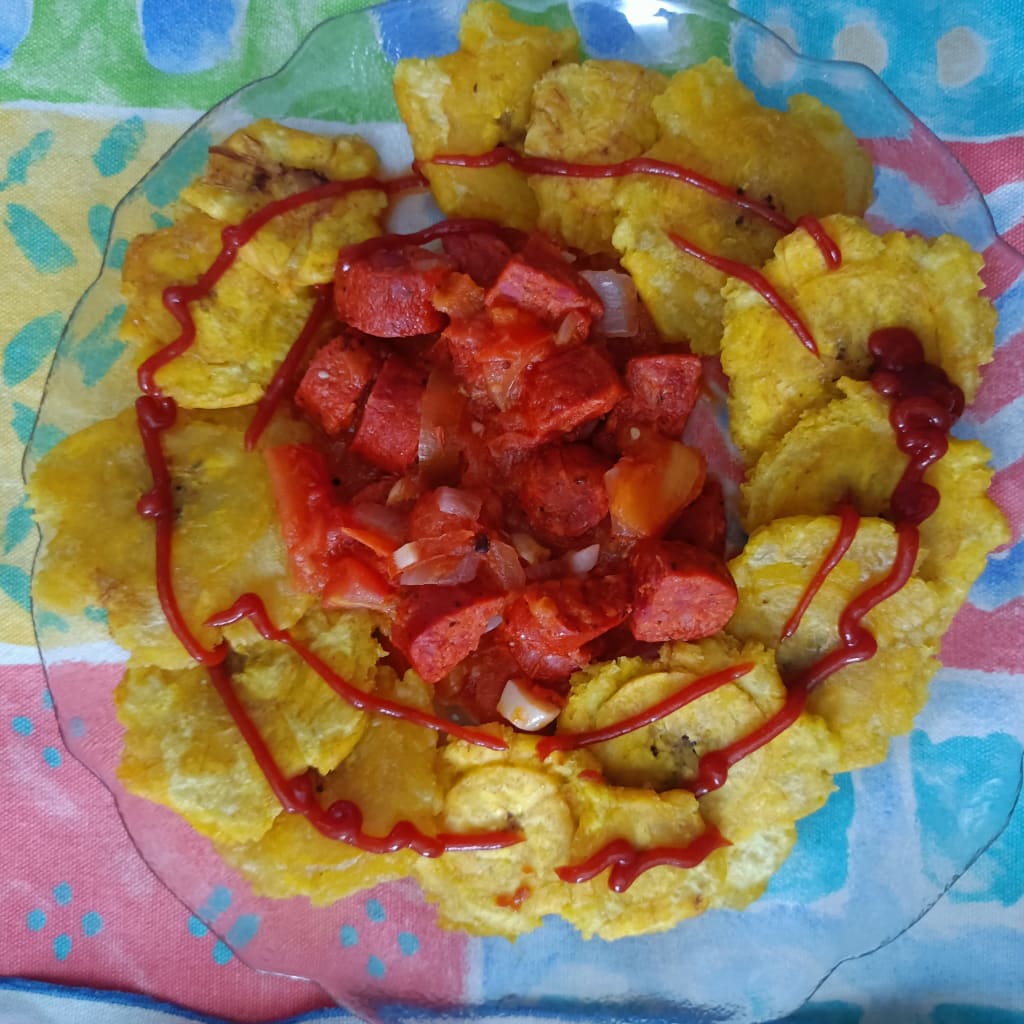
I am not a foodie, but sometimes I like to photograph food. We have the habit of eating healthy, but you know, occasionally we take a walk on the thin line. So, last night we had some fried food. That is correct, as we rarely consume fried food, none of us are affected by high blood pressure or high cholesterol.
Plantain vs. Banana
Before venturing into the kitchen to make our delicious entrée, we must make sure we get the right stuff. The fact that Latin Americans name them differently is curious. People often refer to plantains as bananas or fried bananas in Europe.
Banana is a fruit, it is normally sweet, but even sweeter when ripe (high glycemic index!). A plantain, however, is a cousin of the banana. It is often treated as a vegetable because of its low sugar and high starch content. For starters, don't eat a raw plantain, despite its resemblance to their cousins. The plantain is even better than a potato, it is rich in vitamins (A, B-6 and C) as well as in minerals such as Magnesium (Mg) and Potassium (K). Better yet, plantains are a rich source of fiber.

Ingredients
- 2 Plantains
- Cooking oil
- Salt
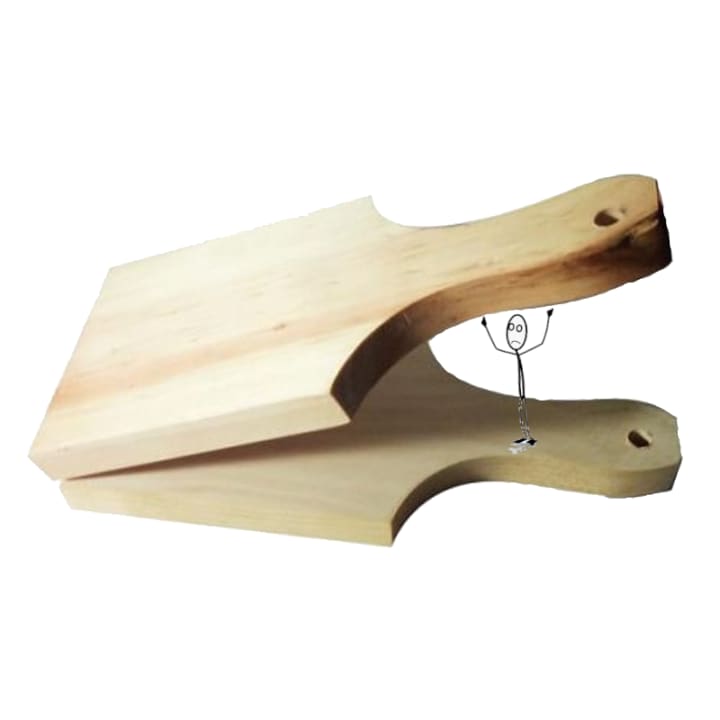
And you will need a tool to squash the semi-fried plantains. We use one like this, but even the bottom of a bottle would do.
Preparation
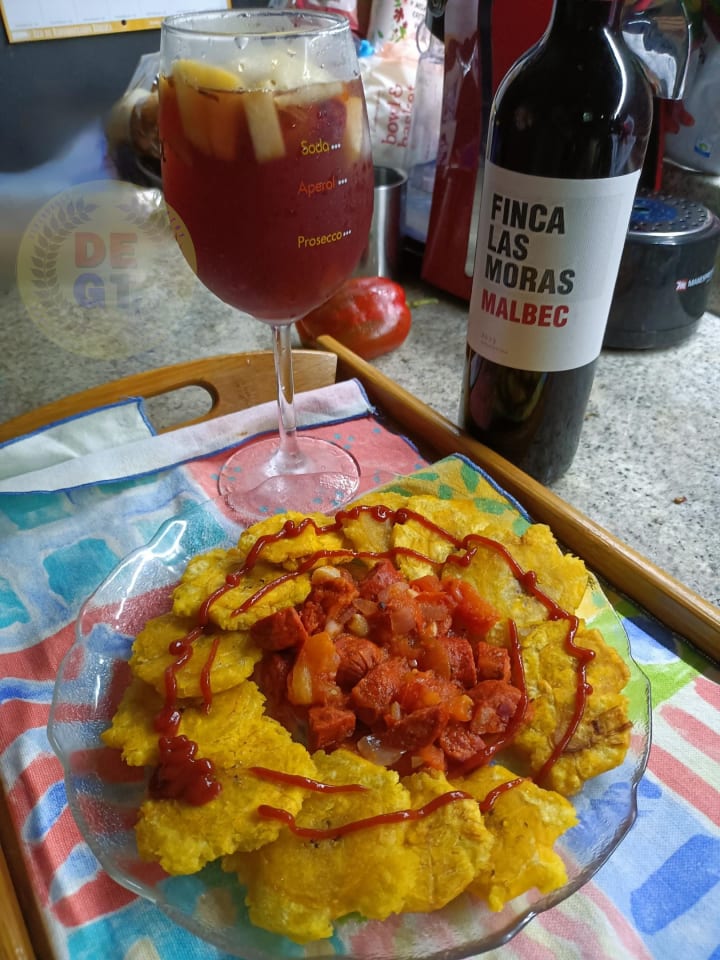
In Panama, fried squashed plantains are called "Patacones". They are delicious when made properly. This is a typical side dish in Panamanian cuisine, but we added the sausage instead of cheese to melt on top. This time, we accompanied the dish with a "spiked" sangria I talked about in another article.
Latin-Americans will certainly recognize the plantains, and probably some people in Southeast Asia. However, what is this substance we refer to as "patacones"?
Meet the "Patacones"
No, these are not fried bananas (the fruit), they are fried plantains. So, let's make some!
First, take two green (or slightly less than green but not ripe!) plantains and peel them. Then cut them in cylindrical slices that are around 1 cm. thick and add salt to them. Although I have not tried it, I think it would be good with chili and salt.
Now put on the stove a medium frying pan with oil (about ½ cm. deep), enough to cover them. Then let the oil get hot.
Once the oil is hot, carefully lie the plantain slices into the frying oil. Be careful not to splash yourself with hot oil. You can accomplish this in batches, since timing is important.
This first phase is only for a short time, only a few minutes. When you observe their color change from white to yellow, it is imperative to remove them from the oil and place them on a napkin that will absorb the oil.
Once they are not too hot to handle, you take them one by one and squash them as thin as you can. You can use two pieces of hard wood, the bottom part of a bottle, or whatever you see fit. The important thing is that each "patacon" (plantain slice) is squashed and spread as you see them in the plate. They aren't completely cooked yet, but they should still feel soft.
We are not done yet! (a helping hand is good, like your wife, girlfriend, husband, boyfriend, etc.). It's time for the 2nd phase.
Now take each of the yellow squashed plantains, and throw them again into the hot oil. You might have let your helper squash the second batch while you squashed the first one.
At this point, you are going to fully fry the SQUASHED plantains. They will cook easier because you make them thin. The thinner, the better, but not too thin that they would break.
Toss them to the other side to achieve even cooking. When they start acquiring a GOLDEN color, golden but NOT burnt!, you take them out of the oil again and into a large towel paper where they should release the oil. You can use a paper towel on top to remove more oil. The objective is to appreciate the plantains flavor, rather than its oil.
Serve them on a plate while they are still warm or hot, but not dripping oil. They should preferably be somewhat crunchy but without oil.
We used sausage, but the fried plantains go really well with a slice (portion) of yellow cheese on top. Add some extra salt if you wish. Alternatively, pour some Ketchup, but I prefer cheese.

Last but not least. If you like my diverse articles please do consider subscribing to my feed or as a Vocal+ member. Although you may use tipping here at Vocal, I am afraid that the banks in my country charge extremely high fees (they keep almost everything). Therefore, consider supporting my work (so that I can keep on) through PayPal donations or Buy Me a Coffee.

By the way, I recently joined Substack where you can subscribe for free articles.

I didn't get to fulfill my personal 2022 Vocal challenge, but maybe I can do it this year!
About the Creator
Lost In Writing
Engineer by birth with an inquisitive mind, genealogist, driven by logic & feeling. Traveled to 34 countries and worked for high tech companies in USA/Europe. Facebook & WhatsApp dissident. Privacy advocate. Lost in Writing™
Keep reading
More stories from Lost In Writing and writers in Feast and other communities.
Of Bottled wines & Cheap Sangria
Old Memories Many years ago, before the world turned into a frenzy of social media and bad influencers, my then girlfriend and I went on holidays to Blanes, Spain. During lunch, we had an unpleasant moment with one of the hotel waiters. When he learned I was Latin-American rather than European, he started screaming xenophobic insults at me. I guess he was ignorant of history; otherwise, he would have been aware of all the riches the Spanish stole from the new continent during the conquest, right?
By Lost In Writingabout a year ago in Proof
Flavorful Feast
The Chinese New Year's Eve dinner, or Nian Ye Fan, is more than just a meal—it’s a cherished tradition filled with symbolic dishes that represent wishes for prosperity, health, and good fortune in the coming year. These ten classic homestyle recipes are perfect for creating that special festive spread at home. They balance flavor, meaning, and tradition, ensuring your family table is both abundant and auspicious. Let's get cooking!
By yue . shui3 days ago in Feast
One Unchecked Box
"Republished" because it was the only way to add the embed for the newly recorded audio version of this story due to the Top Story badge. Plus it serves as a nice, informal announcement of the podcast's revival for another season (go subscribe!):
By Stephen A. Roddewig6 days ago in Fiction


Comments (2)
I love how cute this is! Food education is so underrated. I also love how many diverse niches you have taken on on Vocal! It's inspiring, really ❤️❤️❤️ [3/5]
well written