science
Your digital Food Lab; Feast explores the science of food, food production technology, the origin and future of the foods we eat.
A Yummy Mix
Ever wonder how your tasty treats are created? Many would say a baker. However, the answer is far more complex: It's merely a chemist. A chemist has the capability to make a series of chemical reactions into something beautiful. This is seen through chemical reactions that are displayed in the variety of reaction rates.
By Karen Gosal7 years ago in Feast
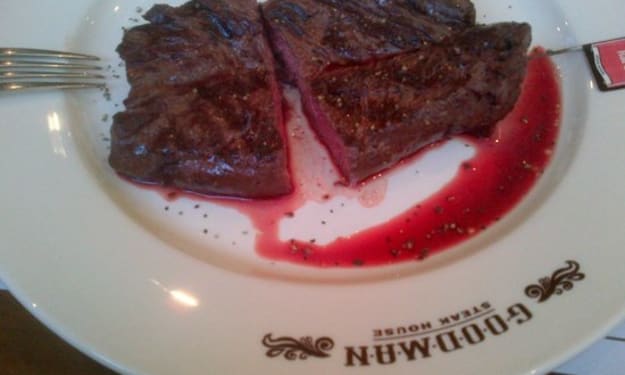
Is That Blood in My Steak?. Top Story - January 2018.
The short answer to this question is no. The reason why is as follows. Beefsteak is a type of steak commonly eaten, that can be served in a variety of different ways, including the way it can be cooked which are: raw, blue rare, medium rare, medium well-done, well-done.
By Matthew Harrison8 years ago in Feast
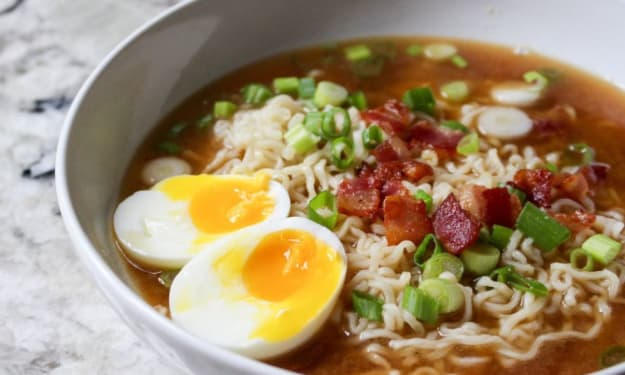
Are Ramen Noodles Bad for You?
We've all done it. College looming over our heads and food costs going up the budget and then getting rid of healthier options for the lovable snack called Ramen Noodles. But are these wonderful, vegan, cheap foods bad for you? I've been a fan of them my whole life but for the past 5 years I haven't consumed a single pack of these pre-processed noodles. But here's a look into what evidence is available and what the science says. Myth and fact will be debunked here and this will be my approach to the article. I will give you 5 major reasons why I left, and I think you should think over it too.
By Abdullah Masood8 years ago in Feast
You Are What You Eat
We have all heard that said to us as children, "You are what you eat." For most of us, when we hear this we pass it off as something our parents said to us simply to be annoying or perhaps even to induce feelings of guilt. Why else would we have the emergence of "guilt free foods"? However, what if the statement hold some truth? Surely an axiom as old as this, as with many others that have withstood the test of time, must have some truth to it and if it did what would be the implications today with regard to the meat industry and their products which we consume? May I suggest how frightening that potential could be?
By Carl Hamby8 years ago in Feast
The Color of a Flavor
If you went to your favorite restaurant and ordered your favorite meal, and it came out a different color, would you still eat it? What if it was a blue steak and green fries? According to Morgen Jahnke in “The Influence of Color on Taste Perception,” some participants in a 1970s study became ill when they found out they ate blue steak and green fries (2). Even though food coloring does not impact the taste of the food, many people will become physically ill at the thought of eating a food that has been artificially colored. Most people will also associate the food's color with a taste and claim the food has a different taste than it actually contains. The artificial colors of food prove to change taste perception without changing the actual taste. Artificial food coloring has impacted the human body for centuries.
By Taylar Mila-Marie8 years ago in Feast
The Truth About Bottled Water
In this day and age, where logos are virtually everywhere—from old-fashioned billboards to those annoying pop-up ads—there seems to be a significance in what we refer to as a "brand." What we call brands is really just a reputation tagged onto a few colors, a name, and a "look" (or style that all the products of that brand have in common).
By Gineva Kingsley8 years ago in Feast
Myths About Organic Farming
Organic food is the buzz word of the moment. It is supposed to be healthier and taste better than conventionally grown foods. Supermarkets are increasing their range of organic foods and many people are buying theirs directly from farms, box schemes, farms shops and farmers’ markets. There are a number of principles and standards that regulate how organic food is produced, covering such things as sustainability, animal welfare, additives and pesticides. Organic foods are said to have a number of benefits both for the consumer and the environment but are these claims true?
By Clare Scanlan9 years ago in Feast
How Will We Eat in the Future?
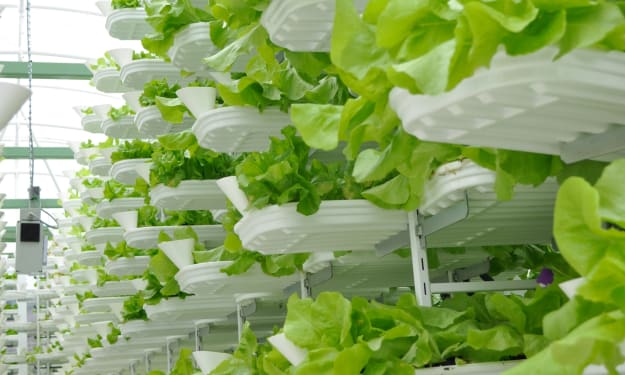
The world’s population is increasing. It’s projected to rise from 7.4 billion people in 2016 to 9.2 billion people in 2050. That’s 1.8 billion extra mouths to feed in a world where, even now, people often go hungry. What’s needed is a revolution in how our food is grown, delivered and prepared. By using technology to further advance crop and meat production, the human race could create a sustainable future for not only our planet but for generations to come.
By Jamie Sergeant9 years ago in Feast