
A Century Ahead: Peering into the World of 2125
A World of Paradoxes

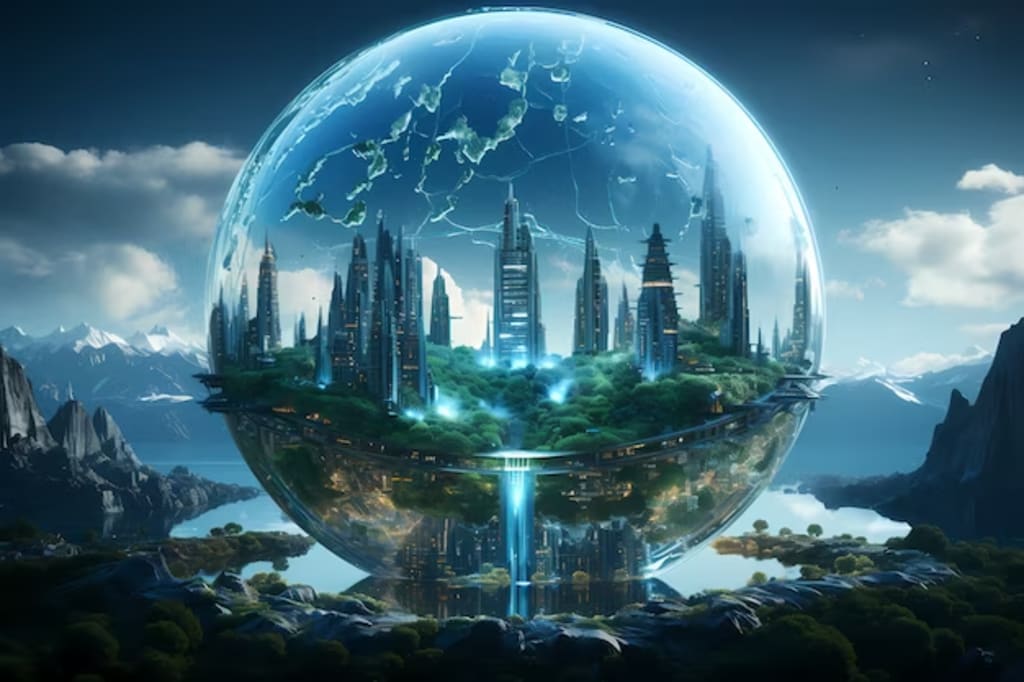
What will life be like a hundred years from now? It’s a tantalizing question, one that invites imagination and a careful examination of our trajectory. From stunning technological breakthroughs to possible ecological challenges, the world of 2125 could look and feel as alien to us as 1925 feels to our modern lives. Here’s a journey into the future, shaped by science, speculation, and a bit of wonder.
The Rise of the Ultra-Connected Civilization
By 2125, the internet will no longer be confined to devices—it will be woven into the very fabric of human experience. Neural interfaces, now a budding technology, will allow seamless connection between our brains and the digital world. Imagine thinking of a question and having the answer appear in your mind, or communicating with a loved one across the globe without speaking a word.
Holographic projections and augmented reality will replace screens and physical devices. Offices and classrooms may exist entirely in virtual environments, blurring the line between real and digital worlds. Humanity will live in what futurists call the "Metaverse 3.0," where work, play, and social interaction are fully integrated into immersive digital spaces.
A Planet in Recovery—or Decline
The future of Earth hinges on decisions made today. Optimistically, humanity might harness advanced green technologies to reverse climate change. Vertical farms will dominate cities, producing food efficiently while conserving land. Renewable energy sources—solar, wind, and perhaps fusion power—could supply most of the planet’s needs, leaving fossil fuels as a relic of the past.
However, if current trends persist, rising sea levels and extreme weather events could reshape coastlines and displace millions. Cities like New York and Tokyo might construct vast seawalls, while others may retreat inland. Climate refugees could become a defining demographic of the next century, prompting unprecedented global cooperation—or conflict.
Medicine and Longevity: The Quest for Immortality
The 2125 healthcare system may be unrecognizable. Gene editing, advanced prosthetics, and synthetic biology could eliminate most hereditary diseases and even reverse aging. Scientists might unlock the secrets of cellular regeneration, allowing humans to extend their lifespans by decades—or even centuries.
Personalized medicine will replace today’s one-size-fits-all approach. Medical nanobots could monitor and repair your body from within, preventing illness before symptoms arise. While this progress holds immense promise, it also raises ethical dilemmas. Who will have access to such life-extending technologies? Could society become divided into the “immortal elite” and the aging masses?
Interplanetary Expansion
A hundred years from now, humanity will likely call more than one planet home. Mars, the Moon, and perhaps even floating colonies on Venus could host thriving human settlements. Advanced spacecraft powered by ion drives or nuclear propulsion could shorten interplanetary travel from months to weeks.
Terraforming—a process of altering a planet’s environment to make it habitable—might be underway on Mars. Vast domes filled with breathable air and sprawling greenhouses will dot the red planet, representing humanity’s determination to conquer the cosmos. Meanwhile, asteroid mining could fuel Earth’s economy with abundant resources, including rare metals needed for advanced technologies.
Artificial Intelligence: Ally or Overlord?
Artificial Intelligence will likely surpass human cognitive abilities by 2125, becoming not just tools but partners—or rivals—in shaping the future. AI could manage global systems, predict natural disasters, and even design solutions to complex problems faster than any human.
Yet, with great power comes great responsibility. Will AI serve humanity, or will it decide its own fate? The next century may be defined by humanity’s ability to balance control and collaboration with these digital minds, ensuring they remain allies rather than adversaries.
The Cultural Revolution
Cultural boundaries may blur as technology brings the world closer together. Language barriers could vanish thanks to instant neural translation, enabling seamless communication between people of all backgrounds. Art, music, and literature might take on forms we can’t yet imagine, driven by collaboration between human creativity and AI innovation.
The definition of identity could also evolve. With the possibility of uploading consciousness to digital realms, the line between physical and virtual existence may fade. Who we are could become less about where we live or what we look like, and more about the ideas and experiences we share across the cosmos.
A New Era of Exploration and Discovery
Despite all the technological advancements, the human spirit’s thirst for discovery will remain unchanged. The oceans—still largely unexplored—may yield answers to mysteries about Earth’s origins and potential life-sustaining resources. Advances in quantum physics could open gateways to other dimensions or reveal new forces of nature.
A World of Paradoxes
The world of 2125 will be one of paradoxes: hyper-connected yet potentially more isolated, ecologically fragile yet technologically robust, more advanced yet grappling with ancient questions of ethics, equity, and meaning.
As we envision this future, one thing becomes clear: the choices we make today will echo through the centuries. Whether humanity thrives or falters, the next hundred years will undoubtedly be one of the most transformative periods in our history.
Will we rise to the challenges and opportunities of the future, or will we be remembered as the architects of our own decline? Only time will tell—but the journey promises to be nothing short of extraordinary.
About the Creator
Keep reading
More stories from Georgia M. and writers in Fiction and other communities.
The Ghost of an Ancient World Found Under Antarctica
Antarctica, the frozen continent at the bottom of the globe, is often associated with penguins, endless snow, and bone-chilling cold. Yet, beneath its thick ice sheet lies a hidden world—a "ghost world"—that offers tantalizing glimpses into an ancient past.
By Georgia M.about a year ago in Earth
On February Seventeenth, Look Up To The Sky
On February Seventeenth, Look Up To The Sky On the seventeenth of February there will be a change in the light.They are calling it an annular solar eclipse, the Ring of Fire. The Moon will pass in front of the Sun, not large enough to cover it completely. There will be no full darkness. Just a bright circle left burning in the sky. I will stand in the field at the edge of town when it begins.
By Marie381Uk a day ago in Fiction
If You Write A Book, Don’t Tell Anyone
There are days when I’m grateful Amazon doesn’t tell me specifically who has bought my book and who hasn’t. If they did, I would be heartbroken when I read the list and noticed all the important names in my life were not on my list of customers.
By Ellen Frances7 days ago in Writers



Comments
There are no comments for this story
Be the first to respond and start the conversation.