
Australia Private Equity Market: Strategic Capital, Business Transformation & Long-Term Value
How deal activity, portfolio optimization and investor confidence are shaping Australia’s private equity landscape
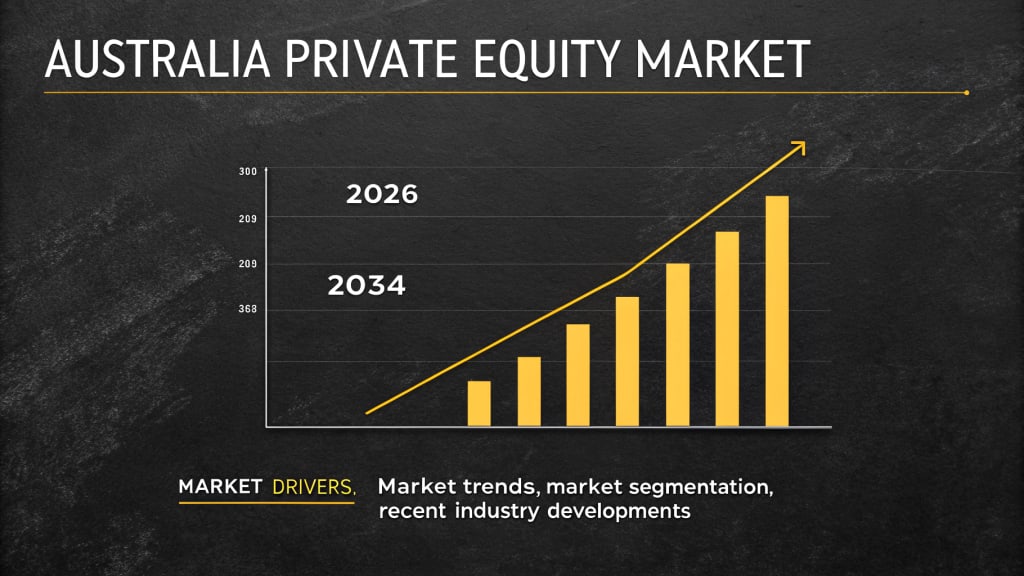
According to IMARC Group, the Australia private equity market reached a size of USD 23.9 Billion in 2025 and is projected to expand to USD 48.5 Billion by 2034, growing at a compound annual growth rate (CAGR) of 8.21% during 2026–2034. This robust growth outlook reflects the rising importance of private equity as a strategic source of long-term capital for business expansion, restructuring and value creation across Australia. As public markets become more volatile and capital efficiency takes center stage, private equity firms are increasingly viewed as active partners rather than passive financiers. The Australian private equity landscape is evolving through higher buyout activity, expanding venture capital participation and increasing exposure to infrastructure, real estate and technology assets. Supported by improving investor confidence and a maturing deal ecosystem, the market is transitioning into a critical pillar of Australia’s broader investment and corporate transformation framework.
Why Should Smart Buyers and Investors Know About the Australia Private Equity Market?
Strong Growth and Attractive Return Potential
With a projected CAGR of 8.21%, private equity represents one of the faster-growing segments of Australia’s investment landscape.
Strategic Role in Business Transformation
Private equity firms play a critical role in driving operational improvements, digital adoption and strategic repositioning across portfolio companies.
Portfolio Diversification Benefits
Exposure to private equity offers diversification away from public markets, enhancing risk-adjusted returns for institutional and high-net-worth investors.
Expanding Opportunities Across Multiple Sectors
From technology and healthcare to infrastructure and real estate, private equity enables targeted exposure to high-growth and resilient sectors.
Alignment With Long-Term Capital Trends
The market aligns closely with long-term investment themes such as sustainability, innovation and infrastructure modernization.
Recent Trends & Developments in the Australia Private Equity Market
April 2025:
Private equity firms increased exposure to infrastructure and energy transition assets, reflecting long-term demand for sustainable and resilient investment opportunities.
December 2024:
Several mid-market buyout transactions highlighted growing appetite for operational turnaround strategies and technology-enabled efficiency improvements.
August 2024:
Global investors expanded allocations to Australian private equity funds, citing regulatory clarity, stable governance and attractive risk-adjusted returns.
The Australia private equity market is emerging as a central force in shaping the country’s corporate and investment future. Supported by strong IMARC growth projections, rising institutional participation and expanding sector coverage, private equity is redefining how capital is deployed for long-term value creation. As businesses seek strategic partners capable of navigating complexity and accelerating transformation, private equity firms are uniquely positioned to bridge capital, expertise and execution. Looking ahead, the market’s evolution will be driven by sustainable investing, technology-enabled decision-making and deeper integration with corporate strategy. For investors, fund managers and business leaders, Australia’s private equity sector represents not merely an alternative asset class, but a forward-looking engine of innovation, resilience and long-term economic growth.
Australia Private Equity Market Vision 2050
1. Deeper Integration With Corporate Strategy
By 2050, private equity is expected to be more deeply integrated into corporate growth planning, acting as a long-term transformation partner rather than a short-term capital provider.
2. Increased Focus on Sustainable and Responsible Investing
Environmental, social and governance (ESG) considerations will become central to deal sourcing, due diligence and portfolio management, influencing capital allocation and valuation decisions.
3. Technology-Driven Deal Sourcing and Execution
Advanced analytics, artificial intelligence and data-driven tools will increasingly support deal identification, risk assessment and portfolio optimization, improving decision-making efficiency.
4. Broader Sector Diversification
Private equity investment will continue expanding beyond traditional industries into renewable energy, digital infrastructure, healthcare services and advanced manufacturing.
5. Longer Investment Horizons and Patient Capital
Future private equity strategies are expected to favor longer holding periods, prioritizing sustainable value creation over short-term financial engineering.
What Are the Key Growth Drivers in the Australia Private Equity Market?
Rising Demand for Buyout and Growth Capital
Australian companies across mid-market and large-cap segments are increasingly turning to private equity for buyout financing, growth acceleration and succession planning. Private equity firms offer strategic capital combined with operational expertise, enabling businesses to scale efficiently in competitive markets.
Expansion of Venture Capital and Innovation Funding
Venture capital investments are becoming a stronger component of the private equity ecosystem, driven by innovation in technology, fintech, healthcare and digital services. Early-stage and growth-stage funding continues to attract both domestic and global investors seeking exposure to high-growth sectors.
Infrastructure and Real Asset Investment Momentum
Infrastructure, energy transition and real estate assets are gaining prominence within private equity portfolios. Long-term cash flow stability, inflation hedging and government-backed projects make these asset classes increasingly attractive for institutional investors.
Portfolio Optimization and Active Value Creation
Private equity firms are adopting more hands-on portfolio management strategies, focusing on operational improvement, digital transformation and cost optimization. This active ownership model is enhancing exit outcomes and long-term returns.
Strong Institutional and Global Investor Participation
Superannuation funds, pension investors and global private equity firms are increasing allocations to Australian assets, supported by regulatory stability, transparent governance frameworks and favorable long-term economic fundamentals.
About the Creator
Keep reading
More stories from Shrestha Roy and writers in Futurism and other communities.
Australia Meat Market: Protein Demand, Consumer Preferences & The Future of Food Supply
According to IMARC Group, the Australia meat market was valued at USD 29.15 Billion in 2025 and is projected to reach USD 34.39 Billion by 2034, growing at a compound annual growth rate (CAGR) of 1.85% during 2026–2034. While this growth rate reflects a relatively mature market, it underscores the continued structural importance of meat within Australia’s food system. The sector remains a cornerstone of domestic nutrition and a critical contributor to agricultural exports, even as consumer expectations, sustainability pressures and dietary awareness reshape demand patterns. Traditional meat categories such as beef, poultry and lamb continue to dominate consumption, but purchasing decisions are increasingly influenced by quality, provenance, ethical sourcing and environmental impact. As food security, climate responsibility and evolving consumer lifestyles gain prominence, the Australia meat market is transitioning from a scale-driven industry toward a value-focused, innovation-led protein ecosystem across Australia.
By Shrestha Royabout 11 hours ago in Futurism
Plant-Based Beverages Market: Rising Popularity and Growth of Almond, Soy, and Oat Milk
According to IMARC Group's latest research publication, The global plant-based beverages market size was valued at USD 33.17 Billion in 2024. The market is projected to reach USD 62.12 Billion by 2033, exhibiting a CAGR of 7.16% from 2025-2033.
By Suhaira Yusuf2 days ago in Futurism




Comments
There are no comments for this story
Be the first to respond and start the conversation.