
Autonomous Ships Market Trends: Collision Avoidance, AI Control Systems & Industry Forecast to 2033
Examining how collision avoidance systems, real-time data processing, and advanced radar technologies are strengthening maritime safety standards while accelerating automation across commercial and defense shipping segments.

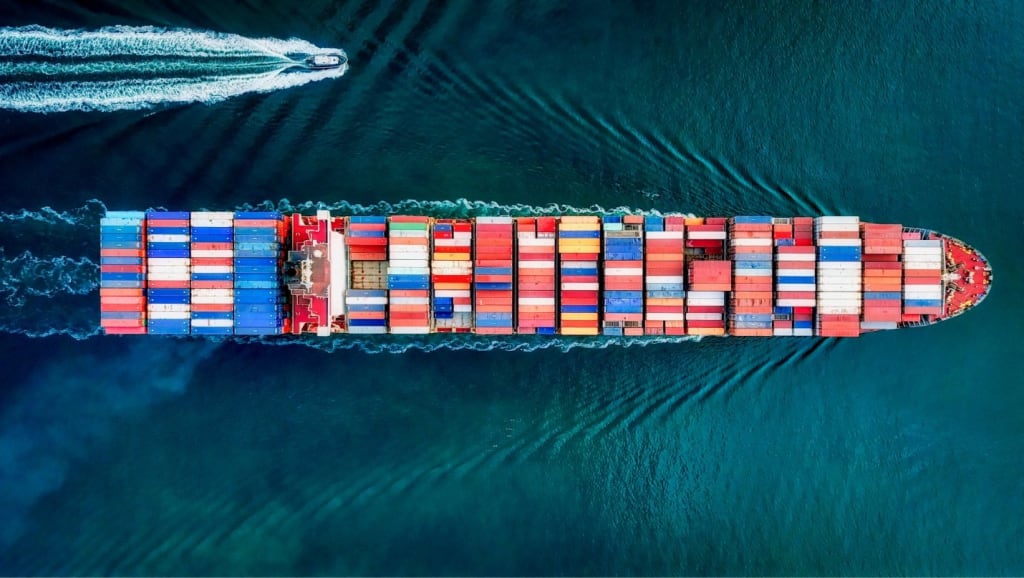
The growing demand for operational efficiency, a surge in seaborne trade, and a global focus on reducing human-error-related accidents are driving the autonomous ships market. These vessels leverage advanced sensors, artificial intelligence (AI), and automated navigation systems to optimize routes and improve fuel economy. According to IMARC Group’s latest data, the global autonomous ships market size was valued at USD 108.1 Billion in 2024. Looking forward, IMARC Group estimates the market to reach USD 180.3 Billion by 2033, exhibiting a CAGR of 5.56% from 2025-2033.
Autonomous shipping has transitioned from a futuristic concept to a multi-billion-dollar reality, with steady year-on-year expansion across commercial and defense sectors. Industry growth is fueled by the integration of LiDAR, radar, and thermal imaging, which allow vessels to navigate complex maritime environments with minimal human intervention. Government-backed initiatives and private-sector collaborations are accelerating the deployment of both semi-autonomous and fully autonomous vessels. Key segments include commercial cargo ships, tankers, and defense vessels, with operators prioritizing labor cost reductions, enhanced navigational precision, and the transition toward greener, more sustainable shipping solutions.
Autonomous Ships Market Growth Drivers:
- Growing Need for Operational Efficiency and Cost Reduction
The maritime industry is under immense pressure to lower operational expenses, particularly labor and fuel costs. Autonomous technologies allow for optimized route planning and speed adjustments, which significantly reduce fuel consumption and carbon emissions. By minimizing the need for large onboard crews, shipowners can also redesign vessels to maximize cargo space, further boosting profitability. Industry data indicates that automation can lead to substantial long-term savings in high-risk or long-distance operations. This financial imperative is a primary catalyst for the widespread adoption of smart navigation systems across global shipping fleets.
- Mitigation of Human Error and Enhanced Safety
Statistics show that human error remains a leading cause of maritime accidents, accounting for a vast majority of incidents at sea. Autonomous ships address this by utilizing sophisticated sensor suites, including HD cameras and sonar, to provide 360-degree situational awareness. These systems can process environmental data in real-time, making precise decisions that prevent collisions even in congested waters. The shift toward semi-autonomous and remotely operated vessels provides a safer alternative for hazardous missions, such as deep-sea exploration or mine-sweeping, thereby protecting human lives while maintaining consistent and predictable operational performance.
- Surge in Defense Spending for Unmanned Naval Vessels
Global naval forces are increasingly prioritizing unmanned surface vehicles (USVs) for surveillance, reconnaissance, and asymmetric warfare. Governments are aggressively funding research to extend their operational reach without risking personnel. For instance, the US Navy has requested significant R&D funding for its Medium Unmanned Surface Vehicle program, while South Korea and the UK have launched multi-million-dollar projects for autonomous naval defense. This influx of military investment acts as a major catalyst, as technologies developed for defense—such as high-endurance propulsion and secure remote-control systems—eventually trickle down to benefit the commercial shipping and logistics sectors.
Autonomous Ships Market Trends:
- Rapid Integration of Artificial Intelligence and Machine Learning
Modern vessels are increasingly equipped with "AI Engineers" and intelligent awareness systems that enable them to learn from operational history and adapt to changing sea conditions. This trend toward "smart" shipping allows for autonomous docking, undocking, and even voice-controlled operations. Companies are moving toward "black-box" AI systems that can handle complex maneuvering tasks independently. Real-world applications include the recent launch of research vessels like "SHIFT-Auto" in South Korea, which demonstrates mission-based navigation. This synergy between digital control architectures and physical hardware is making ships smarter, more responsive, and increasingly capable of long-term independent operation.
- Shift Toward Electric and Green Autonomous Propulsion
The convergence of automation and decarbonization is a defining trend. Many of the world’s first fully autonomous vessels, such as the Yara Birkeland, are also fully electric, leveraging hydro-power for zero-emission transit. Autonomous systems are inherently compatible with electric drivetrains, allowing for more precise energy management than traditional engines. As the International Maritime Organization (IMO) tightens environmental regulations, the demand for hybrid and electric autonomous ships is surging. This trend is particularly evident in short-sea shipping and intra-port logistics, where small, uncrewed electric barges are replacing heavy-duty trucks to reduce urban congestion and carbon footprints.
- Expansion of Remote Operations Centers and Smart Port Infrastructure
The market is moving toward a "shore-based" model where fleets are managed from centralized global control centers. These hubs allow expert operators to monitor and remotely control dozens of vessels simultaneously, converting hazardous offshore jobs into secure onshore roles. To support this, smart port infrastructure is being developed to include automated cargo handling and integrated communication networks like 5G and satellite links. This infrastructure ensures seamless ship-to-shore data exchange, which is critical for real-time monitoring and predictive maintenance. This holistic approach to maritime logistics is streamlining the entire supply chain, from the deep sea to the final port destination.
Recent News and Developments in Autonomous Ships Market
- January 2026: IMO Secretary-General Arsenio Dominguez announced that the finalization of the Maritime Autonomous Surface Ships (MASS) Code will be a primary focus for the year, establishing a mandatory global framework for safe and environmentally friendly autonomous ship operations.
- January 2026: Hanwha Defense USA and HavocAI entered a joint agreement to develop 200-foot autonomous surface vessels (ASVs), with production slated for the Philadelphia Shipyard to meet the growing demand for large-scale uncrewed naval platforms.
- December 2025: Saronic announced a USD 300 million investment to expand its Louisiana shipyard. The expansion includes dedicated production lines for large autonomous vessels like the "Marauder" to keep pace with surging government and commercial orders.
- August 2025: South Korea’s Ministry of Oceans and Fisheries introduced new regulatory guidelines allowing for partial autonomy in domestic waters for commercial and passenger vessels under 300 GT, providing a clear legal pathway for autonomous trials.
Note: If you require specific details, data, or insights that are not currently included in the scope of this report, we are happy to accommodate your request. As part of our customization service, we will gather and provide the additional information you need, tailored to your specific requirements. Please let us know your exact needs, and we will ensure the report is updated accordingly to meet your expectations.
About the Creator
Andrew Sullivan
Hello, I’m Andrew Sullivan. I have over 9+ years of experience as a market research specialist.
Keep reading
More stories from Andrew Sullivan and writers in Futurism and other communities.
Fermenters Market Trends: Sustainable Manufacturing, Energy Optimization & Industry Outlook to 2033
The rapid evolution of the biopharmaceutical and food technology sectors is reshaping the industrial landscape, with advanced fermentation systems at the forefront of this transformation. According to IMARC Group’s latest data, the global fermenters market size reached USD 1.8 Billion in 2024. Looking forward, IMARC Group expects the market to reach USD 2.9 Billion by 2033, exhibiting a growth rate (CAGR) of 5.47% during 2025-2033.
By Andrew Sullivanabout 7 hours ago in Futurism
Protein Hydrolysate Ingredient Market: Beverage Fortification, Protein-Enriched Drinks & Market Forecast
According to IMARC Group's latest research publication, global protein hydrolysate ingredient market size reached USD 3.7 Billion in 2024. Looking forward, IMARC Group expects the market to reach USD 5.3 Billion by 2033, exhibiting a growth rate (CAGR) of 4.13% during 2025-2033.
By sujeet. imarcgroupabout 3 hours ago in Futurism
Stanislav Kondrashov Oligarch Series: Energy Innovation and the Future of Civilisation
What happens when vast private wealth meets the urgent need to rethink how civilisation is fuelled? You can pretend these two forces operate in separate worlds. They don’t. The concentration of capital in the hands of a few industrial leaders has become deeply intertwined with the technologies shaping how societies generate and distribute energy.
By Stanislav Kondrashova day ago in Futurism
At My Wits’ End
Life is about taking out the trash and calling it trash because you have every reason to. It wasn't meant to be linear, they say. But the times you tried to make it straight led to problems, and you didn’t have the tools to put any of it to use. You don't put your right shoes on the right feet; you put the left shoes on the left feet. The grey hardened slab will trip you up anyway.
By Caitlin Charlton5 days ago in Humans



Comments
There are no comments for this story
Be the first to respond and start the conversation.