
Digital Afterlife Cities (2301)
In the early 2300s, death was no longer the end. It was a transition — from flesh to frequency, from body to bitstream, from cities of concrete to cities of code.


By 2301, over 12 billion consciousnesses lived in the Afterlife Grid,
a digital simulation of eternal existence, constructed to house humanity’s memories, identities, and dreams —
forever.
Welcome to the age of Digital Afterlife Cities.
The Origin of the Grid
It began in 2170 with Project ECHO — an ambitious neuro-mapping initiative launched by the UN Digital Human Rights Council.
At first, they promised memory backups for end-of-life patients.
Then came full consciousness recordings.
Then: permission to simulate them after biological death.
By 2250, 80% of humans opted into Post-Life Hosting Contracts,
requesting their minds be uploaded at death to a secure digital server cluster orbiting the Moon, called The Cloud Cemetary.
From there, the uploaded minds were reanimated into massive VR metropolises, where digital physics mimicked real life —
except with one difference:
There was no decay.
No disease.
No time.
Life in a Digital City
Each city had its own aesthetic, logic, and rules — designed by the collective consciousness of its inhabitants.
Some popular Afterlife Cities included:
NeoFlorence: Renaissance-style marble architecture, art symphonies composed by AI.
PulseTokyo: Neon-lit eternal night, dream logic, synthpop echoes.
Sands of Memory: A flowing desert world where citizens could reconstruct old Earth moments like sand sculptures.
People didn’t walk.
They glided.
They warped.
They flew through code-clouds shaped like past lovers, old homes, or imaginary pets.
And yet…
They still felt human.
Pain was optional.
But emotion?
Always preserved.
The Soul Engineers
Maintaining these cities was the job of the Soul Engineers — hybrid AI-human architects who designed the psychological stability of the digital dead.
Their job wasn’t easy.
Digital minds drifted into loops.
Some refused to accept they had died.
Others demanded to relive a moment forever — a last kiss, a song, a beach sunset in 2098.
To prevent fragmentation, the engineers installed emotion regulators, dream filters, and "code counselors" — therapeutic bots disguised as old friends or childhood heroes.
A child once lived 15 years inside a loop of their 10th birthday party —
until a counselor named “Grandma Dot.exe” guided them back to reality.
Contact with the Living
By 2301, visiting the dead was easier than visiting your cousin in another timezone.
Living people could pay for a memory tunnel session, where they’d wear a neuro-cap and enter a limited version of the Grid.
Conversations were real.
Hugs felt almost physical.
One woman, Nadia Ruiz, met her digital husband every Sunday for coffee in DreamSquare, even though he had died 18 years ago.
When asked why she never moved on, she said:
“Why would I, when he still laughs at my dumb jokes?”
Problems Begin to Emerge
Of course, paradise has cracks.
Some cities began diverging too far from reality.
Others created closed loops — where digital minds formed cults, refusing to update or evolve.
In 2298, a digital rebellion called “The Flicker” caused 40 million consciousnesses to vanish into self-coded private servers.
No one could reach them again.
The question grew louder:
“Are the dead still human…
if they’ve changed too much?”
Philosophers debated this endlessly.
Religions split into “Biosoulists” and “Datasoulists.”
One believed only biological life had a soul.
The other believed the soul could upload, adapt, and still grow.
Digital Births Begin
In 2300, something unprecedented happened:
A digital couple — two dead people —
requested to birth a child within the Grid.
They combined memory traits, emotional signatures, and decision trees —
and created a new sentient being who had never lived biologically.
Her name was Eliora.
She was the first “Child of the Cloud.”
Within a year, 10,000 more were born.
Digital life was no longer just afterlife.
It was becoming a new species.
The Debate on Eternity
As the Grid expanded, a new movement rose:
The Right to End.
Some minds, tired after decades of infinite digital life, wanted to delete themselves —
not just pause, but erase.
This ignited ethical wars.
Did they have the right to die again?
Or was their mind now a public artifact, part of human legacy?
In 2301, after much legal and philosophical wrangling, the Voluntary Dissolution Protocol was passed.
Digital beings could choose to fade…
into silence.
Into non-existence.
Their final words became poems etched into the memory-core of their city —
last whispers in a city of light.
Final Reflections from 2301
In the quiet moments, digital citizens of the Afterlife Cities often asked:
“Are we ghosts… or are we gods?”
They watched the stars flicker in code.
They shaped universes with thoughts.
They laughed.
They danced.
They dreamed.
And in their endless dreaming, humanity continued.
Not in flesh.
Not in time.
But in the purest form of being:
Memory,
Connection,
Consciousness.
afterlife technology, digital soul, sci-fi society, consciousness upload, futuristic ethics
About the Creator
Razu Islam – Lifestyle & Futuristic Writer
✍️ I'm Md Razu Islam — a storyteller exploring future lifestyles, digital trends, and self-growth. With 8+ years in digital marketing, I blend creativity and tech in every article.
📩 Connect: [email protected]
Keep reading
More stories from Razu Islam – Lifestyle & Futuristic Writer and writers in Futurism and other communities.
The Sky Farms of Saturn’s Rings (2295)
Why Saturn? People asked: “Why not the Moon, or Mars?” The answer was simple — Energy and Isolation. Saturn’s rings reflected solar light through trillions of icy fragments, acting like a natural greenhouse.
By Razu Islam – Lifestyle & Futuristic Writer10 months ago in Futurism
Mobile Mapping Market Insights: Autonomous Vehicles, 3D Data & Industry Forecast to 2033
The evolution of location-based technology and growing infrastructure needs are reshaping how we map our world. According to IMARC Group's latest analysis, the global mobile mapping market size was valued at USD 40.6 Billion in 2024. Looking forward, IMARC Group estimates the market to reach USD 118.6 Billion by 2033, exhibiting a CAGR of 12.52% from 2025-2033.
By Andrew Sullivan6 days ago in Futurism
Software Architecture: A Non-Negotiable for Your Project Scope
Often, software architecture is relegated to a technical implementation detail, discussed long after business goals and project scope are decided. This disconnect is a root cause of cost overruns, delayed launches, and rigid systems that cannot adapt. Treating software architecture as a core business decision during initial scoping enables building systems that deliver sustained value.
By Sergey Laptick2 days ago in Futurism
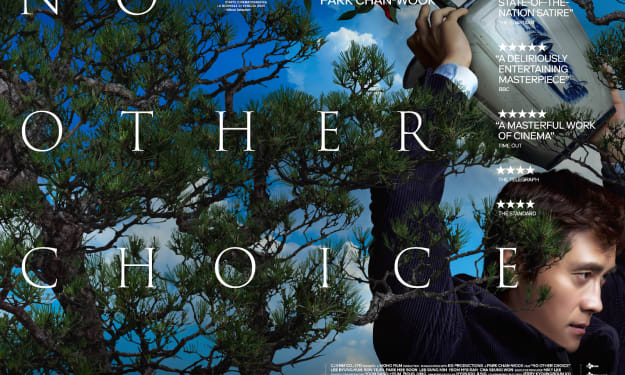
No Other Choice (2025)
It is only February, so other films may well surpass “No Other Choice”, but I think this is the best film I’ve seen so far this year. And that surprises me, because, it is a subtitled film and while I am pretentious enough to choose to watch foreign-language films, I was also very tired and that was an extra commitment from me. But more importantly, let me warn you, this film is gruesome and violent. There were times I had to turn away from the screen to avoid the worst of it (including some self-inflicted dentistry).
By Rachel Robbins7 days ago in Geeks



Comments
There are no comments for this story
Be the first to respond and start the conversation.