
Egypt Aquafeed Market Analysis: Industry Overview, Key Players & Growth Outlook
How Rising Aquaculture Investments Are Driving Growth in the Egypt Aquafeed Market

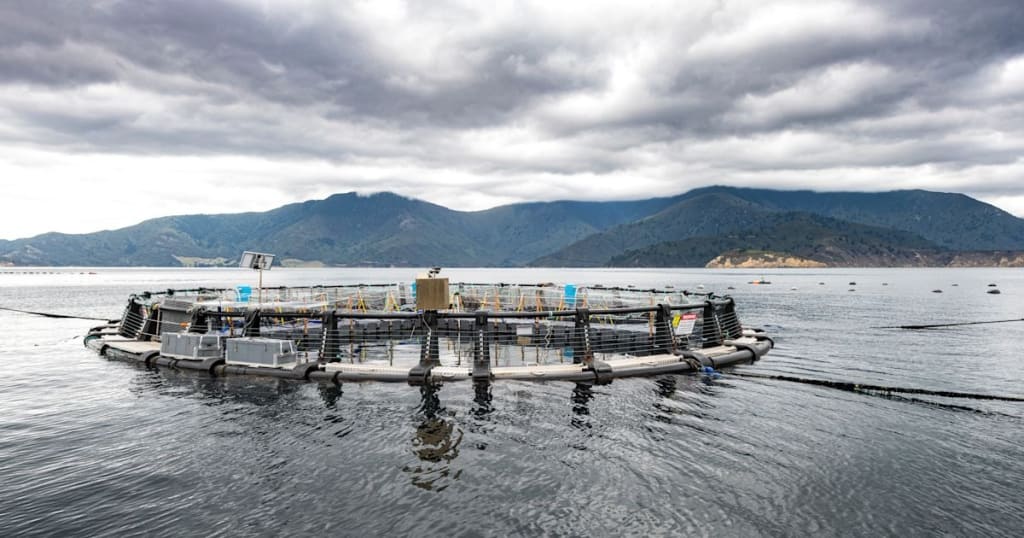
According to IMARC Group's latest research publication, the Egypt aquafeed market size reached 2.2 Billion Tons in 2024. The market is projected to reach 5.0 Billion Tons by 2033, exhibiting a growth rate (CAGR) of 8.5% during 2025-2033.
How AI is Reshaping the Future of Egypt Aquafeed Market
- Precision Feeding Systems & Waste Reduction: AI-powered automated feeders calculate exact feed requirements based on fish count and water temperature, significantly reducing unconsumed feed and ammonia levels while improving farm profitability and water quality.
- Real-Time Water Quality Monitoring: IoT sensors integrated with machine learning continuously track oxygen, pH, and temperature levels, enabling farmers to maintain optimal conditions and prevent disease outbreaks through early detection of environmental changes.
- Predictive Feed Formulation: Advanced algorithms analyze species-specific nutritional needs, growth patterns, and environmental data to optimize feed composition, improving feed conversion ratios and reducing reliance on expensive fishmeal while maximizing sustainable protein sources.
- Disease Detection & Health Management: Computer vision systems monitor fish behavior patterns and identify health anomalies early, allowing farmers to adjust feeding strategies and implement preventive measures before disease spreads across ponds.
Download a Free Sample Report Featuring Updated Market Data
How Vision 2030 is Revolutionizing Egypt Aquafeed Industry
Egypt's Vision 2030 has transformed aquaculture into a cornerstone of food security strategy, with the Ministry of Agriculture targeting 3 million metric tons of fish production annually. The government's focus on sustainable aquaculture development has catalyzed massive infrastructure investments, including mega-projects like Al Fayrouz (targeting 13,000 MT annually) and Ghalyoun Fish Farming Project (13,800 MT annually), each equipped with 150,000 MT-capacity feed factories, veterinary units, and training centers. As Africa's aquaculture leader—contributing 67% of the continent's total output—Egypt leverages Vision 2030 to expand intensive farming systems, recirculation technologies, and extruded feed adoption. Government support through GAFRD (General Authority for Fish Resources Development) provides subsidies, technical training programs, and biosecurity measures that have helped shift 90% of production to high-quality extruded feeds. With Egypt's population projected to reach 117 million, aquaculture supplies 80% of domestic fish needs while supporting 300,000 jobs, positioning the sector as vital for economic diversification and nutritional security under Vision 2030's sustainability framework.
Egypt Aquafeed Market Trends & Drivers:
The explosive growth of Egypt's aquaculture sector is fueling unprecedented demand for specialized feed formulations as production jumped from 1.37 million tons to over 2 million tons in recent years. As the seventh-largest global aquaculture producer and third in tilapia production, Egypt's fish farming dominates Africa with Nile tilapia representing the cornerstone species due to its tolerance to high-density systems, rapid growth rates, and affordable production costs. The sector's demand for aquafeed reached 1.3 million metric tons and continues climbing as intensive farming replaces traditional methods. Egypt's 119 privately-owned feed mills—producing 95% of domestic feed needs—have shifted dramatically from conventional pellets to extruded feeds, which now represent 90% of production thanks to superior digestibility and floating properties that enable better feed management. Rising consumer preference for protein-rich diets, coupled with population growth approaching 117 million people, drives continuous expansion as fish provides 25.3% of average household protein intake across Egypt's coastal cities and Northern Delta regions.
Innovation in feed technology and ingredient sourcing is reshaping cost structures and sustainability practices across Egyptian aquaculture. Soybean meal dominates formulations at 35-40% of feed composition, displacing expensive fishmeal (now only 5-22%) while maintaining nutritional quality for tilapia and other species. Egypt relies heavily on U.S., Ukrainian, Argentinian, Uruguayan, and Brazilian soybean imports, with crushing capacity expanding to meet the projected 260,000 MT soybean meal demand. Technological adoption has accelerated through extruded feed production by approximately 20 specialized companies, offering farmers higher yields through improved feed conversion ratios and reduced waste. Major international players including Skretting, Aller Aqua, Cargill, New Hope, and De Heus have established Egyptian operations, bringing global R&D expertise, specialized formulations for different growth stages, and functional diets that support fish immunity during challenging summer conditions. These companies invest in locally-tailored products—from starter feeds for first-feeding fry to grower and finisher formulations—addressing Egypt's unique climate and farming systems.
Government initiatives and mega-project development are accelerating sector transformation while addressing critical sustainability challenges. Egypt's plan to expand mariculture along Mediterranean and Red Sea coastlines targets high-value species like sea bass, sea bream, and mullet, diversifying beyond freshwater tilapia dominance. The shift toward hatchery-based aquaculture from wild seed collection—which currently accounts for 34% of production valued at USD 1.476 billion—aims to improve biosecurity, genetic quality, and long-term sustainability. Climate resilience programs combat water scarcity through In-Pond Raceway systems that maximize returns per water unit while removing organic waste efficiently, contributing to higher fish growth rates and survival. WorldFish's Abbassa facility serves as Africa's research hub, advancing GIFT tilapia genetics and providing training to thousands of farmers on best management practices. Despite challenges from water competition, input cost volatility, and climate impacts like coastal flooding, Egypt maintains its trajectory through intensive farmer training, improved processing capacity, and partnerships with international organizations supporting innovation in renewable energy integration, disease management, and sustainable feed alternatives.
Egypt Aquafeed Market Industry Segmentation:
The report has segmented the market into the following categories:
Breakup by Species:
- Fish
- Carp
- Tilapia
- Catfish
- Sea Bass
- Sea Bream
- Mullet
- Others
- Molluscs
- Crustaceans
- Shrimp
- Others
- Others
Breakup by Ingredient:
- Soybean
- Fish Meal
- Corn
- Fish Oil
- Additives
- Antibiotics
- Vitamins and Minerals
- Antioxidants
- Amino Acids
- Enzymes
- Probiotics and Prebiotics
- Others
- Others
Breakup by Lifecycle:
- Starter Feed
- Grower Feed
- Finisher Feed
- Brooder Feed
Breakup by Form:
- Pellets
- Extruded
- Powdered
- Liquid
Breakup by Region:
- Alexandria
- Delta
- Suze Canal
- Greater Cairo and Upper North Region
- Asyut Region
- South Upper Region
Competitive Landscape:
The competitive landscape of the industry has also been examined along with the profiles of the key players being Aller Aqua Egypt (Aller Aqua Group A/S), Archer Daniels Midland Company, Bühler Group, Cargill Incorporated, Evergreen Egypt United, Five Star Feed Mills and Animal Produce Company, Koudiis Animal Nutrition B.V. (De Heus Voeders B.V.), New Hope Egypt Aquatic Technology Co. Ltd. (New Hope Liuhe Co., Ltd.), Skretting Egypt (Nutreco N.V) and Zeigler Bros. Inc.
Recent News and Developments in Egypt Aquafeed Market
- January 2025: Cargill announced a USD 50 million investment in aquafeed R&D globally, focusing on sustainable protein sources and probiotic-enhanced formulations that improve gut health and feed conversion ratios for farmed fish, benefiting markets like Egypt.
- September 2025: BioMar partnered with Innovafeed and Auchan to integrate insect protein into commercial shrimp feed on a large scale, demonstrating viable alternatives to wild-caught fish that reduce environmental impact while maintaining nutritional quality.
- 2025: Kafrelsheikh University researchers successfully developed and commercialized the Smart Feed Estimation Device (SFED) for tilapia farms, calculating precise feed requirements based on fish numbers and water temperature, significantly reducing waste and improving water quality across Egyptian operations.
- 2025: WorldFish's Soybean Excellence Center at Abbassa facility expanded AI-powered aquaculture training programs, equipping Egyptian farmers with nanotechnology applications and ICT-based feed additives that enhance nutritional content, disease prevention, and climate resilience in fish production.
Note: If you require specific details, data, or insights that are not currently included in the scope of this report, we are happy to accommodate your request. As part of our customization service, we will gather and provide the additional information you need, tailored to your specific requirements. Please let us know your exact needs, and we will ensure the report is updated accordingly to meet your expectations.
About the Creator
Abhay Rajput
I am working in market research company that provides market and business research intelligence across the globe.
Keep reading
More stories from Abhay Rajput and writers in Futurism and other communities.
Egypt Animal Health Market Analysis: Industry Overview, Key Players & Growth Outlook
According to IMARC Group's latest research publication, the Egypt animal health market size reached USD 116.97 Million in 2024. The market is projected to reach USD 157.81 Million by 2033, exhibiting a growth rate (CAGR) of 3.04% during 2025-2033.
By Abhay Rajput9 days ago in Futurism
Pea Starch Market Outlook: Plant-Based Ingredient Demand and Sustainable Food Growth Opportunities
According to IMARC Group's latest research publication, the global pea starch market size reached USD 151.4 Million in 2024. Looking forward, IMARC Group expects the market to reach USD 263.1 Million by 2033.
By James Whitman6 days ago in Futurism
Australia Natural Gas Market: Domestic Demand, LNG Exports & Infrastructure Investment
According to IMARC Group, the Australia natural gas market reached USD 34.46 Billion in 2025 and is projected to expand to USD 73.82 Billion by 2034, exhibiting a robust compound annual growth rate (CAGR) of 8.83% during 2026–2034. This strong growth reflects natural gas’s strategic role within the evolving energy framework of Australia. As the country balances decarbonization goals with energy security and industrial competitiveness, natural gas continues to function as both a critical domestic fuel source and a high-value export commodity. Sustained LNG demand, infrastructure modernization and growing industrial consumption are reinforcing the sector’s long-term outlook.
By Shrestha Roy2 days ago in Futurism



Comments
There are no comments for this story
Be the first to respond and start the conversation.