
Galaxy S26 Ultra: Samsung’s Next Flagship Aims to Shift the Smartphone Conversation
Leaks and early reporting suggest Samsung is moving from “bigger specs” marketing toward privacy-first design, agentic AI, and long-term value.

What Happened (Facts)
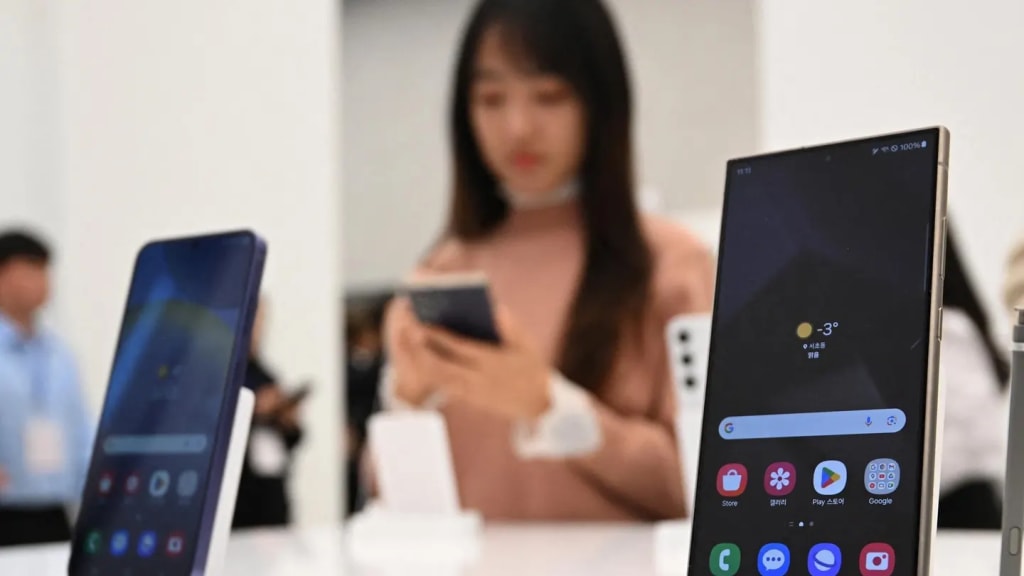
Samsung is expected to unveil the Galaxy S26 Ultra alongside the Galaxy S26 and S26+ at a Galaxy Unpacked event scheduled for next week, according to reporting circulating ahead of the launch. The framing around the S26 Ultra is less about chasing the biggest numbers (megapixels, brightness, raw clock speeds) and more about repositioning the phone as a stable, long-life “professional tool” that anchors Samsung’s ecosystem against rivals like Apple’s iPhone 17 Pro and Google’s Pixel 10 Pro.
Several hardware and platform changes are being discussed:
1) A design pivot toward a unified look.
The Galaxy S26 Ultra is expected to move away from the boxy, angular Ultra aesthetic inherited from the Galaxy Note era. Instead, Samsung reportedly wants the Ultra to align visually with the S26 and S26+, narrowing the visual gap between “consumer” and “professional” devices. The messaging implied here is that all three models are intended to be credible daily drivers for productivity, not that the Ultra is the only “serious” model.
2) Thicker choices in service of better fundamentals.
Rather than chasing thinness, Samsung is rumored to be prioritizing display efficiency and camera performance—two areas where physics often benefits from a bit more space. Reports mention use of an “M14” OLED panel and a thicker unified camera island, implying a strategy that values brighter, more efficient screens and better optical performance over fashion-forward slimness. There’s also chatter that a thin “Edge” variant may have been dropped, with poor sales cited as a reason.
3) Snapdragon 8 Elite Gen 5 for the Ultra.
An update to the reporting claims the Galaxy S26 Ultra will continue Samsung’s partnership with Qualcomm and use the Snapdragon 8 Elite Gen 5, potentially in an overclocked “For Galaxy” configuration (a pattern Samsung has used before). Leaked benchmark references (AnTuTu, 3DMark, Geekbench) are cited as showing improved performance and stability—though these are still pre-release signals rather than final retail behavior. The same reporting suggests the non-Ultra models could use Samsung’s Exynos 2600 in some markets.
4) A headline-grabbing “privacy filter” display feature.
One of the most discussed rumored features is a privacy display mode that obscures parts of the screen unless viewed straight on—an easily demonstrable feature that stands out more than background privacy controls like encryption, private DNS, or rotating MAC addresses. The idea is that privacy becomes visible and instantly understandable.
5) Galaxy AI evolves toward “agentic” workflows.
Samsung’s Galaxy AI suite is expected to remain central, but the reporting frames the next step as “agentic AI”—tools that can surface context and actions across the phone rather than living inside a single app. Features like “Now Brief” and “Now Bar” are cited as examples of Samsung already moving in this direction. The implication is that the phone becomes less “open app → do task → close app” and more “AI surfaces the task → you act immediately.”
6) Pricing and durability positioning.
The reporting suggests Samsung may keep the S26 Ultra’s price roughly level with the S25 Ultra while increasing the base pricing on the S26 and S26+. It also points to Samsung’s seven years of software and security updates and argues that slower charging (compared to some competitors) may be a deliberate long-term battery health strategy.
What Is Analysis (Interpretation)
This story is less about any single feature and more about a strategic reframe: Samsung appears to be trying to “redefine value” in a mature market where spec upgrades are increasingly incremental.
1) “Visible privacy” could become a new battleground.
Most smartphone privacy improvements are real but abstract. A privacy filter display is the opposite: it’s simple to explain, easy to demonstrate in a store, and instantly legible to non-technical buyers. If Samsung executes it well, competitors may feel pressure to respond—not necessarily with identical hardware, but with similarly “obvious” privacy features that can be marketed without a lecture.
2) Agentic AI changes phone behavior more than new cameras do.
Cameras improve every year, but the way you use the phone doesn’t always change. Agentic AI could—if it truly reduces app switching and turns the phone into a cross-app action layer. The risk is that “agentic” becomes a buzzword for a handful of notifications and widgets. The success metric won’t be demos; it’ll be whether users feel the phone proactively helps without becoming intrusive, inaccurate, or creepy.
3) On-device AI is both a privacy story and a reliability story.
Pushing more AI processing on-device isn’t just about keeping data local; it also reduces dependence on network quality and cloud latency. If the Snapdragon 8 Elite Gen 5 is powerful enough to handle more tasks locally, Samsung can position the S26 Ultra as faster, more private, and more consistent—especially for “always-on” assistant-like experiences.
4) A unified design language is a bet on ecosystem clarity.
By making the Ultra look less like a niche “Note successor,” Samsung may be trying to simplify the lineup: three phones, one story—productivity and longevity. That’s useful defensively in a crowded Android market and offensively against Apple, where the Pro branding is already cohesive. The tradeoff is that some Ultra buyers like the distinct identity; Samsung would be betting that cohesion matters more than cult aesthetics.
5) The biggest claims (“change smartphones forever”) are marketing-grade—until proven.
Even if all these moves are real, “forever” is a stretch. What could be lasting is the shift in priorities: away from annual spec flexing and toward privacy-as-a-feature, AI-as-a-workflow layer, and durability as the justification for seven-year support. If Samsung nails those, it won’t end smartphone competition—but it could force rivals to compete on a different axis than raw specs.
About the Creator
Keep reading
More stories from Behind the Tech and writers in Futurism and other communities.
Met Police Using Palantir AI to Flag Officer Misconduct
What Happened The Metropolitan Police has confirmed it is using artificial intelligence tools supplied by US data analytics company Palantir to analyse internal staff data in an effort to identify potential misconduct.
By Behind the Techabout 3 hours ago in Futurism
Smart Mobility and the Future of Urban Transportation
The City That Never Stood Still The city woke before the sun, as it always had. Buses coughed awake, motorcycles threaded through narrow lanes, and pedestrians hurried across crowded intersections. For decades, transportation had been a race against time—steel and rubber competing with human patience.
By CEO A&S Developers5 days ago in Futurism
Boundless
A geographical map could take you there. To the places I've been, to the sights I've seen, to the landscapes I've climbed. But no compass could point you in the direction of my memories. To the experiences I've lived, to the happiness I've felt, to the wonder I've held so close to my heart.
By Alyssa Mussoa day ago in Writers



Comments
There are no comments for this story
Be the first to respond and start the conversation.