
GCC Duty-Free Retailing Market Insights: Passenger Traffic Growth, Luxury Demand & Revenue Outlook
How Rising Tourism and Airport Expansion Are Accelerating Growth in the GCC Duty-Free Retailing Market

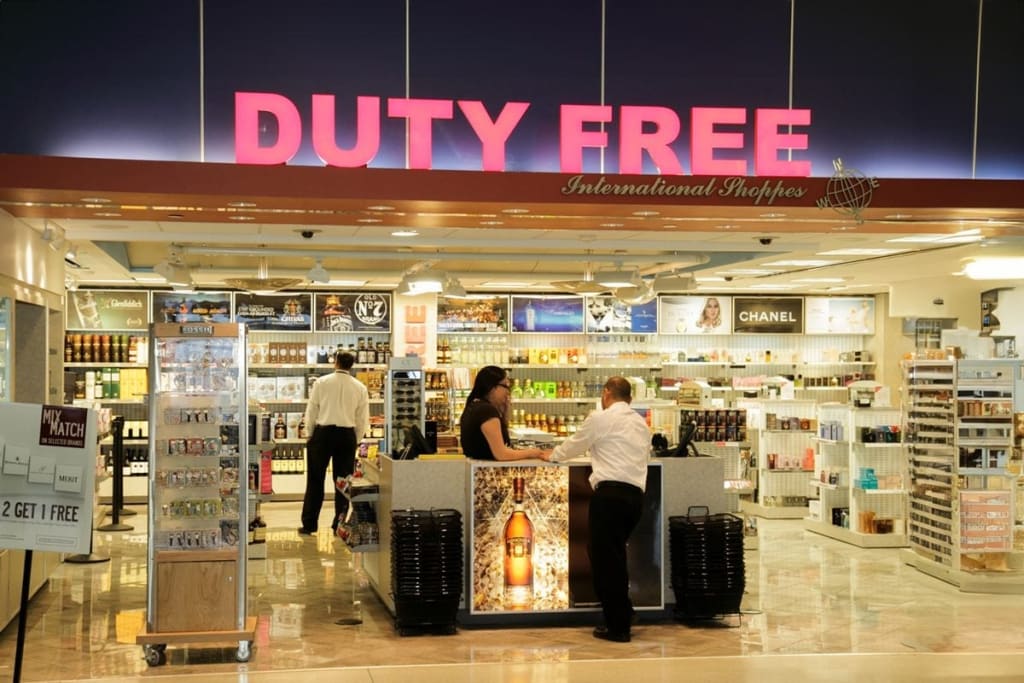
A booming tourism sector, large-scale airport expansions, and a growing base of high-spending international travelers are driving strong momentum in the GCC duty-free retailing space. According to IMARC Group's latest data, the GCC duty-free retailing market size reached USD 1.7 Billion in 2025. Looking forward, IMARC Group estimates the market to reach USD 4.0 Billion by 2034, exhibiting a CAGR of 9.87% from 2026-2034.
The GCC duty-free retailing sector is at an exciting inflection point. Fueled by the region's strategic location as a global crossroads between East, West, and South Asia, airports in Dubai, Doha, Riyadh, and Abu Dhabi are handling record passenger volumes and transforming into world-class shopping destinations. Dubai Duty Free alone posted record annual sales of USD 2.378 billion in 2025 — a nearly 10% year-on-year jump — with ten months of the year setting individual monthly records.
Get a Sample Report for Actionable Market Insights
GCC Duty-Free Retailing Market Growth Drivers:
• Surging Tourism and Passenger Traffic
The GCC's tourism boom is the single biggest engine behind duty-free growth. Hamad International Airport in Doha served 52.7 million passengers in 2024, with Qatar Duty Free recording an 18% sales increase that outpaced even passenger growth. Dubai International Airport, already one of the world's busiest hubs, saw Dubai Duty Free's sales growth exceed passenger traffic by approximately 5% in 2025 — a direct sign that shoppers are spending more per visit. As Saudi Arabia targets 330 million passengers annually by 2030 through Riyadh Expo 2030 and FIFA World Cup 2034 preparations, the pipeline for duty-free footfall across the region has never looked stronger.
• Rapid Airport Infrastructure Expansion
Governments across the GCC are pouring capital into airport development, and duty-free retailers are direct beneficiaries. Saudi Arabia is targeting USD 100 billion in aviation investment by 2030, including the construction of King Salman International Airport in Riyadh — set to become one of the world's largest airports. Dubai is expanding Al Maktoum International Airport, while Abu Dhabi and Muscat have both modernized their terminals in recent years. Every new gate and expanded concourse creates more retail square footage and longer dwell time, which translates directly into higher duty-free sales. This infrastructure buildout is giving retailers the physical canvas they need to open larger, more immersive store formats.
• Supportive Government Policies and Trade Liberalization
Across the GCC, governments are actively creating the conditions for duty-free retail to thrive. Saudi Arabia's Vision 2030 has led to the launch of Al Waha Duty-Free Company by the Public Investment Fund (PIF) — the Kingdom's first homegrown duty-free operator, with plans covering airports, land border crossings, seaports, and in-flight retail. The GCC's unified customs framework, introduced to streamline border operations and reduce wait times, has made cross-border shopping more convenient. Qatar and the UAE have eased regulations on product availability and digital payment platforms. These policy shifts are attracting global retail brands and creating a more competitive, consumer-friendly shopping environment at every major travel hub in the region.
GCC Duty-Free Retailing Market Trends:
• AI-Driven Personalization and Digital Innovation
The GCC's top duty-free operators are moving well beyond traditional retail. Qatar Duty Free launched its 36Q platform — an industry-first data engine that combines insights from Qatar Airways, Hamad International Airport, and the retailer itself — to deliver real-time, personalized offers to individual passengers. Zoning cameras map passenger movement across retail floors, AI tools allocate airport gates based on passengers' likely spending profiles, and digital concourse displays switch language and promotions based on the nationalities of passing travelers. Dubai Duty Free reported online sales of USD 230 million in 2025, growing steadily as a share of total revenue. The direction across the region is clear: data-led personalization is becoming the defining competitive advantage.
• Localized and Culturally Tailored Product Offerings
One of the standout shifts in GCC duty-free is the move toward locally curated merchandise that reflects the culture and identity of each destination. Al Waha, Saudi Arabia's new PIF-backed duty-free operator, has made Saudi-made products a central pillar of its offering, letting travelers buy authentic local goods alongside global luxury brands. In Dubai, exclusive regional products have been a growing revenue driver — Dubai Duty Free estimates that exclusive products accounted for around 12% of total sales in major categories in 2025. Confectionery saw a particularly sharp rise, with 719 tonnes of Dubai chocolate sold across 13 brands. Retailers are learning that travelers are not just looking for tax savings — they want products that feel relevant to the place they are visiting.
• Sustainability and Eco-Conscious Retail Practices
Environmental responsibility is becoming a real factor in how GCC duty-free operators are positioning themselves, particularly as they compete for the attention of younger, globally conscious travelers. Retailers across the region are reducing single-use plastics in packaging, investing in energy-efficient store designs, and curating ranges of sustainable and clean-label products. Hamad International Airport became the first airport globally to achieve FSSC 22000 food safety certification — reflecting a broader commitment to quality and responsible sourcing at Qatar Duty Free. Brands are also responding: duty-free formats are increasingly used to launch limited-edition, sustainable product lines and eco-friendly packaging variants that are not available in standard retail markets, making the channel a testing ground for responsible innovation.
Recent News and Developments in GCC Duty-Free Retailing Market
• March 2025: Saudi Arabia's Public Investment Fund (PIF) launched Al Waha Duty-Free Company, the Kingdom's first domestically owned duty-free operator, with plans to expand across airports, seaports, land border crossings, and in-flight channels. The move is a cornerstone of Saudi Vision 2030's strategy to diversify the economy and capture a greater share of growing travel retail revenues.
• January 2026: Dubai Duty Free announced record annual sales of USD 2.378 billion for 2025 — a 9.85% increase over the previous year and the most successful year in its 42-year history. Perfumes led all categories with USD 438.7 million in sales, followed by liquor, gold, tobacco, and confectionery, with the operator reporting ten record-breaking months during the year.
Note: If you require specific details, data, or insights that are not currently included in the scope of this report, we are happy to accommodate your request. As part of our customization service, we will gather and provide the additional information you need, tailored to your specific requirements. Please let us know your exact needs, and we will ensure the report is updated accordingly to meet your expectations.
About the Creator
Abhay Rajput
I am working in market research company that provides market and business research intelligence across the globe.
Keep reading
More stories from Abhay Rajput and writers in Futurism and other communities.
GCC Dark Chocolate Market Outlook: Demand Drivers, Key Players & Future Opportunities
According to IMARC Group's latest research publication, GCC dark chocolate market size was valued at USD 879.05 Million in 2025. The market is projected to reach USD 1,511.98 Million by 2034, exhibiting a growth rate (CAGR) of 6.21% during 2026–2034.
By Abhay Rajput2 days ago in Futurism
Chance AI: Best AI Vision App That Helps Your Phone Understand What It Sees
Imagine pointing your phone’s camera at something and instantly knowing what it is, where it comes from, or how it works. This is no longer science fiction. Thanks to rapid advances in artificial intelligence, AI vision apps are now capable of understanding images almost like humans do. In 2026, finding the best AI vision app has become important for students, professionals, travelers, and everyday users.
By Maheep Makkara day ago in Futurism
Android 17 Brings Custom Shortcuts to the Pixel Launcher Search Bar
What Happened With the release of Android 17 Beta 1, Google has introduced a long-requested customization feature to the Pixel Launcher search bar, aligning it more closely with the functionality already available in the Google Search widget.
By Behind the Tech4 days ago in Futurism
Think for Me
"How do you calculate the circumference of a circle? Submit your answer when ready." [Pause] "Excellent! Every student was able to call up the answer electronically very quickly. If I, as a robot had feelings, I would express pride. You may break for lunch. Return to this cyber room in 45 minutes."
By Julie Lacksonen5 days ago in Humans


Comments
There are no comments for this story
Be the first to respond and start the conversation.