
India Courts US AI Giants at Delhi Summit Amid Sovereignty Concerns
As Modi Pushes for AI-Driven Growth, Questions Emerge Over Digital Dependence


What Happened
At the AI Impact Summit in Delhi, India positioned itself as a future global AI powerhouse — while deepening ties with major US technology companies.
Prime Minister Narendra Modi described artificial intelligence as a civilizational turning point, comparing its transformative power to the discovery of fire. The summit featured major participation from US AI firms including OpenAI, Google, and Anthropic, which announced expanded access and partnerships across India.
The US government reinforced this alignment by signing the Pax Silica, a technology agreement aimed at strengthening US-India cooperation and limiting China’s influence in India’s AI development.
Senior US officials framed the pact as a democratic alliance to build AI infrastructure and governance together. American companies emphasized partnership rather than control, describing India as a strategic collaborator rather than merely a customer.
However, underlying the summit’s optimism was a strategic dilemma: India currently lacks the semiconductor manufacturing capacity, large-scale data centers, and gigawatt-level energy infrastructure required to independently develop frontier AI systems. Like many nations, it faces a binary choice between US and Chinese AI ecosystems.
Why It Matters
1. AI as Geopolitical Leverage
AI is increasingly viewed not just as a technology but as a foundation of economic and strategic power. Professor Stuart Russell of UC Berkeley suggested that if artificial general intelligence (AGI) emerges, AI systems could manage or produce the majority of global economic output.
In that scenario, nations dependent on foreign AI infrastructure risk ceding long-term leverage. If foundational models, cloud compute, and AI stacks are controlled externally, sovereignty questions follow.
India’s choice of AI partners could shape:
Data governance norms
Infrastructure dependency
Industrial policy
Security alignment
Cultural representation in AI systems
2. Economic Growth vs. Digital Dependence
Anthropic CEO Dario Amodei suggested AI could enable India to achieve extraordinary economic growth rates, potentially reaching 25% in standout scenarios. For a country seeking rapid development for 1.4 billion citizens, such projections are powerful incentives.
Yet critics warn of “digital colonialism” — a scenario where local economies run atop foreign AI stacks, limiting national control over core infrastructure.
US officials reject this framing, arguing that American AI systems are open, secure, and compatible with national sovereignty.
Still, the long-term implications depend on control of:
Model training data
Compute infrastructure
Governance standards
Language and cultural adaptation
3. China as the Alternative
China possesses competitive AI models and infrastructure capacity. However, geopolitical tensions — including border disputes — make deep technological integration politically sensitive for India.
The Pax Silica agreement signals a strategic tilt toward Washington in the AI race, aligning with broader US-China competition.
For the United States, anchoring India within its AI ecosystem strengthens its global position. For India, the decision is both economic and geopolitical.
What Is Analysis
Sovereignty in the Age of AI
India is investing billions in semiconductor capacity and data centers, but these projects require years to mature. In the interim, reliance on external AI platforms may be unavoidable.
The core concern is whether AI becomes a neutral tool or a structural dependency.
If AI systems become embedded in healthcare, education, governance, and defense, the provider of those systems gains indirect influence.
Cultural Representation
Former UK minister and tech executive Joanna Shields warned that global reliance on a small number of AI models risks cultural homogenization.
India’s linguistic diversity — with dozens of major languages and thousands of dialects — requires localized AI adaptation. Negotiating for culturally aware models may become a central policy priority.
The Silicon Valley Model
Critics like Stuart Russell argue that US tech firms historically prioritize user engagement first and monetize later. Expanding AI tools across Indian schools and institutions could create ecosystem lock-in.
From this perspective, early adoption shapes long-term dependency patterns.
The Bigger Picture
India stands at a pivotal moment.
As it approaches 80 years of independence in 2027, the country faces a new kind of sovereignty test — not territorial, but technological.
AI could:
Accelerate economic modernization
Expand access to healthcare and education
Boost productivity and innovation
Reduce rural infrastructure gaps
But it could also entrench external reliance if foundational systems are imported rather than domestically developed.
The Delhi summit underscored both opportunity and risk.
India’s strategy appears to be pragmatic partnership while building domestic capacity. Whether that balance holds will determine if AI becomes a tool of empowerment — or a new axis of dependence.
In the AI century, sovereignty may depend less on borders and more on who controls the code.
About the Creator
Keep reading
More stories from Behind the Tech and writers in Futurism and other communities.
Why Fake AI Videos of UK “Urban Decline” Are Flooding Social Media
What Happened A wave of AI-generated videos falsely portraying parts of the UK — especially Croydon in south London — as dystopian hubs of crime and social decay is spreading rapidly across TikTok, Instagram Reels and other platforms.
By Behind the Techabout 4 hours ago in Futurism
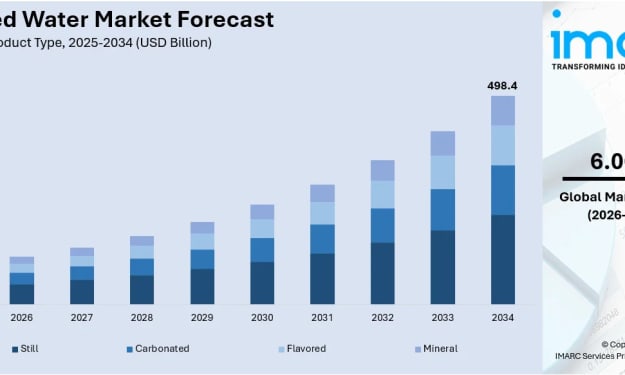
Bottled Water Market Trends: Eco-Friendly Bottles, Smart Labeling & Industry Outlook to 2034
Growing health awareness, concerns about water contamination, and the shift away from sugary beverages are fueling the bottled water market, complemented by convenience factors, premiumization trends, and eco-friendly packaging innovations. According to IMARC Group's latest data, the global bottled water market size was valued at USD 288.8 Billion in 2025. Looking forward, IMARC Group estimates the market to reach USD 498.4 Billion by 2034, exhibiting a CAGR of 6.06% from 2026-2034.
By Andrew Sullivan5 days ago in Futurism
Virtual Reality Market Analysis: Industrial Training, Automation & Forecast to 2033
Rising demand for immersive experiences across gaming, healthcare, and enterprise training, combined with improvements in headset hardware and the spread of 5G connectivity, is pushing virtual reality adoption to new levels. According to IMARC Group's latest data, the global virtual reality market size was valued at USD 15.9 Billion in 2024. Looking forward, IMARC Group estimates the market to reach USD 89.5 Billion by 2033, exhibiting a CAGR of 21.1% from 2025-2033. North America currently dominates the market.
By Suhaira Yusuf5 days ago in Futurism



Comments
There are no comments for this story
Be the first to respond and start the conversation.