
Industry 4.0 Market Analysis: Industrial Automation, Data-Driven Operations & Industry Forecast to 2034
How AIoT convergence is reshaping industrial automation, enhancing decision-making precision, and driving efficiency gains across production, logistics, and maintenance functions

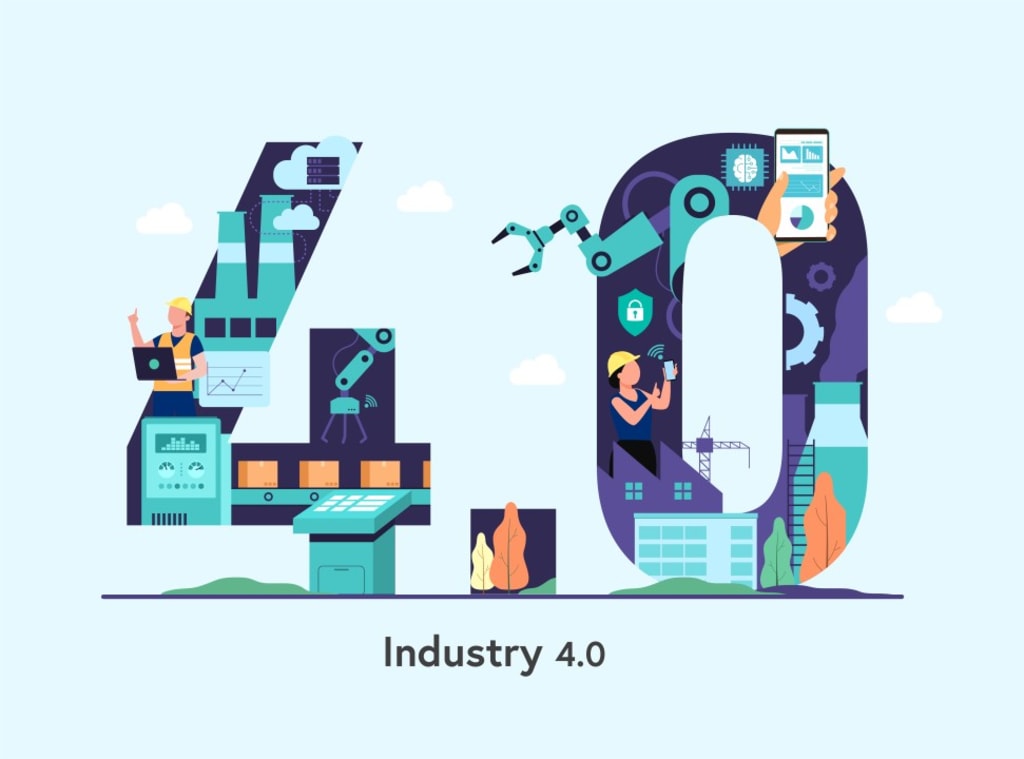
Rising demand for automation, real-time data integration, and the surge in smart factory initiatives are driving the Industry 4.0 evolution. Supported by government digitalization schemes and massive investments in Industrial IoT (IIoT) and AI, the sector is transforming traditional manufacturing into highly efficient, self-optimizing ecosystems. According to IMARC Group’s latest data, the global industry 4.0 market size reached USD 188.5 Billion in 2025. Looking forward, IMARC Group estimates the market to reach USD 599.2 Billion by 2034, exhibiting a CAGR of 13.71% from 2026-2034.
Industry 4.0 has evolved into a cornerstone of modern industrial strategy, moving beyond experimental phases to large-scale deployment across the automotive, aerospace, and electronics sectors. The market is propelled by the need for operational resilience, where technologies like digital twins and predictive maintenance reduce downtime and optimize resource allocation. With hardware currently accounting for nearly half of the market share, the focus is on installing the physical infrastructure—sensors, robots, and communication modules—required to feed data-hungry AI algorithms. As enterprises prioritize "batch size one" customization and sustainable production, the integration of 5G and edge computing is further enabling the low-latency communication necessary for truly autonomous shop floors.
Industry 4.0 Market Growth Drivers:
- Accelerated Adoption of Industrial IoT (IIoT)
The deployment of connected devices is the backbone of the smart factory, enabling machines to communicate and share real-time performance metrics. Industry data indicates that there are now over 18.8 billion connected IoT devices globally, with a significant portion dedicated to industrial applications. These sensors allow manufacturers to monitor temperature, pressure, and vibration, preventing costly asset failures before they occur. By converting raw data into actionable insights, companies are seeing productivity improvements of up to 30%, making IIoT a non-negotiable investment for staying competitive in a volatile global supply chain.
- Rising Demand for Advanced Robotics and Automation
Labor shortages and escalating operational costs are pushing manufacturers toward high-tech robotic solutions. In 2024, global industrial robot installations reached approximately 542,000 units, doubling the volume seen just a decade ago. These machines perform repetitive, high-precision tasks without fatigue, significantly reducing human error and increasing throughput. The move toward collaborative robots, or "cobots," which accounted for 18% of recent shipments, shows a shift toward flexible automation that can work safely alongside human operators. This transition is essential for industries like semiconductor manufacturing, where sub-micron yield targets require perfection.
- Favorable Government Initiatives and Digital Policies
National programs are playing a massive role in de-risking the transition to Industry 4.0 for many businesses. In India, the "Make in India" and "Digital India" initiatives aim to boost manufacturing’s GDP contribution to 25% by 2025, supported by specialized vouchers and subsidies for SMEs to adopt cloud ERP and IoT gateways. Similarly, European and North American governments are providing billions in funding for AI supercomputers and smart manufacturing hubs. These policies ensure that even smaller tier-2 and tier-3 suppliers can meet the digital visibility mandates required by global original equipment manufacturers (OEMs).
Industry 4.0 Market Trends:
- Digital Twin Implementation for Lifecycle Management
Companies are increasingly using digital twins—virtual replicas of physical assets—to simulate production processes before they are physically executed. This trend is saving manufacturers significant capital; digital twins are expected to cut maintenance costs by up to 55% and reduce unplanned downtime by 20%. For example, aerospace leaders use these models to track part traceability and provide augmented work instructions to technicians. By integrating AI and real-time sensor data, these virtual models allow for "what-if" scenario planning, helping managers optimize factory layouts and energy consumption without interrupting actual production lines.
- Integration of Generative AI and Edge Computing
The convergence of Generative AI and edge computing is drastically reducing the time needed to deploy automation logic. Engineers are now using AI copilots to convert natural language commands into automation code, shrinking development timelines from months to weeks. Furthermore, the deployment of private 5G networks, which offer latency below 5 milliseconds, allows for real-time video analytics and autonomous mobile robots (AMRs) to navigate crowded shop floors safely. This shift toward "on-the-edge" processing ensures data sovereignty and avoids high cloud egress fees while providing the split-second decision-making needed for high-speed assembly.
- Focus on Industrial Sustainability and Circularity
Sustainability has moved from a corporate social responsibility goal to a core operational metric within Industry 4.0. Smart energy management systems are being integrated into self-optimizing plants to reduce waste and carbon footprints. Technologies like 3D printing or additive manufacturing are reshaping logistics by allowing for the on-demand production of spare parts, which slashes lead times from 18 months to just three and eliminates the need for massive, carbon-heavy inventories. As regulatory pressures for decarbonization mount, manufacturers are adopting these digital tools to achieve "green" manufacturing certifications and meet strict environmental targets.
Recent News and Developments in Industry 4.0 Market
- October 2024: Typhoon HIL and ABB announced a strategic collaboration to create a specialized digital twin for the DriveLab ACS880, providing industrial clients with a scalable and user-friendly real-time simulation platform for testing complex motor drive systems.
- June 2024: The Department of Telecommunications launched the "Industry 4.0 Baseline Survey," a major initiative designed to help micro, small, and medium-sized enterprises (MSMEs) identify gaps in their digital infrastructure and accelerate the adoption of smart technologies.
- April 2024: The Japanese government awarded approximately USD 470 Million in tenders to five major companies to develop AI supercomputers, specifically aimed at accelerating AI and machine learning applications within the national manufacturing sector.
- February 2024: Emerson Electric unveiled its "Boundless Automation" vision, a next-generation architecture designed to integrate software, data, and sensing technology seamlessly across plant, site, and enterprise levels to break down traditional data silos.
Note: If you require specific details, data, or insights that are not currently included in the scope of this report, we are happy to accommodate your request. As part of our customization service, we will gather and provide the additional information you need, tailored to your specific requirements. Please let us know your exact needs, and we will ensure the report is updated accordingly to meet your expectations.
About the Creator
Andrew Sullivan
Hello, I’m Andrew Sullivan. I have over 9+ years of experience as a market research specialist.
Keep reading
More stories from Andrew Sullivan and writers in Futurism and other communities.
Faucet Market Trends: Commercial Infrastructure Growth, Efficiency Solutions & Industry Forecast to 2034
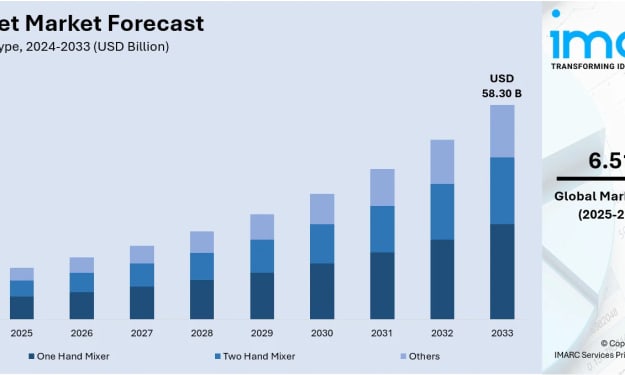
In the modern home and commercial space, the humble faucet has evolved from a basic utility into a high-tech centerpiece of design and sustainability. Driven by rapid urbanization and a global shift toward smarter, more hygienic living environments, the market is seeing a surge in demand for fixtures that blend aesthetic appeal with cutting-edge water-saving technology. According to IMARC Group’s latest data, the global faucet market size was valued at USD 31.03 Billion in 2024. Looking forward, IMARC Group estimates the market to reach USD 58.30 Billion by 2033, exhibiting a CAGR of 6.51% from 2025-2033.
By Andrew Sullivana day ago in Futurism
Saudi Arabia Packaging Market: Sustainable Solutions, E-Commerce Growth, Flexible Packaging & Eco-Friendly Shift
Saudi Arabia's packaging sector is experiencing robust growth, driven by booming e-commerce, expanding food and beverage industries, and rising demand for sustainable solutions. From flexible pouches protecting snacks to rigid containers safeguarding pharmaceuticals, packaging has become essential infrastructure across every segment of the Kingdom's diversifying economy. According to IMARC Group's latest data, the Saudi Arabia packaging market size was valued at USD 11.7 Billion in 2025. Looking forward, IMARC Group estimates the market to reach USD 16.6 Billion by 2034, exhibiting a CAGR of 3.98% from 2026-2034.
By Kishan Kumar4 days ago in Futurism
Sustainable Packaging Solutions in asia
Sustainable Packaging Solutions in Asia The Future of Smart and Responsible Packaging The packaging industry is undergoing a major transformation, especially across Asia where manufacturing, exports, and e-commerce are expanding rapidly. Today, businesses are shifting toward sustainable packaging solutions in Asia to reduce environmental impact while maintaining product quality and brand value. From food products to courier shipments, the demand for eco-friendly materials and innovative designs continues to grow.
By Buddhika Jayanath6 days ago in Futurism
At My Wits’ End
Life is about taking out the trash and calling it trash because you have every reason to. It wasn't meant to be linear, they say. But the times you tried to make it straight led to problems, and you didn’t have the tools to put any of it to use. You don't put your right shoes on the right feet; you put the left shoes on the left feet. The grey hardened slab will trip you up anyway.
By Caitlin Charlton5 days ago in Humans



Comments
There are no comments for this story
Be the first to respond and start the conversation.