
Inkjet Printers Market: Mobile & Cloud Printing Integration, Seamless Connectivity & Growth Outlook
Inkjet Printers Market: Mobile & Cloud Printing Integration, Seamless Connectivity & Growth Outlook

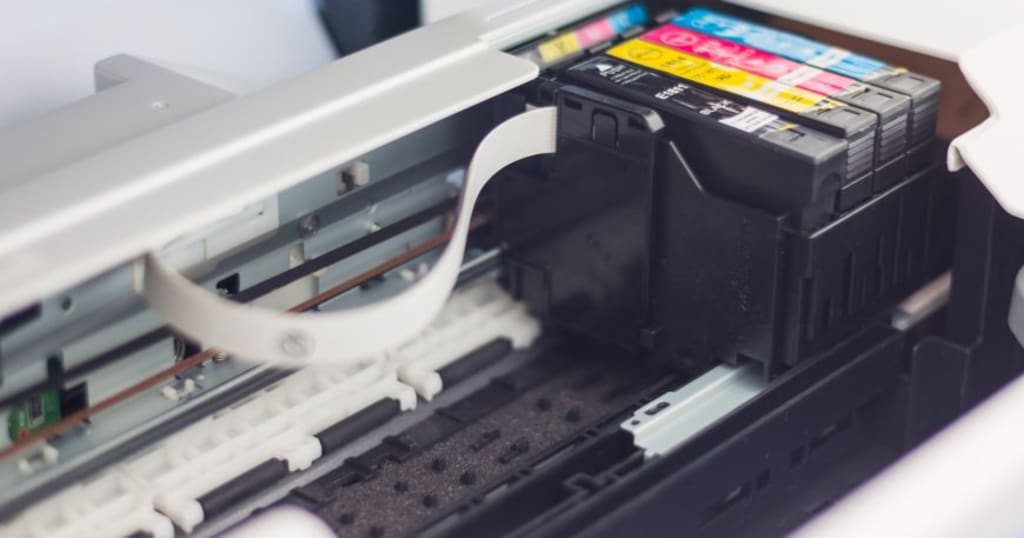
According to IMARC Group's latest research publication, the global inkjet printers market size reached USD 50.9 Billion in 2024. Looking forward, IMARC Group expects the market to reach USD 81.0 Billion by 2033, exhibiting a growth rate (CAGR) of 4.88% during 2025-2033.
How AI is Reshaping the Future of Inkjet Printers Market
- Automated Workflow and Document Processing: AI enables intelligent document recognition through OCR technology, automatically classifying and routing contracts, invoices, and records to proper departments.
- Production Analytics and Process Optimization: AI systems analyze vast datasets from production lines to optimize printing parameters including temperature, humidity, and ink consumption.
- Personalized Support and Enhanced User Experience: Natural language AI provides contextual customer support, remembering user preferences and past questions to deliver immediate customized assistance.

Inkjet Printers Industry Overview
The inkjet printing sector is experiencing a digital transformation driven by Industry 4.0 technologies and sustainability demands. HP launched Print AI in September 2024, introducing intelligent features like Perfect Output that automatically formats documents and provides personalized setup assistance. Major manufacturers are investing heavily in production capacity Epson committed 5.1 billion yen to quadruple its PrecisionCore printhead manufacturing by September 2025, adding 70 jobs to meet surging demand.
Inkjet Printers Market Trends & Drivers
Multifunctional printers are reshaping office and healthcare environments by consolidating printing, scanning, copying, and faxing into single units that save space and costs. FUJIFILM launched three new A3 color multifunction printers in October 2024, connecting with cloud services including accounting and document management systems to support digital transformation.
Industrial inkjet systems are gaining traction across packaging, textiles, and manufacturing for high-speed variable data printing of batch codes, barcodes, and serial numbers on diverse substrates. Videojet launched V4234 pharmaceutical ink in April 2024, compatible with their SIMPLICiTY CIJ printers including the 1880 Series. Markem-Imaje introduced the 9712 bi-jet CIJ printer in January 2025, replacing dual-printer setups with a single unit that delivers high-quality 2D codes while cutting capital and operational costs significantly.
Large format inkjet printers are experiencing robust demand from advertising, textile, and decor industries requiring vibrant, durable prints on varied materials. Canon launched the ImagePROGRAF TZ-5320 and TX Series in January 2025, featuring enhanced magenta ink for color brilliance and printing speeds up to 4 pages per minute with eco-friendly packaging. CMYKhub expanded production capabilities in June 2024 by acquiring two Canon varioPRINT iX3200 presses at Drupa, serving clients needing business cards, brochures, banners, and event packaging.
Leading Companies Operating in the Global Inkjet Printers Industry
- Brother Industries Ltd.
- Canon Singapore Pte. Ltd. (Canon Inc.)
- HP Inc.
- Inkjet Inc.
- Keyence Corporation
- Konica Minolta Inc.
- Mimaki Engineering Co. Ltd.
- Pannier Corporation
- Seiko Epson Corporation
- Videojet Technologies Inc. (Danaher Corporation)
- Xerox Corporation
Inkjet Printers Market Report Segmentation
By Type:
- Multifunctional Printers
- Desktop Printers
- Large Format Printers
- Inkjet Press
- Industrial Inkjet Printers
- Textile Printers
- Others
Multifunctional printers represent the largest segment, as they offer cost-effectiveness, space-saving advantages, and all-in-one functionality for printing, scanning, copying, and faxing.
By Technology:
- Continuous Inkjet
- Drop on Demand
- UV Inkjet
- Others
Continuous inkjet techniques represent the largest class, as they are ideal for high-speed, large-volume printing in industrial applications.
By Application:
- Packaging and Labeling
- Publishing
- Advertising
- Textile Printing
- Photo Printing
- Others
Advertising has the largest market share owing to the growing demand for high-impact visual materials including banners, posters, and signage.
Regional Insights:
- North America (United States, Canada)
- Asia Pacific (China, Japan, India, South Korea, Australia, Indonesia, Others)
- Europe (Germany, France, United Kingdom, Italy, Spain, Russia, Others)
- Latin America (Brazil, Mexico, Others)
- Middle East and Africa
North America exhibits a clear dominance in the inkjet printers market due to advanced manufacturing ecosystems and high adoption of automation technologies.
Recent News and Developments in Inkjet Printers Market
- January 2025: Markem-Imaje launched the 9712 bi-jet CIJ printer, designed for manufacturers requiring large or data-rich codes including 2D codes. The 9712 replaces dual-printer setups by delivering high-quality printing with a single unit, significantly reducing capital and operational costs while enhancing efficiency in high-volume production environments.
- January 2025: Ricoh debuted its Pro Z75 and VC80000 presses at Hunkeler Innovationdays, introducing B2 duplex aqueous inkjet technology at 4,500 sheets per hour and 1,200 dpi resolution for continuous production, representing a significant advancement in industrial printing capabilities.
Note: If you require specific details, data, or insights that are not currently included in the scope of this report, we are happy to accommodate your request. As part of our customization service, we will gather and provide the additional information you need, tailored to your specific requirements. Please let us know your exact needs, and we will ensure the report is updated accordingly to meet your expectations.
About the Creator
sujeet. imarcgroup
With 2 years of hands-on experience at IMARC Group, I have conducted in-depth market research and analysis across diverse industries including technology, healthcare, agriculture, and consumer goods.
Keep reading
More stories from sujeet. imarcgroup and writers in Futurism and other communities.
Software Defined Networking Market 2034: Investment Potential & Emerging Use Cases
According to IMARC Group's latest research publication, global software defined networking market size reached USD 33.1 Billion in 2025. Looking forward, IMARC Group expects the market to reach USD 128.0 Billion by 2034, exhibiting a growth rate (CAGR) of 15.73% during 2026-2034.
By sujeet. imarcgroupa day ago in Futurism
Australia Insurtech Market: Digital Innovation, Customer Experience & Regulatory Adoption
According to IMARC Group, the Australia insurtech market reached USD 376.7 Million in 2025 and is projected to surge to USD 4,186.9 Million by 2034, exhibiting a remarkable compound annual growth rate (CAGR) of 30.68% during 2026–2034. This exponential growth underscores the accelerating digital transformation of the insurance sector across Australia. Insurtech—where technology-driven startups and digital platforms modernize underwriting, claims processing and customer engagement—is reshaping how insurers operate and interact with policyholders. As customer expectations evolve toward faster, more transparent and personalized services, insurtech firms are becoming critical drivers of innovation within Australia’s financial services ecosystem.
By Kevin Cooper7 days ago in Futurism
Saudi Arabia Nanotechnology Market: Advanced Materials, R&D Investments & Growth Outlook
Growing investments in R&D, Vision 2030-driven diversification, and the rising integration of nanotechnology across healthcare, energy, and advanced manufacturing are fueling demand in Saudi Arabia. According to IMARC Group’s latest data, the Saudi Arabia nanotechnology market size reached USD 130.6 Million in 2025. Looking forward, IMARC Group expects the market to reach USD 1,150.7 Million by 2034, exhibiting a growth rate (CAGR) of 27.35% during 2026–2034.
By Shubham Sharma 7 days ago in Futurism



Comments
There are no comments for this story
Be the first to respond and start the conversation.