
It’s the Same Size as Japan, Can Be Seen from Space, and Is a UNESCO World Heritage Site – and It’s Teeming with Thousands of Species
A living wonder of the planet, this vast natural structure supports one of the richest ecosystems on Earth and reminds humanity why conservation matters.

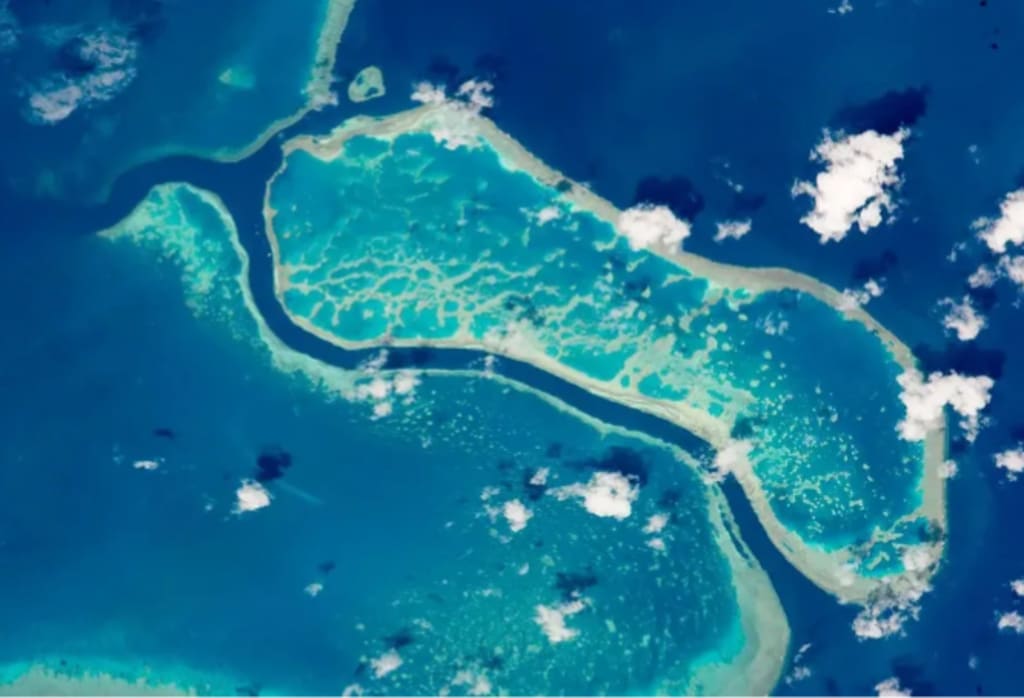
There are few places on Earth so massive, so alive, and so extraordinary that they can be seen from space. Stretching across more than 1,400 miles of ocean, covering an area roughly the size of Japan, and hosting an explosion of marine life, the Great Barrier Reef stands as one of nature’s greatest masterpieces.
Recognized as a UNESCO World Heritage Site, this immense reef system is not just beautiful—it is vital to the planet’s health. Home to thousands of species and shaped over millions of years, it is a living structure that continues to grow, adapt, and inspire awe in scientists and travelers alike.
A Natural Structure Unlike Any Other
The Great Barrier Reef is the largest living structure on Earth. Spanning over 133,000 square miles, it contains more than 2,900 individual reefs and around 900 islands. Its size alone makes it one of the most remarkable natural formations on the planet.
From space, astronauts can see its turquoise patterns shimmering through the Coral Sea. This visibility is not just a visual marvel—it represents the reef’s immense biological complexity. Beneath the surface lies a vast underwater world of coral gardens, deep channels, lagoons, and sandy plains, each playing a role in sustaining life.
What makes this even more astonishing is that the reef is built by tiny coral polyps—organisms no larger than a grain of rice. Over millions of years, these small creatures have constructed a structure that rivals entire countries in scale.
A Haven for Biodiversity
The Great Barrier Reef is one of the most biologically diverse places on Earth. Scientists estimate it supports:
Over 1,500 species of fish
More than 400 types of coral
Around 4,000 species of mollusks
Hundreds of species of birds
Dozens of marine mammals
Sea turtles glide through its waters, dolphins hunt in coordinated groups, and reef sharks patrol the coral edges. Colorful clownfish weave through anemones, while giant clams filter sunlight into shimmering blues and greens.
This diversity is not just impressive—it is essential. The reef functions as a massive natural laboratory where species interact in delicate balance. Predators control populations, herbivores prevent algae overgrowth, and coral provides shelter for thousands of organisms.
In many ways, the reef operates like a bustling underwater city, where every resident has a job to do.
Why the Reef Matters to Humans
Beyond its ecological importance, the Great Barrier Reef is deeply connected to human life. It supports fishing industries, tourism, and coastal protection for millions of people. The reef acts as a natural barrier against storms and erosion, absorbing the energy of waves before they reach the shore.
Indigenous Australian communities have lived in harmony with the reef for tens of thousands of years. Their cultural knowledge and traditions are intertwined with its waters, reefs, and marine creatures.
Economically, the reef contributes billions of dollars annually through tourism and related industries. Millions of visitors travel from around the world to snorkel, dive, and witness its beauty firsthand.
Yet its greatest value may be less tangible: inspiration. Artists, photographers, scientists, and writers continue to draw meaning from its vibrant colors and complex ecosystems.
A System Under Threat
Despite its grandeur, the Great Barrier Reef is fragile. Rising ocean temperatures caused by climate change have led to widespread coral bleaching events. When water becomes too warm, corals expel the algae that give them color and nutrients, turning white and vulnerable to disease.
Pollution, overfishing, and coastal development have also placed stress on reef systems. Agricultural runoff introduces excess nutrients into the water, encouraging algae growth that smothers coral reefs.
In recent decades, multiple bleaching events have affected large portions of the reef, raising alarm among scientists and conservationists worldwide.
The reef’s scale does not make it immune to damage. In fact, its vastness means that changes in climate and human behavior can impact entire regions at once.
Conservation and Hope
Despite these threats, the story of the Great Barrier Reef is not only one of loss—it is also one of resilience. Conservation programs, marine protected zones, and scientific research are helping parts of the reef recover.
Scientists are experimenting with coral restoration techniques, including breeding heat-resistant coral species and replanting damaged areas. Governments and organizations are working to reduce pollution and regulate fishing practices.
Public awareness has also grown. The reef’s status as a UNESCO World Heritage Site brings international attention to its protection, reminding the world that this treasure belongs not just to one nation but to humanity.
Small actions—reducing carbon emissions, minimizing plastic waste, supporting sustainable tourism—can collectively make a difference.
A Living Wonder for the Future
What makes the Great Barrier Reef truly extraordinary is that it is alive. It is not a static monument carved from stone but a breathing ecosystem that changes with the seasons, the tides, and the lives of its inhabitants.
Each coral formation tells a story of survival. Each species represents a chapter in Earth’s evolutionary history. Together, they form a natural archive of life in motion.
Seeing the reef from space emphasizes its scale, but seeing it up close reveals its soul—an explosion of color, motion, and sound beneath the waves.
Final Thoughts
The Great Barrier Reef stands as one of Earth’s most astonishing achievements of nature: as large as a country, visible from space, and filled with thousands of species working in harmony. It is both a wonder and a warning.
Its beauty shows what the planet can create. Its vulnerability shows what the planet can lose.
Protecting this living world is not just about preserving coral and fish—it is about safeguarding the balance of life itself. The reef reminds us that even the grandest natural systems depend on small, careful choices made by humans every day.
In the end, the Great Barrier Reef is more than a destination. It is a symbol of Earth’s creativity, resilience, and responsibility—a vast blue miracle that still has many stories left to tell, if we choose to listen.
About the Creator
Sajida Sikandar
Hi, I’m Sajida Sikandar, a passionate blogger with 3 years of experience in crafting engaging and insightful content. Join me as I share my thoughts, stories, and ideas on a variety of topics that matter to you.
Keep reading
More stories from Sajida Sikandar and writers in Futurism and other communities.
Humans Age Faster at Two Sharp Peaks, Study Finds
Aging has long been viewed as a slow and continuous journey—one wrinkle at a time, one birthday at a time. But a groundbreaking new study suggests that this belief may be outdated. According to recent scientific findings, humans do not age at a constant rate. Instead, aging happens in two dramatic bursts, or “sharp peaks,” during specific stages of life.
By Sajida Sikandar4 days ago in Futurism
AI as a Confidant: Between Salvation and the Abyss 🤖💔
More and more often, we encounter situations where people treat a chatbot as a confidant, a confessor, a friend, or their only companion. It is in human nature to need to "vent" and release difficult emotions 🗣️. Sometimes a lack of family, a lack of trust in one's surroundings, or most often, paralyzing shame, makes us write to a chat window instead of a fellow human being.
By Piotr Nowak7 days ago in Futurism
Bottled Water Market Trends: Eco-Friendly Bottles, Smart Labeling & Industry Outlook to 2034
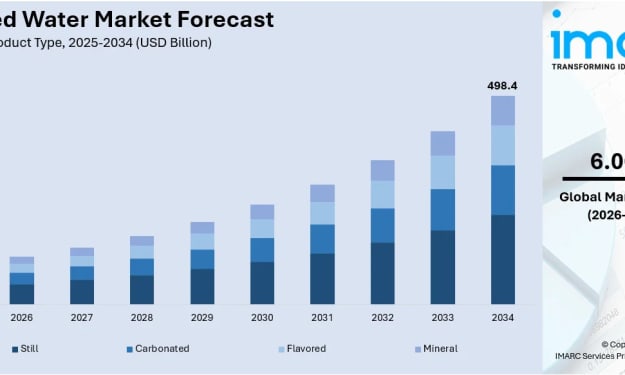
Growing health awareness, concerns about water contamination, and the shift away from sugary beverages are fueling the bottled water market, complemented by convenience factors, premiumization trends, and eco-friendly packaging innovations. According to IMARC Group's latest data, the global bottled water market size was valued at USD 288.8 Billion in 2025. Looking forward, IMARC Group estimates the market to reach USD 498.4 Billion by 2034, exhibiting a CAGR of 6.06% from 2026-2034.
By Andrew Sullivan2 days ago in Futurism
Goodbye, Mr. Duvall
It is turning out to be an interesting year. I was in the middle of teaching a class when a pop-up appeared on the screen announcing the death of Mr. Robert Seldon Duvall (yes, that was his full name). I was in the middle of a discussion on the obsession we have with winning when it comes to sports (the Winter Olympics was a theme), and I felt as though things were coming full circle. We had already lost Gene Hackman last year, and along with that titan, it feels though one particular golden age has closed off to be replaced by...?
By Kendall Defoe 2 days ago in Geeks



Comments
There are no comments for this story
Be the first to respond and start the conversation.