
Portland vs. Silicon Valley: Where to Build Your App in 2026-2027
The Founder’s Dilemma in 2026: Choosing Between Silicon Valley’s Established Powerhouse Ecosystem and Portland’s Emerging Innovation Landscape

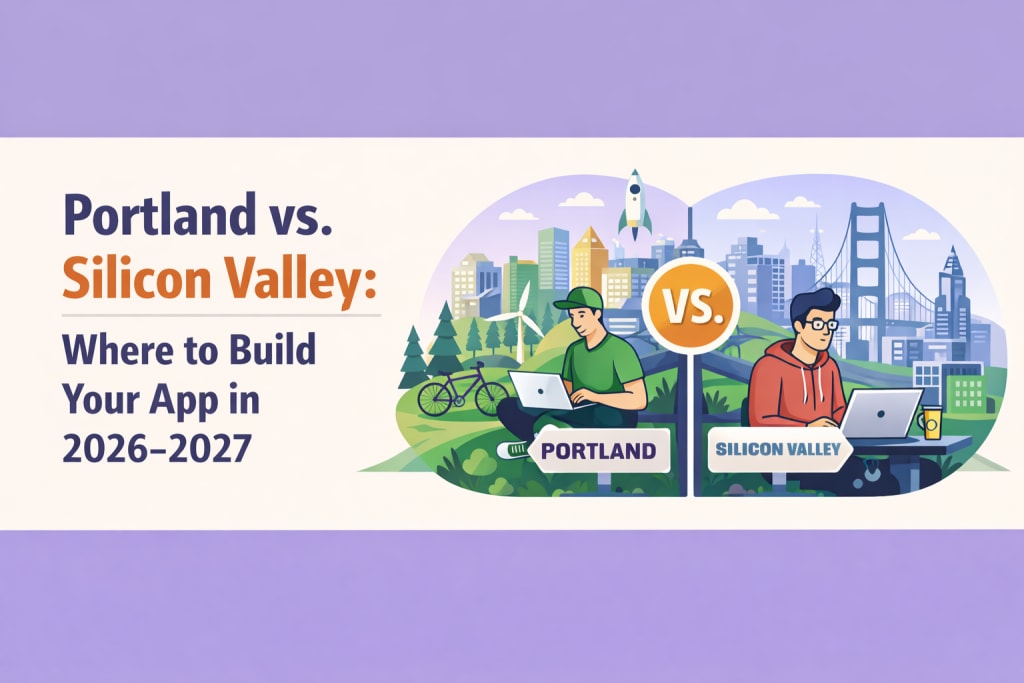
For decades, Silicon Valley has been synonymous with technological innovation. The region built a reputation not only as a hub for groundbreaking ideas but also as a place where ambitious founders could access talent, funding, and mentorship within a tightly interconnected ecosystem. Yet as the technology landscape evolves, many entrepreneurs are beginning to question whether the traditional path still makes sense.
By 2026, the conversation has shifted from “Why not Silicon Valley?” to “What alternatives might offer strategic advantages?” Rising costs, distributed teams, and changing work cultures have opened the door to new innovation centers. Portland, once considered a secondary market, has increasingly entered discussions about where modern apps should be built.
The comparison is no longer about prestige; it is about strategy.
How the Economics of App Development Have Changed Since 2020 —
Rising Costs, Remote Work, and the Shift Away from Traditional Tech Hubs
The economic landscape of software development has undergone significant transformation over the past few years. Silicon Valley remains a high-density environment for innovation, but it also carries some of the highest operational costs in the industry.
Average senior engineering salaries in major California tech hubs continue to exceed six figures by a wide margin, often reaching levels that strain early-stage startup budgets. Beyond salaries, companies must account for office space, operational expenses, and competitive benefits required to attract top-tier talent.
Meanwhile, remote work has reshaped hiring dynamics. Reports suggest that more than 70% of technology teams now operate in hybrid or distributed environments. This shift reduces the need for companies to base themselves in a single geographic center. As a result, founders increasingly evaluate locations based on strategic fit rather than tradition.
Cities with lower cost structures and strong talent pipelines have begun to gain attention as viable alternatives.
Talent Density vs. Talent Accessibility:
Comparing Silicon Valley’s Elite Engineering Networks with Portland’s Collaborative and Sustainable Developer Community
Silicon Valley’s greatest strength remains its talent density. The proximity of experienced engineers, serial founders, and venture-backed startups creates a unique environment where ideas move quickly. Networking opportunities are constant, and knowledge transfer occurs organically through shared professional communities.
However, high demand for talent creates intense competition. Startups often struggle to retain developers when larger companies offer significantly higher compensation packages.
In contrast, Portland has developed a reputation for accessibility and collaboration. While the city may not match the sheer scale of Silicon Valley’s workforce, it offers a stable and growing community of developers drawn to its balanced lifestyle and creative culture.
This difference can influence hiring outcomes. Teams may find that smaller ecosystems encourage deeper collaboration and longer-term retention, factors that can be critical during early development phases.
Funding Culture and Investor Expectations:
How Venture Capital Dynamics Differ Between Silicon Valley’s Hyper-Scale Mindset and Portland’s Pragmatic Growth Approach
Another major distinction lies in investor philosophy. Silicon Valley’s venture capital ecosystem often emphasizes rapid scaling and aggressive growth metrics. This model has produced iconic success stories but also creates pressure for startups to prioritize expansion over sustainability.
Outside of traditional venture hubs, funding expectations may differ. Alternative ecosystems sometimes support slower, more deliberate growth strategies, focusing on profitability and long-term stability rather than immediate scale.
For certain types of products, especially niche or specialized applications, this environment can be advantageous. Founders may experience greater flexibility in defining success metrics without constant pressure to pursue hypergrowth trajectories.
Cost Structures Beyond Salaries:
Infrastructure, Burn Rate, Team Scaling, and the Hidden Financial Realities Founders Often Overlook
When evaluating where to build an app, salary comparisons alone do not tell the full story. Operational efficiency depends on a range of factors:
- Cost of living and relocation expenses.
- Employee retention rates and turnover costs.
- Access to coworking spaces or flexible office arrangements.
- Legal and regulatory overhead.
- Networking expenses and business development activities.
Lower overall burn rates can extend a startup’s runway significantly. Even small percentage differences in operational costs may translate into months of additional development time, which can determine whether a product reaches market readiness.
These considerations often become more important as funding environments tighten and investors prioritize efficiency.
Innovation Speed vs. Strategic Stability:
Understanding How Different Tech Ecosystems Influence Product Decisions, Risk Tolerance, and Long-Term Development Strategy
Silicon Valley’s pace is famously fast. Teams frequently iterate rapidly, driven by competitive pressure and investor expectations. This environment can accelerate innovation but may also encourage premature scaling or feature expansion before core product-market fit is achieved.
Alternative ecosystems sometimes foster a more measured approach. Developers may focus on refining user experience and technical stability before expanding aggressively. This difference is not inherently better or worse; it reflects distinct philosophies about growth.
Companies must consider whether their product benefits from rapid experimentation or from steady, deliberate development cycles.
The Role of Lifestyle, Culture, and Work Philosophy in Shaping Engineering Output and Team Retention in Both Cities
Work culture influences productivity more than many founders anticipate. Silicon Valley’s intensity can drive exceptional innovation, but it may also lead to burnout or frequent job changes.
Cities known for balanced lifestyles can offer a different dynamic. Developers may prioritize long-term projects and collaborative environments over constant career mobility.
These cultural differences can affect team cohesion, product consistency, and the overall pace of development. Choosing a location aligned with company values may ultimately prove more important than selecting the most famous tech hub.
Why More Companies Are Exploring Alternative Tech Cities —
And How mobile app development Portland Is Becoming Part of a Larger Industry Trend
As remote collaboration tools mature and distributed teams become standard, geographic flexibility has increased dramatically. Companies no longer need to cluster exclusively around legacy tech centers to access expertise.
Industry surveys indicate that a growing percentage of startups are intentionally building outside traditional hubs to reduce costs, access diverse talent pools, and differentiate themselves culturally. Portland’s reputation for sustainability, design-forward thinking, and collaborative innovation positions it as part of this broader shift toward distributed technology ecosystems.
Rather than replacing Silicon Valley, these emerging centers are expanding the options available to founders.
Lessons from Founders Who Chose Outside Silicon Valley —
What Worked, What Didn’t, and What Changed Their Product Outcomes
Examining companies that launched outside traditional hubs reveals several common lessons:
- Strategic clarity matters more than location prestige.
- Access to experienced mentors can be achieved remotely.
- Lower burn rates provide room for experimentation.
- Strong local communities can foster meaningful partnerships.
- Distributed teams require intentional communication practices.
These insights highlight that success depends less on geography and more on alignment between company goals and ecosystem strengths.
Looking Toward 2027:
Will Silicon Valley Maintain Its Dominance or Will Distributed Innovation Ecosystems Redefine Where Apps Are Built?
Silicon Valley’s influence is unlikely to disappear. Its infrastructure, capital networks, and history of innovation remain powerful advantages. However, the technology landscape is no longer defined by a single geographic center.
As tools enable seamless collaboration across regions, founders gain freedom to choose environments that match their strategic priorities. Some will continue to pursue the traditional path, while others will explore ecosystems offering different balances of cost, culture, and opportunity.
The most significant shift may not be the rise of one city over another, but the growing realization that innovation is becoming decentralized. In this evolving landscape, the question is no longer where technology must be built — but where it makes the most sense for each unique vision.
About the Creator
Ash Smith
Ash Smith writes about tech, emerging technologies, AI, and work life. He creates clear, trustworthy stories for clients in Seattle, Indianapolis, Portland, San Diego, Tampa, Austin, Los Angeles, and Charlotte.
Entertainment and Streaming Trends in Mobile App Development Los Angeles
There was a time when streaming meant pressing play and watching quietly. That era is fading. Today, audiences expect interaction, personalization, and real-time engagement layered into entertainment experiences. The shift has transformed mobile apps from passive viewing platforms into digital stages where users comment, create, react, and influence outcomes as events unfold.
By Samantha Blakea day ago in Futurism
Mobile Mapping Market Insights: Autonomous Vehicles, 3D Data & Industry Forecast to 2033
The evolution of location-based technology and growing infrastructure needs are reshaping how we map our world. According to IMARC Group's latest analysis, the global mobile mapping market size was valued at USD 40.6 Billion in 2024. Looking forward, IMARC Group estimates the market to reach USD 118.6 Billion by 2033, exhibiting a CAGR of 12.52% from 2025-2033.
By Andrew Sullivan4 days ago in Futurism
Diaries to Nietzsche
Quotation from Friedrich Nietzsche "He who wrestles long with monsters should beware lest he himself become a monster. And if you gaze long into an abyss, the abyss also gazes into you. Man is not destroyed by suffering, but by the meaning he makes of it."
By LUCCIAN LAYTH5 days ago in Critique


Comments
There are no comments for this story
Be the first to respond and start the conversation.