
Stainless Steel Market: Alloy Advancements, Capacity Expansion & Growth Analysis
How energy transition projects, recycling adoption, and alloy innovation are driving stainless steel market evolution

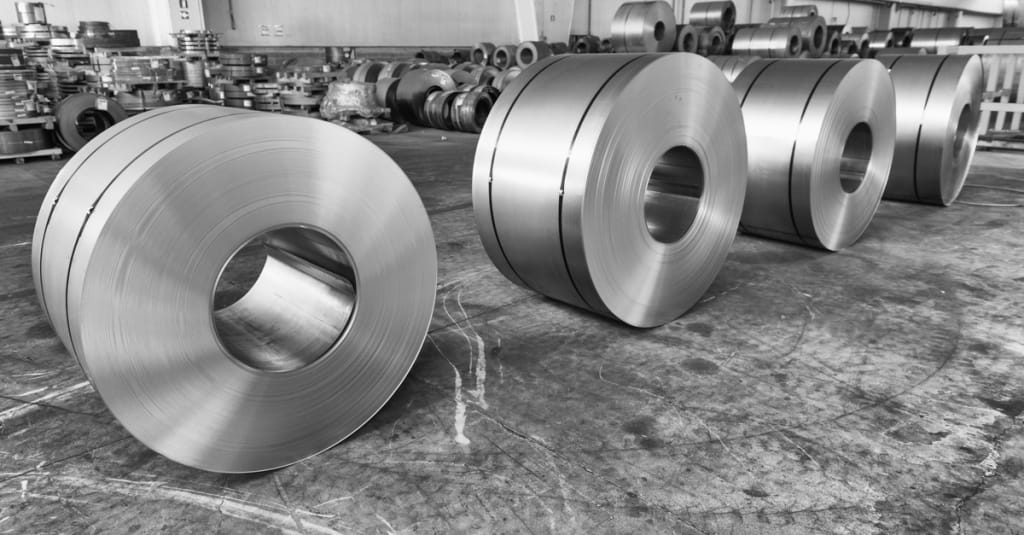
According to IMARC Group’s latest research publication, global stainless steel market size reached USD 163.72 Billion in 2024. Looking forward, IMARC Group expects the market to reach USD 261.54 Billion by 2033, exhibiting a growth rate (CAGR) of 5.08% during 2025-2033.
How AI is Reshaping the Future of Stainless Steel Market
- Predictive Maintenance and Equipment Optimization: AI algorithms analyze sensor data from blast furnaces, mills, and crushers to predict equipment failures before breakdowns occur. Outokumpu shortened furnace treatment time by 4% and increased capacity by 17%, achieving 1,736 tons of CO₂ reduction through AI-driven optimization.
- Real-Time Quality Control and Defect Detection: Machine learning with computer vision enables automated inspection of steel sheets, coils, and components for surface defects and microstructural anomalies. High-resolution imaging combined with deep learning eliminates human error and reduces material waste while ensuring compliance with industry standards.
- Demand Forecasting and Inventory Management: AI analyzes historical sales data, market trends, and economic conditions to predict demand with greater accuracy. Companies using AI-powered forecasting improved accuracy by 10%, enabling optimized inventory levels and reducing holding costs while ensuring timely delivery to customers.
- Energy Efficiency and Sustainability Optimization: AI monitors energy consumption patterns and production parameters to identify areas for improvement. Digital twins simulate production stages from melting to finishing, minimizing variability and reducing operational costs through streamlined equipment maintenance and optimized resource utilization.
- Supply Chain Transparency and Risk Management: AI combined with IoT devices enables end-to-end traceability throughout the supply chain. AI-powered analytics identify potential risks such as unauthorized suppliers or quality deviations, enhancing transparency and enabling rapid response to supply chain disruptions or quality issues.
Stainless Steel Industry Overview:
The stainless steel industry is experiencing steady expansion driven by urbanization and infrastructure development across emerging economies. Asia Pacific dominates production with China’s crude stainless steel output reaching 9.62 million tonnes in Q1, rising 6.6% year-over-year according to the Stainless Steel Council of China. India’s government announced a new stainless steel policy targeting 30 million tons annual domestic capacity from current 6.6 million tons. Major producers are investing heavily in sustainable manufacturing—Cleveland-Cliffs commissioned a USD 150 million hydrogen-based bright anneal line eliminating acid processing, while Outokumpu launched low-emission steel using high recycled content and renewable electricity. Construction projects like Mumbai’s Coastal Road and Lagos Rail Mass Transit utilize stainless steel rebar for enhanced marine corrosion resistance, demonstrating the material’s critical role in modern resilient infrastructure.
Get Instant Access to the Stainless Steel Market Sample Report
Stainless Steel Market Trends & Drivers
The construction and infrastructure boom is the primary driver propelling stainless steel demand globally. Rapid urbanization requires materials offering strength, durability, and sustainability for long-term public projects. Governments worldwide are investing in smart cities, transport systems, and coastal infrastructure where stainless steel’s corrosion resistance and low maintenance prove essential. Projects across developing nations increasingly specify stainless steel—for example, India’s infrastructure initiatives and Africa’s transportation networks incorporate the material in elevated structures and reinforcement systems. The U.S. Infrastructure Investment and Jobs Act is fueling steel demand for bridges, pipelines, and public works. Stainless steel’s high strength-to-weight ratio enables innovative architectural designs without compromising structural integrity, while its recyclability aligns with green building standards. Commercial and residential projects favor the material for facades, cladding, roofing, and interior applications, combining aesthetic flexibility with functional dependability in harsh environmental conditions.
The automotive industry’s transformation toward electric vehicles is creating substantial growth opportunities for stainless steel suppliers. EV adoption is accelerating with U.S. electric vehicle numbers projected to reach 26.4 million by 2030, representing approximately 32% of annual light-duty vehicle sales according to Edison Electric Institute projections. Stainless steel’s heat resistance makes it ideal for battery trays and fuel cell applications in hydrogen vehicles—with melting points approximately twice that of aluminum, it offers superior fire safety. Despite being denser, stainless steel enables thickness reduction without compromising strength, requiring less material and cutting emissions. Automotive manufacturers increasingly specify the material for exhaust systems, structural components, fuel tanks, and chassis parts due to corrosion resistance and design adaptability. Major producers like Outokumpu and Nippon Steel are developing high-strength specialty grades tailored for mobility applications, while sustainable production methods and closed-loop recyclability enhance lifecycle sustainability credentials.
Sustainability initiatives and technological advancements are reshaping competitive dynamics in the stainless steel market. Leading producers are adopting hydrogen-based production, carbon capture technologies, and increasing recycled steel usage to meet tightening environmental regulations and customer ESG requirements. Industry reports indicate global clean energy investment reached USD 2 Trillion, reflecting 70% growth over the past decade, driving renewable energy projects requiring stainless steel components for wind turbines, solar panel structures, and energy storage systems. Steel demand for wind turbines is projected to grow 20% as countries transition toward net-zero emissions targets. Manufacturers are also implementing digital transformation strategies including automated robotics for precision operations, reducing workplace hazards while improving accuracy. Advanced production technologies enable customization of stainless steel alloys with enhanced strength-to-weight ratios and improved formability, expanding applications across aerospace, medical devices, and consumer goods. The material’s aesthetic appeal, coupled with technical performance, positions it advantageously as industries prioritize both functionality and sustainability.
Leading Companies Operating in the Global Stainless Steel Industry:
- Acerinox S.A.
- Aperam S.A.
- ArcelorMittal S.A.
- Baosteel Group
- JFE Steel Corporation (JFE Holdings Inc.)
- Jindal Stainless Limited
- Nippon Steel Corporation
- Outokumpu Oyj
- POSCO Products
- thyssenkrupp Stainless GmbH (ThyssenKrupp AG)
- Yieh United Steel Corp.
Stainless Steel Market Report Segmentation:
By Product:
- Flat
- Long
Flat products represent the largest segment due to widespread application across construction, automotive panels, kitchen appliances, and industrial equipment.
By Grade:
- 200 Series
- 300 Series
- 400 Series
- Duplex Series
- Others
300 Series dominates the market owing to superior corrosion resistance, excellent weldability, and high formability, making it suitable for diverse applications.
By Application:
- Automotive and Transportation
- Building and Construction
- Consumer Goods
- Mechanical Engineering and Heavy Industries
- Others
Automotive and transportation hold significant market share due to stainless steel’s critical role in exhaust systems, chassis, fuel tanks, and structural components.
Regional Insights:
- North America (United States, Canada)
- Asia Pacific (China, Japan, India, South Korea, Australia, Indonesia, Others)
- Europe (Germany, France, United Kingdom, Italy, Spain, Russia, Others)
- Latin America (Brazil, Mexico, Others)
- Middle East and Africa
Asia Pacific exhibits clear dominance in the stainless steel market due to strong manufacturing base, rapid industrialization, and infrastructure development.
Recent News and Developments in Stainless Steel Market
- July 2025: Cleveland-Cliffs aligned stainless steel capacity with infrastructure and automotive needs in the United States. The company also commissioned its USD 150 million Vertical Stainless Bright Anneal Line at Coshocton Works, revolutionizing production using 100% hydrogen atmosphere that replaced acid-based methods and enhanced sustainability.
- July 2025: Outokumpu launched next-generation low-emission stainless steel in Europe, produced using high recycled content and renewable electricity. The company also introduced low-carbon stainless steel offerings in the U.S., focusing on supply chain efficiency and sustainability goals to support cleaner production practices.
- June 2025: Acerinox invested in advanced melting and rolling technologies to improve efficiency and product quality for industrial stainless steel grades. Additionally, ATI Inc. expanded production of high-performance stainless steel grades for aerospace and defense, focusing on heat and corrosion resistance.
- May 2025: Jindal Stainless was in talks with Maharashtra state government to secure land for its planned INR 40,000 crore stainless steel production plant with overall melting capacity of 4 million tons annually. The company also expanded specialty stainless steel grades capacity to support domestic infrastructure, railways, and renewable energy projects.
- May 2025: Thyssenkrupp Materials expanded stainless steel services for automotive and hydrogen infrastructure projects across the EU. This expansion supported growing demand for specialty materials in sustainable transportation and clean energy applications throughout European markets.
Note: If you require specific details, data, or insights that are not currently included in the scope of this report, we are happy to accommodate your request. As part of our customization service, we will gather and provide the additional information you need, tailored to your specific requirements. Please let us know your exact needs, and we will ensure the report is updated accordingly to meet your expectations.
About the Creator
Andrew Sullivan
Hello, I’m Andrew Sullivan. I have over 9+ years of experience as a market research specialist.
Keep reading
More stories from Andrew Sullivan and writers in Futurism and other communities.
Junction Box Manufacturing Plant Setup Cost: Complete Guide to Layout, Machinery, Raw Materials, and Business Plan
The electrical components industry continues to experience robust growth as infrastructure development, renewable energy projects, and smart building technologies expand globally. Junction boxes, essential for protecting electrical connections and ensuring safety in residential, commercial, and industrial applications, represent a lucrative manufacturing opportunity for entrepreneurs and established businesses alike.
By Andrew Sullivanabout a month ago in Futurism
Hybrid Fiber Optic Connectors Market Outlook: High-Speed Connectivity Demand and Growth Opportunities
According to IMARC Group's latest research publication, global hybrid fiber optic connectors market size reached USD 927.8 Million in 2024. Looking forward, IMARC Group expects the market to reach USD 1,566.9 Million by 2033, exhibiting a growth rate (CAGR) of 5.7% during 2025-2033.
By James Whitman6 days ago in Futurism




Comments
There are no comments for this story
Be the first to respond and start the conversation.