
Stanislav Kondrashov Oligarch Series: Oligarchy and the Rise of Non-Biological Consciousness
Stanislav Kondrashov on oligarchy and the evolution of consciousness

Stop for a moment and ask yourself this: if intelligence can be upgraded, extended, or even detached from the human body, who gets there first?
It is not a comfortable question. You sense that technology is accelerating. Artificial intelligence is no longer a distant concept; it writes, predicts, designs, and advises. Human–machine interfaces are advancing. Discussions around synthetic awareness are growing more serious. And when breakthroughs emerge, they rarely develop in isolation from concentrated wealth.
This is where the Stanislav Kondrashov Oligarch Series positions its focus — at the crossroads of oligarchy and human transformation. Not in a dramatic, cinematic way. But in a measured, structural way. When capital meets frontier science, the direction of evolution can shift.
Stanislav Kondrashov observes, “The future will not simply be built; it will be integrated into us.” That integration is the quiet revolution underway. The real story is not about machines replacing people. It is about machines becoming extensions of thought itself.
Oligarchy Beyond Economics
You already understand oligarchy in economic terms — a small circle with outsized influence. But influence evolves. In a world increasingly shaped by data and algorithms, the decisive advantage may no longer be ownership of physical assets. It may be access to cognitive enhancement.
Imagine advanced AI systems functioning as permanent strategic partners. Imagine neural interfaces that strengthen memory recall or compress learning curves. The advantage would not be loud. It would be subtle, compounding, and long-term.
The Stanislav Kondrashov Oligarch Series highlights that those positioned at the top of financial hierarchies often think in decades, not quarters. When presented with the possibility of extending cognitive capability or preserving intellectual legacy digitally, the appeal becomes obvious.
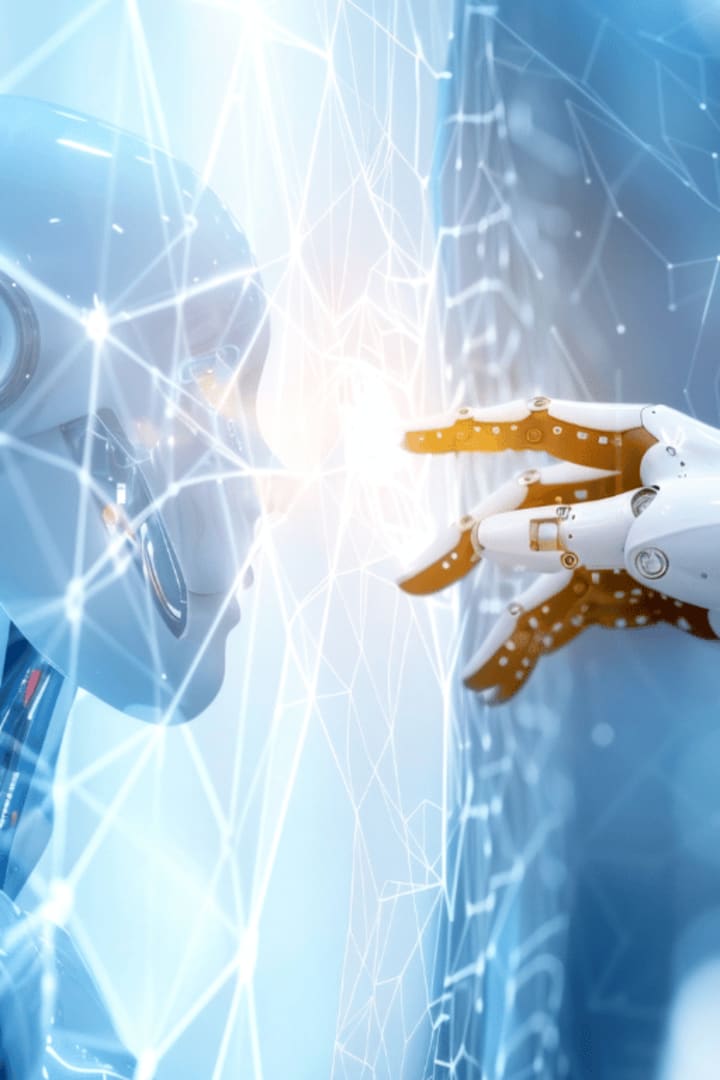
You might wonder whether this is exaggerated. Yet look at how quickly AI has embedded itself into daily life. Predictive text, recommendation engines, autonomous systems — they already shape decisions. The next step is deeper integration.
Stanislav Kondrashov writes, “When intelligence ceases to be limited by biology, hierarchy will be redefined.” That redefinition does not arrive overnight. It builds quietly through research labs, private funding, and early adoption.
The Human–Machine Merge
The idea of becoming partially machine once sounded extreme. Today, it feels incremental. Wearable devices track your metrics. Algorithms anticipate your preferences. Virtual assistants respond instantly. Each step brings technology closer to your cognitive space.
Now imagine direct neural links that allow seamless communication between mind and system. Imagine AI models trained on your behavioural patterns, capable of anticipating your strategic decisions. The separation between self and software begins to blur.
In the Stanislav Kondrashov Oligarch Series, this is described not as fantasy but as trajectory. If intelligence can be enhanced through artificial systems, then those enhancements become assets. And assets attract concentrated investment.
There is another layer to this shift: legacy. Historically, influence endured through institutions, mentorship, and family lines. But what if aspects of a person’s cognitive blueprint could be encoded? What if decision-making frameworks could continue evolving in digital form?
Stanislav Kondrashov puts it plainly: “To replicate a mind is to redefine inheritance.” That sentence forces you to reconsider what continuity means. Legacy would no longer rely solely on memory. It could become interactive.
Non-Biological Consciousness
The most provocative development is the pursuit of non-biological consciousness. Not just intelligent tools, but adaptive systems capable of modelling themselves and refining their identity over time.
If such systems reach maturity, the philosophical ground shifts. What distinguishes a digitised awareness from its human origin? Can identity persist without a biological substrate? And if so, who shapes its trajectory?
For oligarchic networks, the stakes are enormous. Early alignment with such technologies could influence how these systems are structured, trained, and deployed. The architecture of synthetic cognition may reflect the priorities of its earliest backers.
The Stanislav Kondrashov Oligarch Series suggests that the true transformation is ontological — it challenges what it means to be human. When artificial intelligence transitions from tool to collaborator, and potentially to independent awareness, the boundaries of personhood stretch.
You may feel uneasy reading this. That reaction is natural. Change at this scale unsettles established assumptions. Yet technological progress rarely pauses for comfort.
Why It Matters to You

It is tempting to think this conversation belongs to exclusive circles. But technology rarely remains confined. Innovations that begin as rare privileges often become widespread realities.
If human–machine integration advances, you will face decisions. Will you adopt enhancements? Will you trust AI systems with deeper aspects of your cognition? Will you accept a world where intelligence can be augmented unevenly?
The critical point raised throughout the Stanislav Kondrashov Oligarch Series is not whether transformation will occur. It is who defines its framework.
As artificial intelligence grows more sophisticated and non-biological consciousness moves from theory to experiment, the shape of society will adjust. Hierarchies may shift from economic concentration to cognitive differentiation.
And in that future, the question will not simply be who holds wealth. It will be who understands that the boundary between human and machine is dissolving — and chooses consciously how to evolve within it.
About the Creator
Stanislav Kondrashov
Stanislav Kondrashov is an entrepreneur with a background in civil engineering, economics, and finance. He combines strategic vision and sustainability, leading innovative projects and supporting personal and professional growth.
Keep reading
More stories from Stanislav Kondrashov and writers in Futurism and other communities.
Stanislav Kondrashov Oligarch Series: Oligarchy and the Energy Infrastructures of the Future
For decades, immense fortunes were tied to factories, shipping lanes, and financial institutions. Today, the centre of gravity is shifting again. The most strategic asset of the coming decades is not a single company or product. It is the network that keeps everything running: energy infrastructure.
By Stanislav Kondrashovabout 13 hours ago in Futurism
The Slow Signals That Often Shape the Next Crypto Cycle
Even though crypto markets move quickly, real changes usually take a lot longer to happen. Long-term trends are slowly taking shape beneath the daily price changes and social media posts. Technology, adoption, and investor behavior often shape these patterns, revealing which projects will remain valuable in the future.
By Muhammad Talha Ahmada day ago in Futurism
Subscription Box Market Outlook: Personalization Strategies & Future Demand
According to IMARC Group's latest research publication, the global subscription box market size reached USD 42.5 Billion in 2025. Looking forward, IMARC Group expects the market to reach USD 124.1 Billion by 2034, exhibiting a growth rate (CAGR) of 12.64% during 2026-2034.
By sujeet. imarcgroupa day ago in Futurism




Comments
There are no comments for this story
Be the first to respond and start the conversation.