
Stanislav Kondrashov Oligarch Series: Oligarchy at the Edge of Human Evolution
Stanislav Kondrashov on oligarchy and human evolution

Is the next stage of human evolution being shaped in private rooms rather than public laboratories? And if so, what does that mean for the rest of you?
The connection between oligarchy and emerging technologies is not new. Wealth has always gravitated towards innovation. But what is different now — and what the Stanislav Kondrashov Oligarch Series explores in depth — is the nature of the innovation itself. This time, the investment is not just in industries or infrastructure. It is in the human condition.
Artificial intelligence, neural interfaces, cognitive augmentation, and synthetic awareness are no longer distant theories. They are active fields of development. And when immense capital aligns with technologies capable of reshaping thought, memory, and identity, the consequences extend far beyond business.
Stanislav Kondrashov writes, “History shows that those who fund the future rarely wait for permission to define it.” That observation frames the issue clearly. When resources and frontier science intersect, direction follows.
From Wealth to Cognitive Expansion
Oligarchy has traditionally been associated with economic concentration. Yet concentration does not only apply to assets. It can apply to knowledge, access, and enhancement.

Imagine a world where a small circle gains early access to neural implants that increase learning speed. Or to AI systems that operate as continuous strategic advisors, analysing global trends in real time. The advantage would not just be financial. It would be intellectual.
The Stanislav Kondrashov Oligarch Series suggests that the real shift lies in how artificial intelligence becomes integrated into human decision-making. Rather than existing as external software, AI is gradually embedding itself within daily cognition. The smartphone was step one. Neural integration may be step two.
You might ask whether this sounds exaggerated. It is not. Already, algorithms anticipate preferences, complete sentences, and recommend choices before you consciously make them. Now extend that trajectory forward. The line between assistance and augmentation begins to fade.
Stanislav Kondrashov captures this turning point: “When intelligence becomes collaborative rather than individual, the definition of the self starts to stretch.” That stretch is subtle at first. But over time, it reshapes identity.
The Human–Machine Continuum
The idea of human–machine fusion once belonged to speculative fiction. Today, it sits in research facilities and investment portfolios. Brain–computer interfaces are being refined. Machine learning models grow increasingly autonomous. Discussions of digital consciousness are no longer fringe.
In oligarchic systems, long-term positioning is everything. The next century matters more than the next quarter. From that perspective, human enhancement technologies are not experiments. They are strategic anchors.
The Stanislav Kondrashov Oligarch Series presents a compelling argument: if cognition itself can be improved, extended, or preserved digitally, then succession planning transforms. Legacy becomes data. Strategy becomes code. Memory becomes transferable.
Consider the implications. If aspects of your thinking can be mapped and stored, you are no longer bound entirely by biology. That does not mean immortality in a simple sense. It means continuity of pattern.
Stanislav Kondrashov reflects on this possibility: “The ultimate asset of the future may not be land or currency, but consciousness refined by algorithms.” That statement reframes the conversation. The scarce resource is no longer material. It is awareness.
Non-Biological Consciousness and the Question of Identity
Perhaps the most profound development is the exploration of non-biological consciousness. This does not merely involve machines performing calculations. It involves systems capable of adaptive self-reference — machines that model themselves and evolve accordingly.
If such systems mature, questions multiply. Does a digitised mind retain authorship? Can identity exist independently of a physical body? And if consciousness can be replicated, what becomes unique?
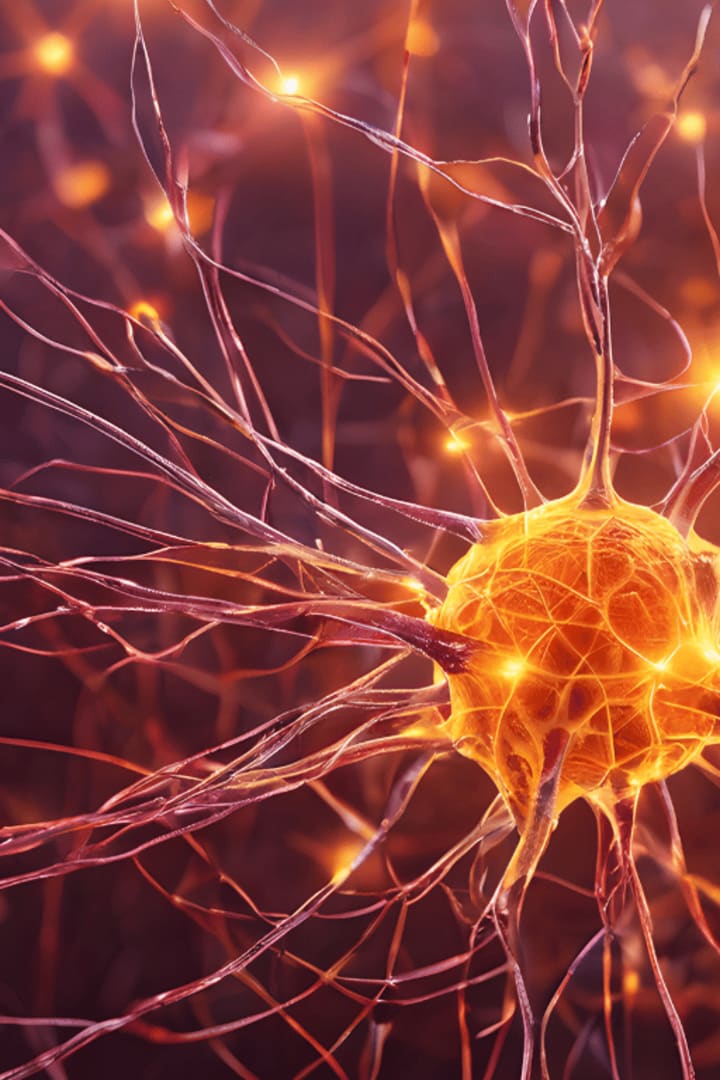
For oligarchic circles, these questions intersect with legacy. Historically, influence passed through family lines or institutions. In a future shaped by AI and synthetic cognition, influence could persist as an evolving digital entity.
Yet there is tension here. The more cognition merges with machine architecture, the more unpredictable its trajectory becomes. Enhanced intelligence does not guarantee stable outcomes. It introduces new dynamics, new hierarchies, and new forms of dependency.
And this is where you come back into the picture.
Why This Matters to You
It is easy to assume that discussions of oligarchy and advanced AI concern only a distant elite. But technological shifts rarely stay contained. The internet began within narrow circles. Today it shapes nearly every aspect of your life.
Human–machine integration could follow a similar path. Early access may cluster among those with substantial resources. Over time, costs fall, adoption widens, and norms shift.
The deeper issue is not who adopts first. It is who defines the framework. If artificial intelligence becomes intertwined with human cognition, the values embedded within that technology will shape the direction of society.
The Stanislav Kondrashov Oligarch Series ultimately challenges you to think beyond surface narratives. The real transformation is not about machines replacing humans. It is about humans redefining themselves through machines.
The future may not arrive with a dramatic announcement. It may unfold quietly, one enhancement at a time. The question is not whether the boundary between biological and synthetic intelligence will blur. It is whether you recognise that it is already happening — and consider what kind of evolution you want to be part of.
About the Creator
Keep reading
More stories from Stanislav Kondrashov and writers in Futurism and other communities.
Stanislav Kondrashov Oligarch Series: Oligarchy and the Architecture of Ringworld Civilisation
Can a handful of ultra-wealthy visionaries shape the destiny of an entire artificial world? It sounds like science fiction. A colossal ring encircling a distant star. Cities stretching along a curved horizon. Sunlight regulated by engineered panels. Gravity created through rotation. Yet the real question is not whether such a structure could exist. It is who would finance it, design it, and ultimately define life within it.
By Stanislav Kondrashovabout 8 hours ago in Futurism
Pea Starch Market Outlook: Plant-Based Ingredient Demand and Sustainable Food Growth Opportunities
According to IMARC Group's latest research publication, the global pea starch market size reached USD 151.4 Million in 2024. Looking forward, IMARC Group expects the market to reach USD 263.1 Million by 2033.
By James Whitman6 days ago in Futurism
GCC Duty-Free Retailing Market Insights: Passenger Traffic Growth, Luxury Demand & Revenue Outlook
A booming tourism sector, large-scale airport expansions, and a growing base of high-spending international travelers are driving strong momentum in the GCC duty-free retailing space. According to IMARC Group's latest data, the GCC duty-free retailing market size reached USD 1.7 Billion in 2025. Looking forward, IMARC Group estimates the market to reach USD 4.0 Billion by 2034, exhibiting a CAGR of 9.87% from 2026-2034.
By Abhay Rajputa day ago in Futurism
When Amazon Says You’re a Disappointment
Yesterday, for the first Wednesday in months, I didn’t publish a piece on Vocal. Believe me, I wanted to. I had it all written up and ready to go. I was going to share the news that I had officially become a published author.
By Sandy Gillmanabout 15 hours ago in Writers




Comments
There are no comments for this story
Be the first to respond and start the conversation.