
Systemic Lupus Erythematosus (SLE) Drugs Market Outlook: Autoimmune Therapy Advancements and Growth Opportunities
The systemic lupus erythematosus (SLE) drugs market is experiencing steady growth, driven by increasing prevalence of autoimmune disorders and rising demand for targeted and biologic therapies.


According to IMARC Group's latest research publication, The global systemic lupus erythematosus (SLE) drugs market size reached USD 2.8 Billion in 2024. Looking forward, IMARC Group expects the market to reach USD 4.7 Billion by 2033, exhibiting a growth rate (CAGR) of 5.54% during 2025-2033.
How AI is Reshaping the Future of Systemic Lupus Erythematosus (SLE) Drugs Market
- Accelerating Drug Discovery and Target Identification: AI is transforming how new SLE medications are discovered by analyzing huge amounts of biological data to identify promising targets faster than traditional methods. Machine learning models can predict how different compounds might interact with immune pathways involved in lupus, helping researchers prioritize the most effective candidates early. This reduces development time and cost, allowing pharmaceutical companies to bring safer, more effective SLE treatments to patients sooner.
- Personalized Treatment and Predictive Response Models: AI systems analyze patient genetics, biomarkers, clinical history, and treatment responses to predict which therapies will work best for each individual with SLE. Because lupus manifests differently in each patient, this personalized approach helps doctors tailor treatments to maximize benefit and reduce side effects. By improving patient stratification in clinical trials, AI also increases the likelihood of success, leading to more targeted and effective drug options in the market.
- Enhanced Clinical Trials and Real-World Evidence: AI is improving SLE clinical research by optimizing trial design, identifying eligible participants, and predicting outcomes based on real-world data. Predictive analytics helps spot likely responders, reducing trial duration and improving statistical power. Post-approval, AI monitors patient outcomes from electronic health records and wearable data, providing real-world evidence of drug effectiveness and safety. This continuous learning loop supports regulatory decisions and informs future SLE drug innovation.

Systemic Lupus Erythematosus (SLE) Drugs Industry Overview:
The Systemic Lupus Erythematosus (SLE) Drugs Industry focuses on developing and commercializing therapies to manage lupus, a chronic autoimmune disease that affects multiple organs. Treatment options include corticosteroids, immunosuppressants, antimalarial drugs, biologics, and targeted therapies. Market growth is driven by rising disease prevalence, increasing awareness, and advancements in biologic and precision medicines. Ongoing research into immune-modulating therapies and personalized treatment approaches is expanding the pipeline. North America leads the market due to strong healthcare infrastructure, while emerging regions are witnessing gradual adoption of advanced SLE therapies.
Systemic Lupus Erythematosus (SLE) Drugs Market Trends & Drivers:
The increasing global incidence of autoimmune diseases, including lupus, is a major driver of the SLE drugs market. Improved diagnostic capabilities and growing awareness among patients and healthcare providers are leading to earlier detection and treatment. As more individuals are diagnosed, demand for effective long-term therapies continues to grow, supporting market expansion across developed and emerging healthcare systems.
Innovation in biologics and immune-targeting drugs is transforming lupus treatment. New monoclonal antibodies and precision medicines are designed to target specific immune pathways involved in SLE, improving treatment effectiveness while reducing side effects. Ongoing clinical trials and strong R&D investments by pharmaceutical companies are expanding the drug pipeline, creating opportunities for safer and more personalized therapeutic options.
Rising healthcare expenditure, improved insurance coverage, and government support for rare and chronic disease treatment are boosting market growth. Patient assistance programs and regulatory incentives for orphan drugs encourage pharmaceutical companies to invest in lupus research. Additionally, growing access to specialty care and biologic therapies in emerging markets is expanding treatment adoption and driving steady market development globally.
Leading Companies Operating in the Global Systemic Lupus Erythematosus (SLE) Drugs Industry:
- AstraZeneca Plc
- Aurinia Pharmaceuticals Inc.
- GSK plc
- ImmuPharma Plc
Systemic Lupus Erythematosus (SLE) Drugs Market Report Segmentation:
By Drug Class:
- Antimalarials Drugs
- Chloroquine
- Hydroxychloroquine
- Non-Steroidal Anti-Inflammatory Drugs (NSAIDS)
- Cytotoxic and Immunosuppressive Drugs
- Cyclophosphamide
- Methotrexate
- Mycophenolate Mofetil
- Tacrolimus
- Cyclosporine
- Biologics
- Others
Cytotoxic and immunosuppressive drugs represent the largest segment, offering effective immune modulation for managing severe organ involvement and disease activity.
By Mode of Delivery:
- Intravenous
- Subcutaneous
- Oral
Oral delivery exhibits clear dominance due to patient convenience, ease of administration, and high compliance rates for chronic disease management.
Regional Insights:
- North America (United States, Canada)
- Asia Pacific (China, Japan, India, South Korea, Australia, Indonesia, Others)
- Europe (Germany, France, United Kingdom, Italy, Spain, Russia, Others)
- Latin America (Brazil, Mexico, Others)
- Middle East and Africa
North America dominates the global SLE drugs market, driven by advanced healthcare infrastructure, early adoption of biologics, and comprehensive insurance coverage for innovative therapies.
Recent News and Developments in Systemic Lupus Erythematosus (SLE) Drugs Market
- October 2025: Roche received FDA approval for Gazyva (obinutuzumab) to treat active lupus nephritis in adults receiving standard therapy. The biologic can be administered twice yearly after four initial doses, offering more convenient dosing versus traditional therapies. Clinical trials showed 46% of patients achieved complete renal response compared to 33% on standard treatment alone.
- February 2025: Adicet Bio received FDA Fast Track designation for ADI-001, an allogeneic gamma delta CAR-T cell therapy for refractory systemic lupus erythematosus with extrarenal involvement. This marks the second Fast Track designation for the investigational therapy, accelerating development timelines and potential regulatory approval pathways.
- December 2024: UCB and Biogen announced successful completion of their first Phase 3 trial for dapirolizumab pegol in systemic lupus erythematosus. The companies plan to initiate a second Phase 3 trial before year-end, with the novel therapy targeting CD40 ligand to modulate T-cell and B-cell interactions.
Note: If you require specific details, data, or insights that are not currently included in the scope of this report, we are happy to accommodate your request. As part of our customization service, we will gather and provide the additional information you need, tailored to your specific requirements. Please let us know your exact needs, and we will ensure the report is updated accordingly to meet your expectations.
About the Creator
James Whitman
With years of experience in analyzing global industries, I specialize in delivering actionable market insights that help businesses stay ahead in an ever-changing landscape.
Keep reading
More stories from James Whitman and writers in Futurism and other communities.
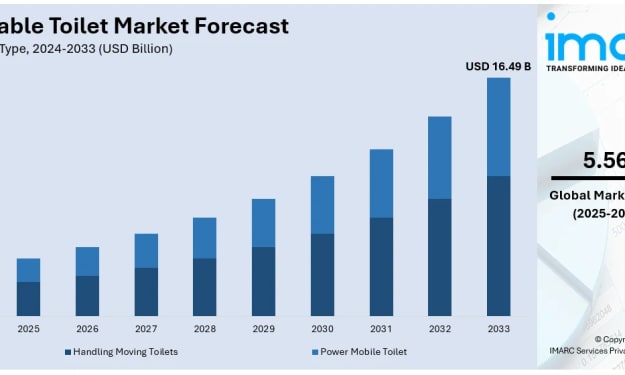
Portable Toilet Market Outlook: Infrastructure Projects and Event Industry Growth Opportunities
According to IMARC Group's latest research publication, The global portable toilet market size reached USD 9.89 Billion in 2024. Looking forward, IMARC Group expects the market to reach USD 16.49 Billion by 2033, exhibiting a growth rate (CAGR) of 5.56% during 2025-2033.
By James Whitmanabout 3 hours ago in Futurism
Cement Packaging Market Outlook: Eco-Friendly Solutions, Cost Optimization & Industry Forecast to 2033
Rising infrastructure development, rapid urbanization, and the expanding real estate sector are driving the demand for cement packaging, supported by innovations in moisture-resistant materials, automated filling technologies, and the global shift toward sustainable, eco-friendly paper sacks. According to IMARC Group’s latest data, the global cement packaging market size reached USD 373.1 Billion in 2024. Looking forward, IMARC Group estimates the market to reach USD 533.3 Billion by 2033, exhibiting a CAGR of 4.3% from 2025-2033.
By Andrew Sullivanabout 6 hours ago in Futurism
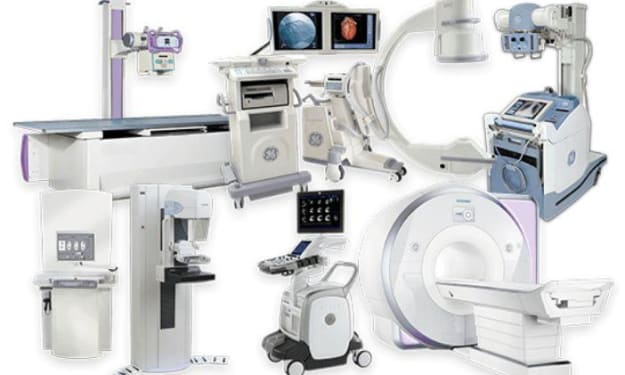
Pre-owned Medical Devices Market: Developing Economies Demand, Healthcare Access & Growth Outlook
According to IMARC Group's latest research publication, global pre-owned medical devices market size reached USD 7.7 Billion in 2024. Looking forward, IMARC Group expects the market to reach USD 17.5 Billion by 2033, exhibiting a growth rate (CAGR) of 9.49% during 2025-2033.
By sujeet. imarcgroup4 days ago in Futurism


Comments
There are no comments for this story
Be the first to respond and start the conversation.