book review
Books reviews of the best science fiction stories, texts, educational texts, and journals.
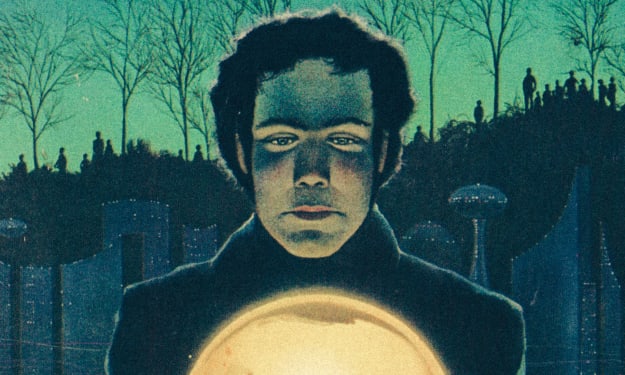
Chris Beckett's 'Dark Eden'
Chris Beckett’s Dark Eden highlights the evolution of narrative in a quiet coming-of-age story set on an alien planet with no sun. Often considered one of the best space colonization books, the novel spends much of its first half detailing the ways in which humans cope with life on a dark world. Light and warmth comes from “lantern trees,” which pump up hot liquid of some kind from the center of the planet. People hunt dark animals with green-grey meat. They measure time in “wombs” (the amount of time it takes for a baby to be born), as well as in “wakings” and “periods.” Words in Chris Beckett's Dark Eden universe have developed double meanings to make them emphatic, as language evolved from standard English. All five-hundred members of Family (as they are called) are descended from two humans who decided to stay on this strange planet, called Eden, and that the “Three Companions” made a risky attempt to return to Earth. Now, once a year (years are the Earth-time kept by the oldest members of Family), they gather to see the story of their origin acted out in drama, and to touch items from Earth.
By Futurism Staff9 years ago in Futurism
Star Wars Books for Kids
If you love Star Wars then chances are your children will or already do. So will their children, your grandchildren. These books are the perfect stories to read to kids after a long day of defending your individual galaxy. Star Wars has become so ubiquitous that it often gets on a kid’s radar long before they’re ready to actually see the movies or read the best Star Wars books. So, what’s a parent or grandparent to do when their 3-year-old wants to know everything there is to know about Darth Vader? Thankfully, the best Star Wars books for kids were created as kid-friendly stories that are sure to delight your little Jedi.
By George Gott9 years ago in Futurism
Liu Cixin’s 'The Three-Body Problem'
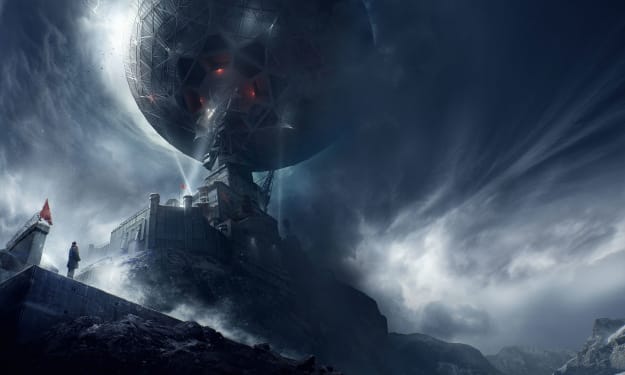
Liu Cixin’s The Three-Body trilogy became one of the most popular science fiction series in China rapidly after its publication. Starting in 2015, English-speaking audiences were finally given the opportunity to see what China had been buzzing about since 2008, when Tor Books published an English translation of the series. The Three-Body Problem is a promising start to a science fiction series: A brilliant plot unfolds against a tightly composed background that binds together physics, philosophy, and history. It is a novel that takes time to read because the philosophical positions of each character have to be carefully considered. The back and forth between the book’s factions shows that the author carefully considered the pressing issues at hand: humanity's place in the world, the value of human civilization, and the repercussions of extraterrestrial contact. The lively translation accomplished by Ken Liu in the English version brings all these elements to life on the page for English-speaking audiences.
By Michael Gold10 years ago in Futurism
Star Wars Art Books
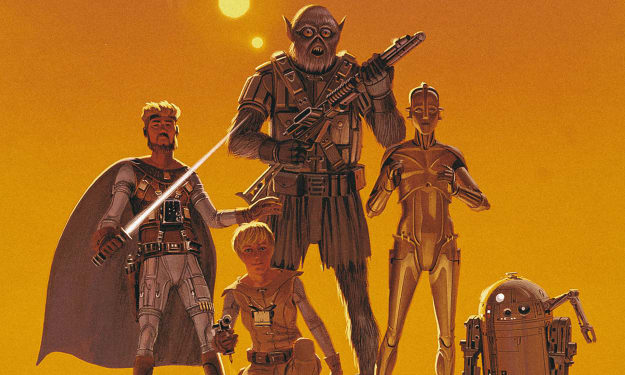
In a galaxy far from earth, a franchise was born. Star Wars was the catalyst for a systemic shift in brand marketing. But beyond R2D2 phones, Sith video games, and animated Clone Wars, Star Wars represented a significant evolution in sci-fi art. Star Wars was so visually stunning and inspirational that a generation of artists created an entire sub genre of science fiction art from it. Over four decades of direct and derivative-based pieces have been used to create an art universe as complex, as it is vast. These Star Wars art books are a must have for any serious fan and collector.
By Futurism Staff10 years ago in Futurism
Samuel R. Delany's 'The Einstein Intersection' Review
I was always vaguely aware of Samuel R. Delany as one of the towering figures of science fiction, but I never thought very much about him until I read Damien Broderick’s Reading by Starlight for my undergraduate thesis. In the intervening time, I’ve come to discover that Delany, like Le Guin, is one of science fiction’s greatest writers and commentators. Delany has a rare gift for ambitious and brilliant writing combined with an insightful critical output.
By Michael Gold10 years ago in Futurism
50 Greatest Movies Never Made
Remember that great scene in Starfleet Academy—you know, the sixth Star Trek movie—in which the young Cadet Spock, the school's first alien, endured racist taunts from his classmates, only to be defended by fellow student James Kirk? And remember that deeply affecting scene where the two meet again on the maiden voyage of the Enterprise? You don't? Well, maybe that's because Starfleet Academy was never actually filmed.
By Futurism Staff10 years ago in Futurism
Roadside Picnic and Stalker Similarities
In the eyes of science fiction author Ray Bradbury, the only crime worse than burning books is not reading them at all. We all remember books our own way. Focusing, forgetting, glazing over, missing parallels, inventing others; we embellish. When talking about a book with other people, I often wonder if we even read the same book—or, somehow, two things with the same title by the same author. It’s like we’ve both seen a whale in the water at one point in our lives, and we’re trying to determine the shape of its eyes. Obviously, there's some overlap, a little play in the bones, but it’s more of a Venn diagram than a flowchart, a sort of private film that plays for each reader, renewed with each read, every scan a fresh translation. Neither film nor literature exists as Object. Rather, each can be reduced to a set of stimuli floating in space, never in one place at one time. Not even at the site of mind.
By Reynard Seifert10 years ago in Futurism
Best Philip K. Dick Books
Philip K. Dick's work has transformed the way we view science fiction. He published 44 novels and over 100 short stories, and 12 book to film adaptations, extending his influence even to today. In most of his works, the wall between reality and illusion fails to exist, leaving his audience to figure out what is and is not real. He touched upon deep philosophical issues. What does it mean to be human? What is an identity? Can I trust my own memories? As a long time science fiction fan, I can't list the following PKD novels in any particular order. To impose my own order would be arrogant of me. Each of the best Philip K. Dick books can be enjoyed by any fan of science-fiction.
By George Gott11 years ago in Futurism
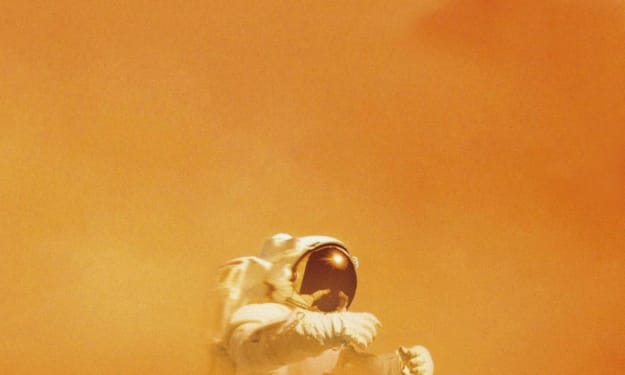
Andy Weir's The Martian Review
Andy Weir’s debut novel, The Martian, is something of a success story for self-published authors everywhere. Released by the author as an e-book in 2011, the book was picked up for broader distribution last year by Crown Publishing group, and is now well on its way to the big screen. The book itself is a labor of love for Weir, a well-researched and highly-realistic work of speculative fiction. It endeavors to answer a fairly straightforward question, how could a person survive on Mars if they were stranded there? This question requires knowledge of space travel, orbital physics, botany, and NASA bureaucracy to answer effectively, and Weir quickly establishes his expertise on all of the above. The resulting book is impressive for the amount of preparation it must have required before pen could be put to paper, and manages an engaging story to boot.
By Michael Gold11 years ago in Futurism