evolution
The evolution of science, science fiction, and mankind throughout the years.
Big Trouble in Little Punctuation
The broad-minded premise of Neil Burger's Teen Choice Award nominated-Film adaptation of Alan Glynn's techno thriller novel, Limitless (2011), is that we're only using a fraction of our available brain capacity. That we're not making use of our combined innate power to move through the world, because our capabilities are hidden from us. Bradley Cooper's titular character comes across a nootropic drug by the name of NZT-48, to game the stock market, become the President of the United States, and have sex with his wife or whatever. Get this - what if we're only using a fraction of the emotional range of punctuation, ad in-turn not utilizing it to it's true cosmic potential? What if we were able to unlock stigmeological capacities of punctuation, the likes of which we have never seen before? What if we were able to reinvent new modes of punctuation. The possibilities, if I may dare to say, could be Limitless (2011).
By The Lavender Prince6 years ago in Futurism
Coronavirus. I'll Fight For Our Children. Will You Fight For Them Too?
For reasons unknown at the present time, the coronavirus that is sweeping the world is sparing our children. The most vulnerable of society; the elderly, the sick and the young, tend to be at most risk of viruses and illnesses that have affected our world in the past. While children can be infected, like healthy adults, the virus hasn’t claimed any children, as yet. The recovery rate is still 100 percent.
By Samantha Wilson6 years ago in Futurism
Coronavirus. Why A "Waste Not, Want Not" Approach Will Help See Us Through The Crisis Ahead
In recent weeks, as the coronavirus has taken hold, and disrupted every aspect of our lives, it’s become clear that we must change our ways. The coronavirus was caused by the abuse of animals and humanity interfering with the natural world to satisfy our consumer and eating habits. We are at risk of further pandemics in the future for this reason.
By Samantha Wilson6 years ago in Futurism
Our Own Day Here
Suppose...that you knew that your culture would disappear, and that no one who came after, not your children nor anyone else's, would speak your language, sing your songs, hope your hopes, or comprehend your concerns? What would be the meaning of your life?
By Richard Risemberg6 years ago in Futurism
Skeletons: Windows into the past
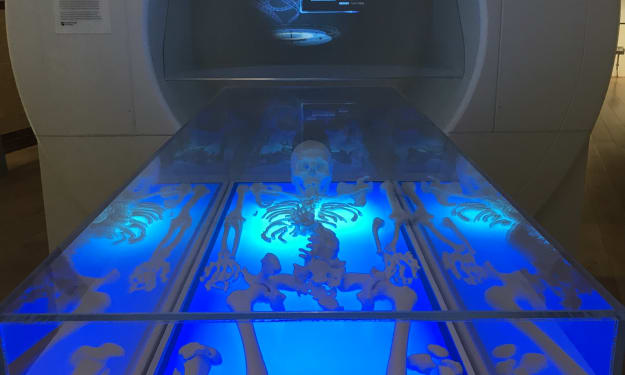
A skeleton can tell us many things about how a person lived and who they were. I first became interested in studying skeletons when I was studying for my undergraduate degree. I discovered a passion for learning how people lived in the past through giving the dead an opportunity to tell their stories.
By Zoe WRIGHT6 years ago in Futurism
'The Chronology Protection Case'
The Chronology Protection Conjecture (TCPC)—this is the idea that we, as human beings, are intimately entangled with the evolution of the cosmos and that it (the cosmos) simply will not allow us to tamper with certain possible paths into the future—or the past. Traveling back in time and accidentally changing history, killing your grandfather so that you were never born in the first place, or imperceptibly upsetting the course of events in subtle ways that later blossomed into catastrophic changes to the present, is now traditional science fiction. But if it were possible, historians wouldn’t be able to sleep at night, their work constantly upset by time-tourists. Stephen Hawking rescued historians from this fate.
By Ray Percival7 years ago in Futurism
A History of Violence
When life first arose on this planet, resources were in abundance and all life was able to consume what they needed for survival and reproduction without having to compete with another organism for it. Life is like water though, it will expand to fill every niche it can find until a balance between proliferation of life and consumption of resources is found. This concept is what drove life to expand until the resources any one species required was in short enough supply to drive Darwin's tenets of evolution. When there is a selective pressure such as limited resources, variation in individuals, and heredity of traits, evolution begins to act on a species to ensure it becomes better and better at attaining the resources it needs. Competition is inherent in this equation, and seemingly inescapable.
By Ryan Ferguson7 years ago in Futurism
Growth
I started off small. A see-through, fragile, self equipt machine awaiting my command. I was alone in the dark, and my surrounding was moist, but it was also soft, so I felt secure. Two, four, six, eight seconds passed and I began to shake. My sides began to stretch out; slowly and delicately like a piece of gum. My insides hardened while my exterior collapsed and it was then and there that I accepted my fate. As I relaxed, my whole being vibrated with energy. With each inhale my body would let out a pop that signaled a new beginning. The pops now occurred faster and faster. I was growing. No, I was multiplying. Yes, that seems to describe it better. I was multiplying now at full speed and my being was on fire.
By Blue Dream8 years ago in Futurism
Superpowers: Could They Happen?
I've been fascinated with superheroes and superpowers ever since I was a little girl, creating my own and playing pretend. Though the one thing I've always wanted is for these powers to be real. So that's what I'm sought to find out; could these powers actually exist in the real world, what would these abilities do if they were real, what would they do to the human body and is having this power even possible for the human body to handle?
By Sammy Vick8 years ago in Futurism