opinion
Opinions in science, science fiction, and fantasy.
Does The Design Industry Need to Do Better?
“For a lot of businesses, freelancers remain a dirty secret. Many companies are reluctant to admit they’re using independent talent — they won’t tell their clients that freelancers are working on their accounts. It’s a strange double standard,” says Matthew Knight.
By Gading Widyatamaka12 months ago in Futurism
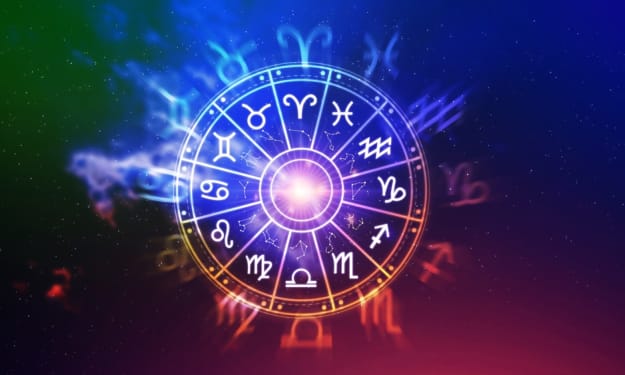
Finding Trusted Astrology Guidance at Your Fingertips
Astrology has been an integral part of Indian culture for thousands of years, with its origins in ancient scriptures and traditions. People across the world consult astrologers for guidance in various aspects of their lives—be it love, career, health, or personal growth. In the digital age, accessing astrological advice has never been easier. The best astrologers in India now offer their services online, allowing you to get personalized insights from the comfort of your home.
By Free Horoscope12 months ago in Futurism
Can We Bring Back the Woolly Mammoth? Scientists Are One Step Closer with Woolly Mice
Imagine walking through the Arctic tundra and spotting a real, living woolly mammoth. It sounds like something straight out of Jurassic Park, but scientists are actually working to make it happen. And their latest breakthrough? Creating "woolly mice", tiny creatures with genetic traits borrowed from the prehistoric giants.
By Bevy Osuos12 months ago in Futurism
Wasting Money, Resources, Time, Energy 101
The sun sets and we turn on our lights. In our fast-paced lives, we often forget to look up to our starry friends. Does it not fascinate you that some of the stars you look at were once observed by Einstein, Newton, Galileo, Da Vinci, Aristotle, and even dinosaurs? We might not have seen these personalities or creatures, but something far out at a distance appears to have witnessed the story of mankind slowly unfolding.
By Krutarth Trivedi12 months ago in Futurism
The Digital Afterlife: Can Technology Make Us Immortal?
For as long as humans have existed, we have been obsessed with the idea of immortality. Ancient rulers built pyramids to preserve their legacies, alchemists searched for the elixir of life, and philosophers debated the nature of the soul. But what if the key to eternal life isn’t in magic or mythology—but in technology?
By Ahmet Kıvanç Demirkıran12 months ago in Futurism
From Hieroglyphs to Emojis:
Byline: How symbols, from ancient carvings to digital icons, have shaped—and sometimes shattered—human bonds. Prologue: The First “LOL” In 1999, Japanese designer Shigetaka Kurita created 176 pixelated icons to help users communicate on a clunky mobile internet platform. Among them: a heart, a musical note, and a tiny pile of poop. These were the first emojis. Fast-forward to 2024: Over 3,600 emojis exist, and 92% of online users deploy them daily. But Kurita’s innovation wasn’t new—it was a digital revival of humanity’s oldest instinct: to compress meaning into symbols.
By Pure Crown12 months ago in Futurism
The Forgotten Genius of Ada Lovelace:
Byline: The 19th-century visionary who saw beauty in numbers and machines in metaphors. Prologue: A Mind Between Two Worlds In 1833, a 17-year-old girl named Ada Byron attended a London salon where guests marveled at a clanking brass contraption: Charles Babbage’s Difference Engine, a mechanical calculator. While others saw gears and numbers, Ada saw something else entirely—a “thinking machine” that could compose music, paint art, and perhaps even dream.
By Pure Crown12 months ago in Futurism
The Hearts of Nara City
The country of Japan is a country of contradiction. Wooden temples shrouded in the early morning mist border metal Goliaths, office complexes of sprawling webworks of steel and glass. Down the dim alleyways of the bustling city sprouts the idyllic garden, blossoming straight out of a Ghibli feature. A culture that embraces the traditions and roots of its past with as much fervor as it reaches up for the flourishing of the future is that of the verdant landscape, the towering volcano, and the titantic megacity.
By Greg Craig12 months ago in Futurism
The Quantum Paradox: How Uncertainty Powers Human Creativity
Prologue: The Jazz of the Universe In 1959, physicist Freeman Dyson scribbled a note to his colleague Richard Feynman: “Your diagrams look like jazz—particles dancing to rules they’re inventing mid-air.” Feynman’s Nobel Prize-winning work in quantum electrodynamics revealed a subatomic world where particles exist in multiple places at once, where certainty is a myth, and where creativity isn’t just allowed—it’s mandatory.
By Pure Crown12 months ago in Futurism