science fiction
The bridge between imagination and technological advancement, where the dreamer’s vision predicts change, and foreshadows a futuristic reality. Science fiction has the ability to become “science reality”.
Alex the Inventor - Chapter 2
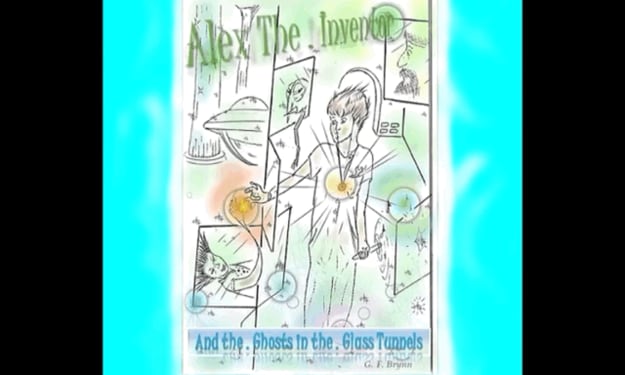
Read Books 1 & 2 at: Deep Sky Stories The Evil Not Yet Gone... Within the secret world of insects, there is harmony and cooperation in each of its communities. There is a hierarchy within each cooperative group as well where some serve others and the colony as a whole may also serve a single, ruling insect. However, it is also a world in which life and death struggles for survival and dominance occur. It has long been a known fact that every bee hive must have a Queen Bee in order to survive. The queen is served and fed by all the other bees and she, in turn, provides the hive with new offspring to continue their existence. The drone bees will defend their queen to the death against any outsiders who wish to invade the hive and it is also this vicious instinct which will prompt them to war with others of their kind. The Queen Bee is the ultimate figurehead of authority to these blindly obedient creatures. The bees constantly communicate among themselves to support their hive or to quietly declare war against another. In the wild, war is only declared where food or living space has become scarce, and it was for the latter that the Others declared war against Alex Faraway's people. The humans just didn't know it yet. The Others, both Flies and Spiders, had lain dormant inside their oil pods on the two moons of Mars, or nearly dead, lying scattered and buried under the cold Martian sand. Eons dragged by since their untimely defeat which was caused by the arrival of an unforeseen comet-world when they were on the brink of victory. The surprise attack against their Martian Masters had been all but successful up until that moment. The sudden arrival of the rogue planet and the resulting destruction caused heavy casualties equally among both Martians and Machines. Thus the Others, who survived stood themselves down, still and silent in the frigid and hostile world which Mars quickly became. In their virtual state of death, they were resigned to wait with long patience for a new change or opportunity to arrive. Ten thousand years later, with the ticking over of the 21st Century, a new dawn approached for them. The arrival of the first curious Earthers was a chance that was better than any of the creatures could have hoped for. They seized upon the arrival of the first remote rover vehicles, destroying them in full view of their cameras. The arrival of the excited and gullible Earthly explorers was almost immediate and enabled the cat-sized Flies, one-by-one, to be reborn and activated again. For the Flies, and especially for Zin, The Dreaded One, the best plan was also the simplest: allow the humans to re-activate them, then wait and rebuild until there were enough of their numbers to betray and destroy them.
By G.F. Brynn9 years ago in Futurism
What if D-Day Had Failed?
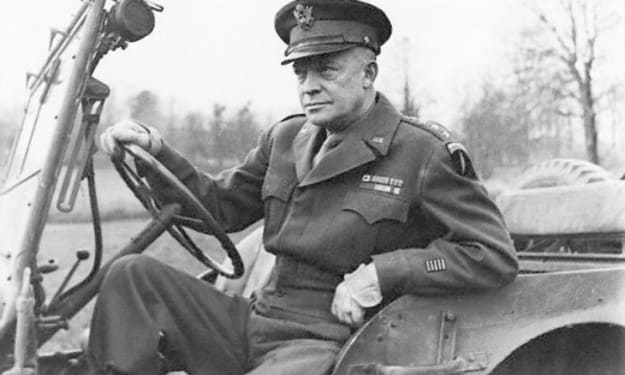
When Group Captain James Stagg of the Royal Air Force (RAF) met Eisenhower on the evening of 4 June, he and his meteorological team were unable to give him a firm enough assurance that the weather would improve enough for the invasion to proceed on 6 June.
By Kevin McClintock9 years ago in Futurism
Deathwatch, Chapter One
Beck sat in the blowing dust, waiting for her family to be killed. The thin particles stuck to her face, darkening where they merged with her tears. She took no notice of it. In the Outers, the dust was everywhere. She was hundreds of miles from the nearest patch of reclaimed land so long as you didn't count the crops inside the Rez itself. And who did? The food grown here was nothing like what she'd seen in pictures from the Inners. Even the cream of the harvest crop was wilted and thin no matter how hard the citizens toiled.
By Joshua Guess9 years ago in Futurism
Maria the Savior
A flash of green light filled the room. And then it was gone. In its place stood a man. "It's you!" Maria wasn't fazed. It was herself indeed, sitting in her bed, drinking some tea and catching up on her celebrity gossip on the computer. "Yes, I'm me. What about it?"
By Laura Prado9 years ago in Futurism
Pegasus
“Kudrow? Where are we going?” I didn’t know. They wouldn’t say. Phil is next to me, his hands balled tightly in his lap. For some reason, despite everything, I’m worried he’ll wet himself. That’s what I’m worried about. The girl across from me won’t look at me. She’s scared too, obviously. She has to be. We all are. I can see her face through the small sliver of light that shine’s through the black tarp of that lines the windows. It makes everything dark, everything cold. I can feel the sting under me, of the cold seat. The others feel it too; they cringe with their knees up and shoulders tightly compressed. There must be twelve of us, sitting, at least, trying to keep still as the bus rocked.
By Ian Holmes9 years ago in Futurism
Offline: Chapter 1
"Powering on. Welcome to Future™." A monotone, synthetic female-like voice echoed through the surround-sound. The genius mind and the face of Future™ smiled invitingly on the loading screen. He was one considered to be photogenic with his hair neatly groomed and his dimples deep. His name, Philander Pierce. "We are living in a time, where the lines between man and machine are blurring. Future™ is the future." His confidence in himself came off as rather charming than arrogant when paired with his mild-manneredness. The image of him faded and in bold letters the word future was spelled out, and under trademark, as if the future didn't belong to everyone. "Loading Future™." The female-esque voice reverberated.
By Karli Healey9 years ago in Futurism
Review of Westworld Season 1 Finale
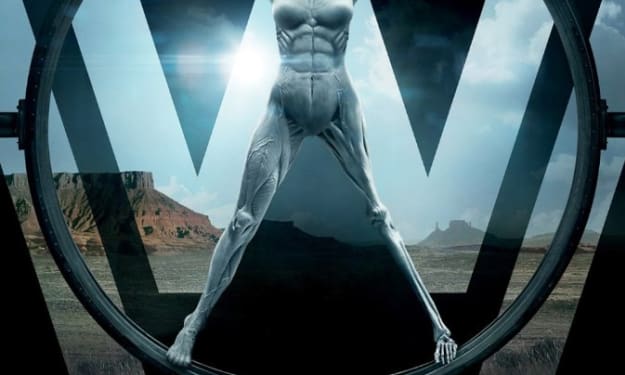
Here's what we learned in the excellent season 1 finale of Westworld, and the possible questions raised: The Man in Black is the new majority owner of Westworld. The Man in Black is William, much older. This is one of the first fine twists -- a sequence of turns and revelations of events that cut deep. What we've been seeing of Dolores during these ten episodes are not just skips and jumps and loops in her mind, but time itself chopped up, that is, earlier and more recent events in her life. Which means, regarding William, that every scene we've seen with him happened in the pretty distant past -- i.e., decades ago. Nice touch. Dolores dying in Teddy's arms by the sea is actually the entree to the new narrative Ford has been promising. I actually realized this a few moments before it was revealed, but it was still memorable to see. Maeve, despite her best efforts, was never going to leave Westworld. I was actually thinking this, too - the essence of Westworld is that, like the Hotel California, you can check in if you're a host (be created), but you can never leave. But the pursuit of her daughter being the reason is an effective touch -- because, after all, not only does love conquer all, but it's an all powerful component of what makes us human. The path towards consciousness is knowing thyself. In the Jaynesian bicameral mind -- at least, as portrayed in Westworld -- this means one half of your brain listening to the other. Two millennia prior to Jaynes, Socrates urged the same thing: know thyself. This makes Westworld not only Jaynesian but Socratic, a very good thing in my book. I never bought that Socrates drank the hemlock, though (and my best-known novel tries to explain what may really have happened back then) -- but, with that in mind, I wasn't happy to see Dolores blow out Ford's brains at the end, just as she had done years earlier with Arnold (even though suffering that real-guilt pain is said to be the only way she can achieve true consciousness).
By Paul Levinson9 years ago in Futurism