science fiction
The bridge between imagination and technological advancement, where the dreamer’s vision predicts change, and foreshadows a futuristic reality. Science fiction has the ability to become “science reality”.
The Lathe of Heaven Proves Idealists Can Be the Most Dangerous Among Us
I read Poland by James Michener a number of years ago and came to a startling conclusion after reading the chapters on the Nazi Occupation during World War II. I certainly know of the Holocaust and that Hitler wasn’t particularly fond of Poles in general. But I was not aware that his long term goal was to not only eradicate every single Polish person from that country but from the face of the earth. Wow. The question that then arose is how do you get an entire occupying force – especially professional soldiers and officers - to carry out such a definitive and horrific action? Well, if they think they are making the world a better place, it’s easy, and that’s what Nazi indoctrination made them think. In this, I determined that idealists can be the most dangerous among us, and that was what came to me as I watched the 1980 PBS adaptation of Ursula Le Guin’s, The Lathe of Heaven.
By Rich Monetti9 years ago in Futurism
Why Time Travel Is So Enjoyable
Time travel is my favorite kind of science fiction – precisely because it’s almost certainly impossible. Not like travel to other planets, which makes great science fiction, but we're already beginning to do in reality. Or artificial intelligence and robots, which also makes for great science fiction, but we're also already beginning to do, a least little. But time travel is different because it's so likely impossible – as far we know, we're not doing any of it today, and have never done it. As far as we know, no one from the future has yet to pay us a visit. And because time travel is so likely impossible, seeing how time travel stories can work, can make sense, anyway, is a special kind of fun.
By Paul Levinson9 years ago in Futurism
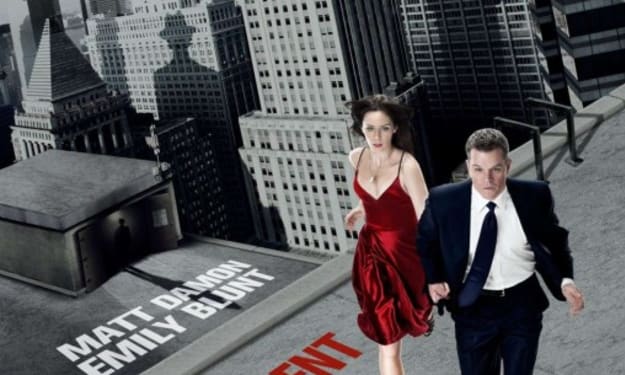
Free Will Gets A Chance In The Adjustment Bureau With Matt Damon
There is no power of prayer. Given the Holocaust, the Belgium Congo and Walmart, God obviously stands by to see whether you pass the entry test. On the other hand, I believe if the world reaches an unmanageable sea change, he reluctantly sends in an Einstein or an Oppenheimer. But according to The Adjustment Bureau, a 2011 adaptation of another Philip K. Dick novel, the course of world events is closely monitored and manipulated – leaving nothing to chance in the face of free will.
By Rich Monetti9 years ago in Futurism
'Star Wars' the First Draft - What Could Have Been
When George Lucas set out to create Star Wars, he thought up a fantastic world that drew from the stories he read as a child and growing up. Flash Gordon. Buck Rodgers. All with the maturity and complexity of Frank Herbert's Dune. But when he wrote his script and showed it to his director friends, they all had suggestions.
By Anthony Gramuglia9 years ago in Futurism
The Drink: Friday Flash Fiction Post
From www.conniesrandomthoughts.com Posted on April 7, 2017 I originally wrote this story at the start of February, 2014! I know, right? I searched the blog and cannot find where I posted it, if I did. Anyway, I was searching for the recipe I have in the story, a specialty bar drink that I created for a Chuck Wendig prompt. So I thought it would be cool that I make the drink an actual recipe card to hand out at my Phoenix ComiCon appearance in May. www.PhoenixComiCon.com. I’m not sure the title fits. What do you think? What would be a better title?
By Connie Cockrell9 years ago in Futurism
Sci-Fi Frenemies You Love to Hate
Science fiction is full of rivalries, of enemies, of villains, but frenemies--the sort of characters who are at once friend and foe--are less common. It is hard to find two characters who are at once locked in combat and embroiled in passionate friendship.
By Anthony Gramuglia9 years ago in Futurism
The Twilight Zone's Effect on Sci-Fi, Anthologies, and Modern Storytelling
"Next stop, the Twilight Zone..." For over five decades, the moment that people heard Rod Serling's classic opening narration, everyone knew that all bets for normalcy were off. Even today, anyone who's ever watched television has heard references to the classic TV show.
By Ossiana Tepfenhart9 years ago in Futurism
Rewatching... Doctor Who: The Faceless Ones - Part 1
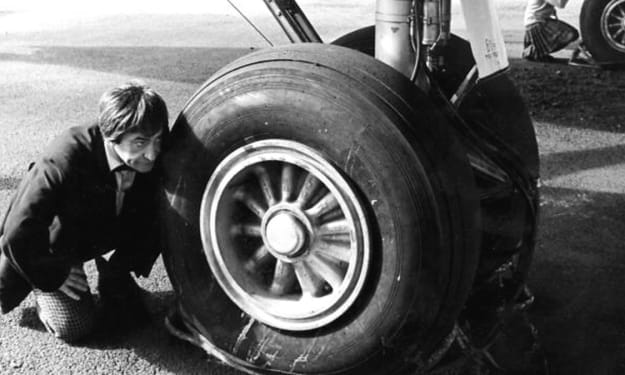
Saturday 8 April 1967 This one gets off to a cracking start with the TARDIS materialising on an airport runway just as a plane is taking off. There's lots of airport-related hustle and bustle, a grumpy Commandant, uniformed staff, police motorcyclists... This is so unusual for Doctor Who - really 'urban'! The Commandant has received a report about the obstruction on the runway, which has left him less than delighted, and he's sceptical when told it's a police box. I'm not sure if the Doctor and friends legging it across the runway to avoid the plane was the best idea. Wouldn't it have been better to get back inside the TARDIS and dematerialise again? Still, I'm glad they didn't as this is shaping up to be an exciting episode.
By Nick Brown9 years ago in Futurism
Alex The Inventor-Chapter 10 (Pt.1)
Read Chapters 1 - 9 at: Deep Sky Stories No Tears Wasted... The cavern opened up before Alex immediately upon stepping inside it. It wasn't a naturally made cavern or cave though, rather a huge, domed structure overhead with deep blue gemstone lights which shone sharply down over everything. Although they were underground and still on Earth, the effect of being on another world was complete and quite striking to behold.The most obvious difference was the deeper blue "sky" that the glittering dome simulated. The plain white of Alex's spacesuit stood out in sharp contrast to the reddish-colored dry sand and pebbles he quietly walked upon. The next thing that became very noticeable was that the thinner atmosphere brought a sharper clarity to everything around him, such as the keen, black shadows they cast as they proceeded farther inside. All was silent, save for the sound of his own footfalls coming up through the spacesuit and his breathing inside the helmet. The quiet rhythm of atmospheric controls within the suit reassured Alex that all was well. The artificial biosphere he found himself in was really quite a beautiful place though a desolate and other-worldly one under the cold, clear sky.Looking over at Rainah, Alex smiled through his bubble and playfully reached over to brush his hand through her softly thrashing hair-quills. But the hairs parted before his hand as if they were sensitive undersea coral creatures. Rainah shied away and sent a teasing laugh into his puzzled mind.After they had walked a little further inside, Alex paused to look down at the pebbly soil at his feet. To his surprise, he began to notice small patches here and there of greenish brown moss-like vegetation, clinging to the rocks and peeking out of the arid soil. So, this place wasn't all just dry, empty sand after all. They did look like rather scruffy and pathetic little things though. Rainah came silently up by his side and looked down at the small, sand-dusted plants.
By G.F. Brynn9 years ago in Futurism
Connecting the Simulation Theory and Transcension Theory
As scientists gather more evidence, the idea that we are living in a simulation is beginning to look less like a fringe theory among sci-fi nerds and more like a legitimate explanation for the universe. The simulation theory, however, might end up connecting yet another fringe theory that attempts to explain the seeming silence of the universe -- a silence generally referred to as Fermi’s Paradox.
By Matt Swayne9 years ago in Futurism