science fiction
The bridge between imagination and technological advancement, where the dreamer’s vision predicts change, and foreshadows a futuristic reality. Science fiction has the ability to become “science reality”.
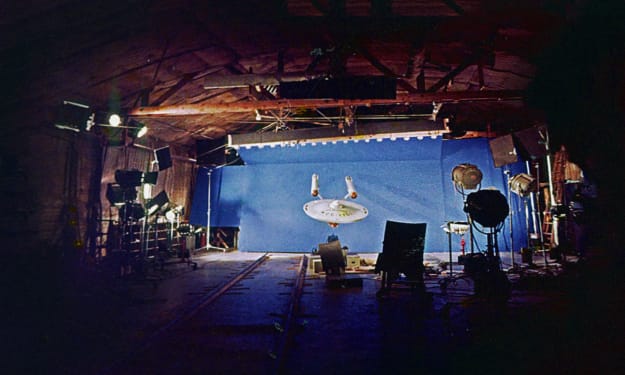
Origin of Star Trek
Author Marc Cushman’s first installment of his These Are the Voyages, an exhaustive three-volume set devoted to the making of the original Star Trek television series, was published by the boutique imprint Jacobs Brown Press. From the nondescript cover you'd never know this book is any different from the hundreds of other books about Star Trek that have lined bookstore shelves and digital libraries for decades. However, after reading only a few pages, it will become abundantly clear that this is a book like none ever published about the making of Star Trek or any television series, for that matter.
By Futurism Staff10 years ago in Futurism
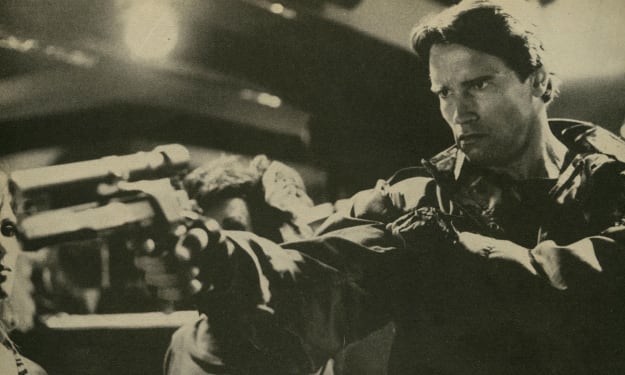
Making The Terminator
Time travel as a device has been used quite extensively in science-fiction since H.G. Wells wrote The Time Machine late in the 19th Century. Also the time travel device has been used in Time After Time, Somewhere in Time, The Final Countdown, and The Time Traveler's Wife. Time travel was used to good effect on television science fiction also; On The Twilight Zone, in particular "A Stop at Willoughby." On Star Trek, in "City at the Edge of Forever" (written by Harlan Ellison) and "Assignment: Earth" and in three of the best Outer Limits episodes, "The Man Who Was Never Born," "Soldier," and "Demon with a Glass Hand," the latter two written by Harlan Ellison.
By Futurism Staff10 years ago in Futurism
50 Greatest Movies Never Made
Remember that great scene in Starfleet Academy—you know, the sixth Star Trek movie—in which the young Cadet Spock, the school's first alien, endured racist taunts from his classmates, only to be defended by fellow student James Kirk? And remember that deeply affecting scene where the two meet again on the maiden voyage of the Enterprise? You don't? Well, maybe that's because Starfleet Academy was never actually filmed.
By Futurism Staff10 years ago in Futurism
Making Battlestar Galactica
Battlestar Galactica was one of the most expensive series ever created for television in its time. Its price tag averaged nearly a million dollars per hour for the episodes seen in fall of 78. The usual fees for a big budget series were compounded by an inspired move from creator/writer/executive producer Glen Larson. In signing John Dykstra, multiple Academy Award-winning special effects supervisor for Star Wars, Larson hired a formidable talent. Dykstra created the dazzling array of effects that highlight this otherwise pedestrian program, making Battlestar Galactica the hottest new series of its time.
By Futurism Staff10 years ago in Futurism
299,000 Kilometers a Second
Bill had 24 hours before his flight. He had spent the last month jettisoning his possessions to his friends and family in a process that felt a lot like a living funeral. All his books, most of his clothes, and many of the objects he had collected for years began to feel heavy on him.
By Brett Ryan Bonowicz10 years ago in Futurism
Lost Hope Creator Jeff Saamanen
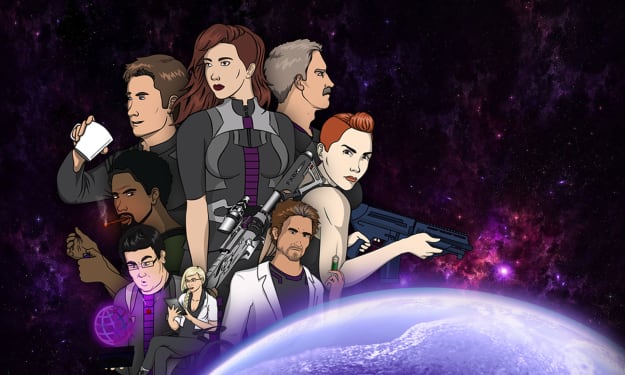
Lost Hope is a comedic sci-fi epic with mature themes and dramatic overtones; or, as we like to call it, Archer meets Star Wars. Lost Hope, created by real life sci-fi couple Jeff Saamanen and Natalie Harvey, follows the exploits of Clara Hope and her team after the unexpected destruction of planet Earth. Together with her inexperienced crew of the USS Hopeful, Clara is forced to protect what remains of our species from the vast unknown of the universe.
By Natasha Sydor10 years ago in Futurism
How to Analyze a Science Fiction Film
I like to time travel, so I love science fiction. Unlike other genres of film, science fiction warrants its own criteria to be effectively evaluated. First, like any film, we measure a movie for its entertainment value: cinematography, acting, and plot (the basics). Science fiction cinema has an extra step. Audiences have to ask, is this good science fiction? The most important thing to realize when learning how to analyze a science fiction film is that qualifying as sci-fi takes more than putting actors on a stage set in space. Plenty of films purport to be science fiction but fall flat under analysis, because they fall back on fantasy or rely on absurd logic.
By Futurism Staff10 years ago in Futurism
Best Isaac Asimov Books
Often known to say that he did not fear computers, Isaac Asimov was truly fearful of the lack of computers. Isaac Asimov's imagination is synonymous with prophetic visions of the future. On science, he said, "The most exciting phrase to hear in science, the one that heralds new discoveries, is not 'Eureka!' (I've found it!), but 'That's funny...'" At one point, Isaac Asimov served as the Vice President of the MENSA organization. He referred to his colleagues in MENSA International as "brain proud" and quite passionately raved about their IQs. A genius among geniuses, Isaac Asimov's contribution to science fiction literature stands alongside those of his contemporaries, and his books surely rival the best Arthur C. Clarke books and the greatest works of Robert Heinlein. Whether I, Robot or I, Asimov – the author's memoir – is your book of choice, celebrate this iconic author with the best Isaac Asimov books.
By Natasha Sydor10 years ago in Futurism
Yar's Plume
It was uncomfortably chilly on the night we saw each other last. I remember the methane snowflakes and the carbon ice, the first time around. The landscape around the Plume had an unusually eerie feeling. Even a really long displacement such as the one I was going through now could not approximate the feeling. The memory somehow made the hair on my back rise. A distant, logical, and pedantic part of my troubled, aching mind sought to inform the other part—the instinctive, impulse-driven part—that technically, I had no hair. No back for that matter either.
By Vasileios Kalampakas10 years ago in Futurism
Java From Hell-Coffee Enhances Super Powers
I should’ve seen it coming when I first saw it. When I saw my guy pal Bob Bloch- flying. Literally! I found that a particular affront, considering that, underneath my modest disguise of a human being like you and everyone else on this planet, I am, in fact (cue the echo chamber):
By David Perlmutter10 years ago in Futurism
Roadside Picnic and Stalker Similarities
In the eyes of science fiction author Ray Bradbury, the only crime worse than burning books is not reading them at all. We all remember books our own way. Focusing, forgetting, glazing over, missing parallels, inventing others; we embellish. When talking about a book with other people, I often wonder if we even read the same book—or, somehow, two things with the same title by the same author. It’s like we’ve both seen a whale in the water at one point in our lives, and we’re trying to determine the shape of its eyes. Obviously, there's some overlap, a little play in the bones, but it’s more of a Venn diagram than a flowchart, a sort of private film that plays for each reader, renewed with each read, every scan a fresh translation. Neither film nor literature exists as Object. Rather, each can be reduced to a set of stimuli floating in space, never in one place at one time. Not even at the site of mind.
By Reynard Seifert10 years ago in Futurism