science
Topics and developments in science and medicine, presented by Futurism.
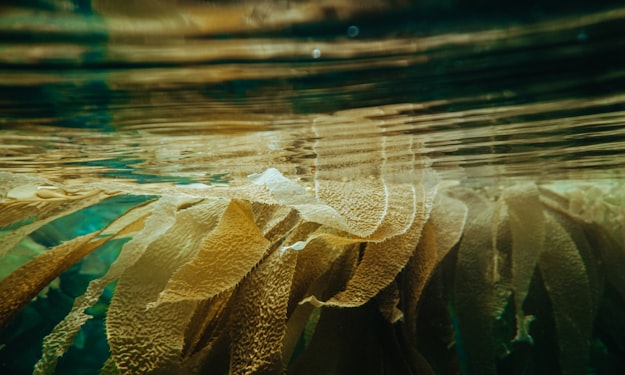
Interesting facts about Sea Kelp biology
Kelp, or often referred to as sea kelp, is a type of algae or seaweed. Though it looks like an underwater tree, kelp is a type of brown algae and belongs to several species of the order Laminariales. Many species play a significant role in the marine ecosystem, from sheltering marine organisms from storms to supporting marine biodiversity.
By Bradley Knight 6 years ago in Futurism
The world of aquaponics
The futuristic world of agriculture - cultivation of fish and vegetables in a closed system. The system is based on fish waste providing the required nutrients for plants to grow. In this way fish (trout, tilapi etc) and vegetales can be harvested together, with a small amount of water loss. It is an ideal system for countries where available water supply is scarce. To make systems energy efficient in aquaponics or as it is known in spanish acuaponia solar panels can be used.
By Mundo Acuaponia6 years ago in Futurism
Energy #2 - Coal
It began forming from the dead 300 million years ago. Its presence covered most of the known world. It bound itself to ancient civilizations using it to, at first survive, and then thrive as our ancestors removed it from burial and burned it to ash.
By Felix Martinez6 years ago in Futurism
Is Perpetuation Nonsense?. Part 2
It's not to mention the emanated creaking noise - another "loss-proof", for sound is as much an energy form. After all, a perpetual motion machine is, to any extent, futile, let alone the generation of any actual thermodynamic work.
By olivia janell6 years ago in Futurism
The Interdisciplinary Nature of Studying the History of Science
The origins of various sciences are dependent on existence of other fields of science. A single experiment can lead to the creation of a whole new field, which is true in the case of very important discoveries. Although there are perceived and documented pressures on some groups of individuals, those situations frequently lead to important discoveries being made by unexpected individuals, like Galileo, who worked on the fringes of science.
By Sabine Lucile Scott6 years ago in Futurism