space
Space: The Final Frontier. Exploring space developments and theorizing about how humans fit into the universe.
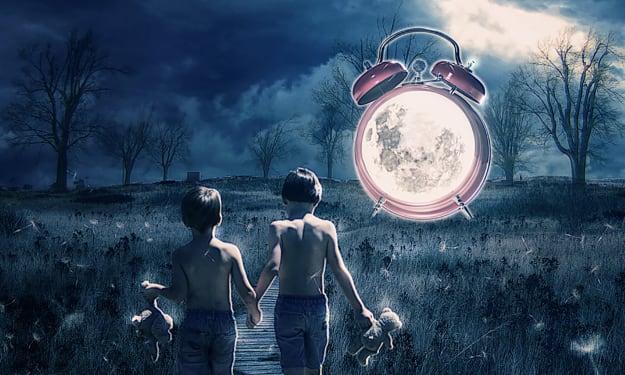
Meaning of the Moon
What has the moon done for you lately? Have you sailed on the tide? Perhaps you've been a bit loony? Did you feel lycanthropic? Did your moonlighting pay for your moonshine? Did you recite "Jack and Jill"? All these phrases refer to the moon, our natural satellite and, by far, the most noticeable object in the night sky. Its changing shape and brightness have long fascinated watchers. Consequently moon lore, beliefs, and stories regarding the meaning of the moon have greatly enriched our culture.
By Futurism Staff10 years ago in Futurism
Astronaut Gordon Cooper Interview
Which would you consider the greatest challenge: steering a racing car to victory? Piloting an experimental aircraft? Whirling in a centrifuge to find out your body's ultimate limits? Keeping in mind the hundreds of intricate details a spacecraft checkout requires while waiting to be hurled into orbit? Astronaut Gordon Cooper took all those challenges. And that was only the first career for a man who then put the future to work.
By Futurism Staff10 years ago in Futurism
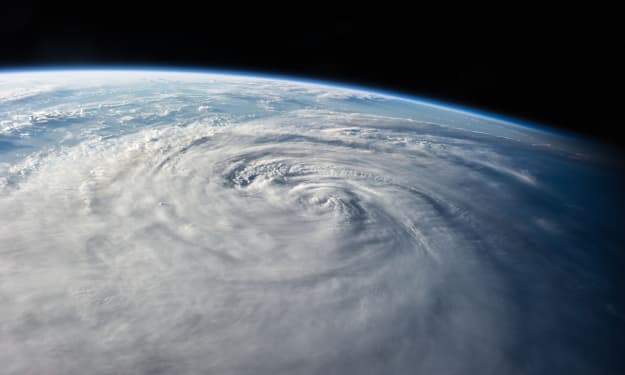
Atmosphere of Earth
Imagine you are an otherworldly explorer. As part of your survey of the Milky Way, you have come across an interesting stellar system with nine major planets. You have gotten permission from your superiors to investigate the lively third planet. The planet is called “Earth” in one of the many languages used there. In your last report you discussed the development of the planet as part of the entire system. Now you are going to begin a more detailed examination of Earth itself. The most logical place to start is the atmosphere, the envelope of gasses and vapors that gives this planet so much of its character. Since it is always best to begin at the beginning, you review your findings concerning the early history of the atmosphere.
By Futurism Staff10 years ago in Futurism
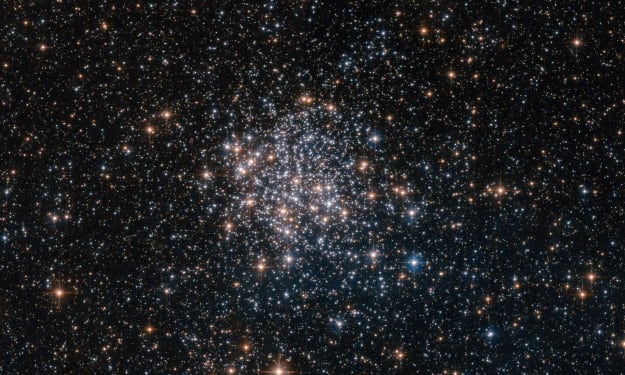
Star Cluster Science
Тhe star clusters must be regions of incredible beauty. Imagine living on a planet inside a star cluster. Your night sky would be densely spangled with bright points of light. Glowing bands of cosmic gas might arch overhead. The spectacle could make Earth's clearest winter skies seem dull.
By Futurism Staff10 years ago in Futurism
Finding Scorpius Constellation
Scorpius' claim to fame lies in its poisonous sting. The great hunter Orion boasted that he could wipe out all the creatures of the Earth. Gaia, the goddess of the Earth, realized how lonely our planet would be without the birds and beasts, so she sent a giant scorpion to attack the bragging hunter. In the terrible battle that followed, Orion killed the scorpion, but not before he was fatally stung.
By Futurism Staff10 years ago in Futurism
Jacques Vallee Interview
"When I was beginning my career in science," recalls Dr. Jacques Vallee, "the main argument against UFOs was that astronomers never saw them. I found that argument convincing." Then, in 1961, he and other satellite trackers at the Paris Observatory detected something odd overhead. Stranger still was what happened after that: The project director erased the data tape before an orbit for the unidentified object could be computed. "I thought, here we are at a renowned institution, seeing something we can't explain and destroying data for fear of ridicule. That, for me, reopened the entire question."
By Futurism Staff10 years ago in Futurism
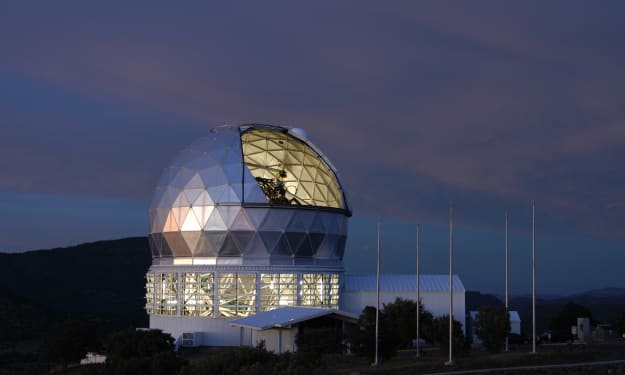
Observatory Guide
There are few pastimes more fascinating, more mysterious, or more peaceful than simply stargazing at a splendid night sky—wondering what it all means. Will we ever travel to any of those other suns? Are there other souls like us on a distant planet, looking up and wondering the same? A special breed of investigator is devoted to finding the answers to some of these questions, by studying everything in the universe from the movement of planets to the nature of such bizarre objects as quasars and black holes, which explode or go beep in the night. That investigator is the astronomer.
By Futurism Staff10 years ago in Futurism
Time's Role in Science Fiction
What is time? In our world, it represents a concept, unit, choice, and even a dimension. In the science fictional universe, it represents all of these concepts elevated into an all encompassing one. Time finds itself as a necessity in that nothing could exist without it––a statement that we cannot fathom because we have never experienced it. Writer Charles Yu claims in his novel, How To Live Safely in a Science Fictional Universe, that “time is an ocean of inertia.”
By Natasha Sydor10 years ago in Futurism
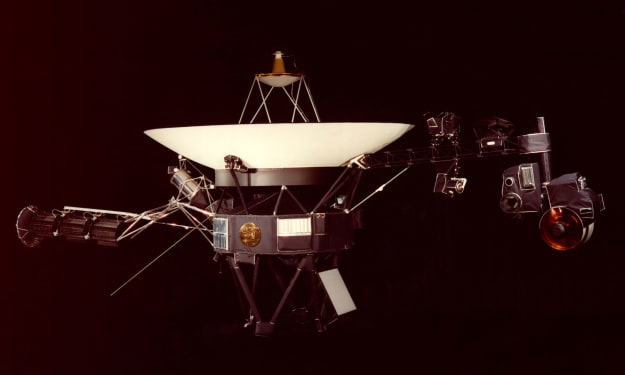
Voyager 2's Expedition
It weighs almost a ton and measures approximately four meters by four meters. Its two television cameras take tens of thousands of pictures of worlds in the outer solar system. A collision with a micrometeoroid could cause it to lose its orientation temporarily, but it wouldn't founder. It is made of millions of parts. If certain components fail, others will take over. We're talking about the fantastic Voyager 2, the semi-intelligent robot that, for nearly 40 years, has explored unknown worlds.
By Futurism Staff10 years ago in Futurism
History of Halley's Comet
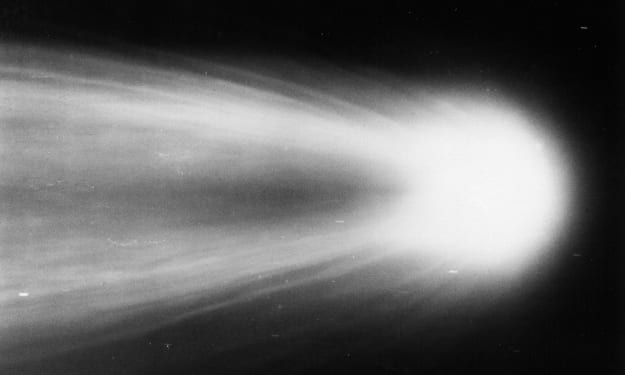
It was August in 1682 when the faint gleam first appeared in the night sky. From one night to the next, it grew slightly brighter and changed position among the background stars. The pioneers of astronomy peered at it through that new-fangled invention, the telescope, and watched it begin to sprout a tail. Among the majority of people, however, the instinctive reaction was fear. “A comet,” they whispered. “A comet has appeared! And plague, famine, and war will surely follow.”
By Futurism Staff10 years ago in Futurism