virtuosos
From Albert Einstein to Elon Musk, Futurism's virtuosos are making science fiction into reality.
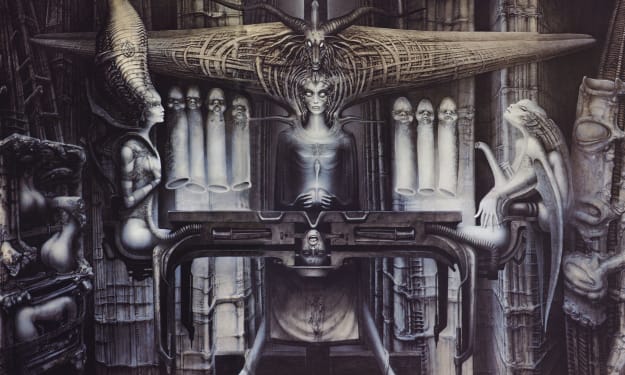
Coolest Sci-Fi Illustrators
If you ask me, no single genre of literature ever really comes close to the aesthetic awesomeness that science fiction does. Sci-fi illustrators seem to have an innate ability to make a book's fantastic scenery come to life and make you want to dive into that strange world.
By Riley Raul Reese9 years ago in Futurism
Who Was Isaac Asimov?
Isaac Asimov (1920-1992) is remembered as one of the top 3 science fiction writers, along with Robert Heinlein and Arthur C. Clarke. Asimov is widely considered to be the founder of modern science fiction, born near modern-day Smolensk to a family of poor Jewish millers in Soviet Russia during the Russian Civil War. His family immigrated to the U.S. when he was three years old to escape the chaos of the Russian Revolution.
By Stephanie Gladwell9 years ago in Futurism
To Preserve a Demon
Writer/editor Jason Davis has a special ambition -- to catalog, digitize, edit, correct, annotate and re-publish (or publish for the first time, in some cases) all of Harlan Ellison's writings. Twenty-six four-foot-wide drawers of typescripts, over 100 feet of paper if stacked, the lifework of a man who is easily one of the most influential and cantankerous authors of the 20th century. Jason is spearheading the Harlan Ellison Books Preservation Project, a grand undertaking "To create definitive versions of all Harlan Ellison's writings, fiction and non-fiction, to preserve in print for posterity."
By Joshua Sky9 years ago in Futurism
Is Vernor Vinge's Singularity The End Of Days?
Vernor Vinge is a former San Diego State University math professor and a Hugo award-winning science fiction novelist. He is best known for his novels and novellas A Fire Upon the Deep (1992), A Deepness in the Sky (1999), Rainbows End (2006), Fast Times at Fairmont High (2002), and The Cookie Monster (2004). In Vinge's 1993 essay "The Coming Technological Singularity" Vinge wrote, "Within thirty years, we will have the technological means to create superhuman intelligence, also referred to as the singularity. Shortly after, the human era will be ended." The singularity, in essence, is the end of days.
By Joshua Samuel Zook9 years ago in Futurism
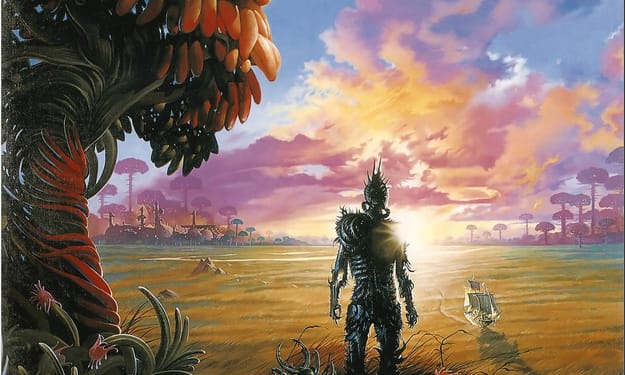
Dan Simmons' Hyperion
In Hyperion, Dan Simmons accomplished the creation of one of the most beautifully rendered science fiction universes ever encountered in the readers mind. Hyperion tells the story of a group of seven strangers on their way to the distant world of Hyperion. Earth is dead, but humanity has spread among the stars in a web of worlds (connected by an FTL transportation system called The Web) known as the Hegemony. There are worlds humans live on which are not a part of the Hegemony, but that number is in constant decline as the benefits of conformity outweigh the benefits of independence. Somewhere in the galaxy, a self-aware collective of artificial intelligence known as the TechnoCore have made their home, helping the Hegemony to care for its technology. Also spread in between the stars are the Ousters, “barbarians,” who roam in Zero-G mobile cities and flotilla, attacking Hegemony targets whenever the opportunity presents itself.
By Joshua Samuel Zook9 years ago in Futurism
Isaac Asimov's Autobiography: In Memory Yet Green
I ran into my pal, Matthew B. Tepper, a fellow Isaac Asimov enthusiast at the L.A. Science Fiction and Fantasy Society. To date, he owns 465 of the 515 books Asimov wrote. I asked him if he had any suggestions of what I ought to read that most people hadn’t from his oeuvre. He brought me into LASFS’ extraordinary library. Therein he pulled out the first volume of In Memories Yet Green, Isaac Asimov’s autobiography and said “read this.”
By Joshua Sky9 years ago in Futurism
Can Scientific Theory Prove Philosophical Ideology?
Philosophy was once the domain of the purely speculative—the nearly abstract. A well-known philosophy department posed the question, "What is human?" The questions were too complex. The answers available only to God. That is, if there is a God.
By Joshua Samuel Zook9 years ago in Futurism
Thought Leader Malcolm Gladwell
Thought leader Malcolm Gladwell's books and articles often deal with the unexpected implications of research in the social sciences and make frequent and extended use of academic work, particularly in the areas of sociology, psychology, and social psychology. Gladwell was appointed to the Order of Canada on June 30, 2011. When Gladwell started at The New Yorker in 1996 he wanted to "mine current academic research for insights, theories, direction, or inspiration." His first assignment was to write a piece about fashion. Instead of writing about high-class fashion, thought leader Malcolm Gladwell opted to write a piece about a man who manufactured T-shirts, saying "it was much more interesting to write a piece about someone who made a T-shirt for $8 than it was to write about a dress that costs $100,000.
By Futurism Staff9 years ago in Futurism
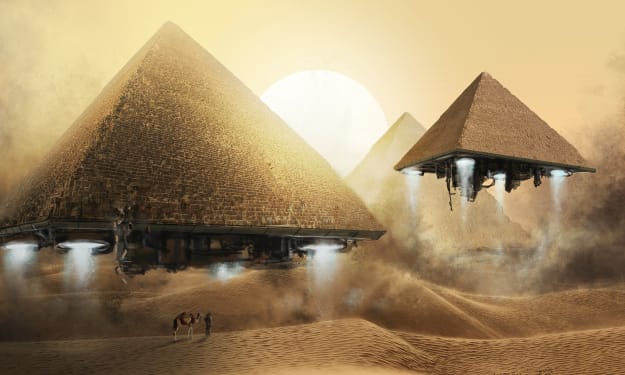
Stunning Sci-Fi Art Spaceships
Of all things futuristic and infeasible, spaceships steal the hearts of sci-fi lovers more than just about anything else. From the stalwart flagbearers like the Millennium Falcon and the Mothership to fighter craft and faster-than-light travel, spaceships—along with their Captains, crews, and missions—have always enraptured fans.
By Jake Burgess10 years ago in Futurism
Predictions from Sci-Fi Authors
Science fiction authors are modern-day prophets. Many of the predictions from the great writers like Isaac Asimov and Philip K. Dick came to fruition at the turn of the 21st century. Writer Michael Banks closely followed the growth of online web services and the evolution of the internet from the early 1980s onward. His perception on the predictive nature of science fiction can be proven through a study of the the great sci-fi author's ability to blur the lines between speculation and fact are often the catalyst for authentic advance in tech. His books, including Crosley: Two Brothers and a Business Empire That Transformed the NationandOn the Way to the Web: The Secret History of the Internet and Its Foundersdelve into the results of this chain of predictions. His perceptions will continue to drive further authors to continue to essentially create the future. Many of his theories were captured in a 1978 article from vintage sci-fi magazine Starlog.
By Futurism Staff10 years ago in Futurism