
Why the Drones Market Is Redefining Aerial Technology and Industrial Innovation?
The Expanding Role of Unmanned Systems in Commercial, Consumer, and Public Applications

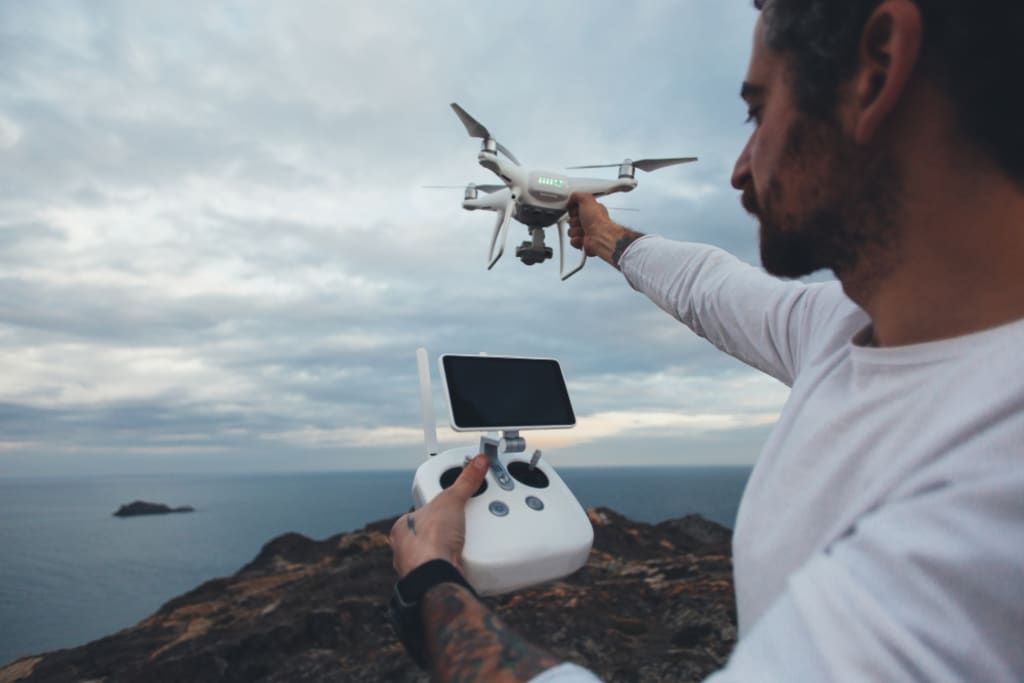
Aerial technology has experienced the rise of the unmanned aerial vehicle industry, developing from its history of military applications to commercial, industrial, and recreational uses of aerial capability. The drones market is one of the products of this movement, in which multiple industries are realizing the benefits of UAV systems.
Drones have myriad applications, from aerial photography and agriculture to inspecting infrastructure and logistics to public safety and environmental monitoring, all due to their ability to access remote areas and gather real-time information. The importance of the drones market is partly attributed to advances in automation, connectivity, and smart technologies.
Understanding What the Drones Market Really Is
The drone market is the industry related to the development, production, distribution and integration of unmanned aerial vehicles (UAV) and their assorted parts and systems such as cameras, sensors, positioning systems, communication devices and specialized parts.
The market segment includes hobby, art or recreational drones; commercial drones for professional use; and drone software systems for drone navigation, drone flight control, drone data analysis, drone data post-processing and fleet management use.
Flown with clever software, the drone hardware provides an aerial view and data collection features which were previously expensive or inaccessible.
Key Factors Driving the Popularity of the Drones Market
One of the major drivers for the growth of the drones market is their ability to increase operational efficiency by performing faster inspections, surveys, and deliveries than manual labor.
Cost-effectiveness can also be a factor since organizations would not spend on labor and equipment to monitor and gather data with drones.
Recent developments in battery technology and lightweight materials have allowed for increased flight time and maneuverability.
A need for aerial photography and videography to support media, entertainment, and real estate markets further increases the opportunity.
Since then, the approval of commercial drone use has been gradually accepted in many jurisdictions.
Click here if you want to know more about Drones Market
The Role of Innovation and Advanced Technologies
Innovation in the form of GPS stabilization and obstacle avoidance sensors has been important for the growth of the drones market as they add safety and precision to these machines.
Automation and artificial intelligence have been included with autonomous flight planning, object recognition and automated data processing to avoid manual control and improve efficiency.
High-resolution cameras and thermal sensors have expanded the range of agricultural, construction, disaster management, and other applications.
Cloud data platforms provide data storage and processing capacity to enable real-time insights from the aerial data and support decision-making.
More reliable communication technology allows for stable connections between the drone and control station.
Changing Industry Practices and Consumer Applications
A trend of industrial automation and remote monitoring relying on drones as mobile data gathering platforms has arisen in the energy, mining, and infrastructure sectors.
Drones can be used in agriculture for crop monitoring and resource management, and as a topic of research into last-mile delivery.
Public safety agencies deploy drones for surveillance, emergency response and search, improving situational awareness.
Consumers continue to use drones for creative, recreational, and travel purposes, especially in the area of photography.
As drone capabilities expand, various industries begin to use drones routinely.
Benefits and Practical Advantages
The drones market offers several practical advantages:
• Improved Accessibility: Reaches hard-to-access or dangerous locations
• Operational Efficiency: Faster inspections, surveys, and other operations are possible
• Cost Savings: Less labor and equipment are required.
• High-Quality Data Collection: Captures detailed visual and sensor data
• Automation Support: Autonomous and remote operations
• Versatility: Serves multiple industries and consumer markets
• Improved Safety: Lowers the risk of personnel exposure
These benefits also contributed to the wider adoption of drones.
Global Adoption and Regional Relevance
The uptake of commercial drones has seen strong penetration in both developing and developed nations, with commercial and industrial applications dominating in developed economies.
Emerging markets have also adopted drones for agriculture, supporting infrastructure, environmental monitoring and other uses.
Regional regulations govern deployment practices, such as licensing and operations.
Government support for innovation and technology development also drives market growth.
Drones are a common feature of modern operational planning in many regions.
Challenges Facing the Drones Market
Despite this rapid growth, the drones market also encounters difficulties, including airspace and licensing regulations, which may limit operations.
Privacy and security concerns must be managed to allow responsible use.
The battery and payload may limit the performance of these applications.
Implementation into existing infrastructure and communication systems requires continued technological change.
Safety and legal compliance are priorities in the design and construction of the vehicle.
Future Outlook of the Drones Market
Future drones are likely to be driven by advances in autonomy, networking and AI, with more fully autonomous flight systems being developed as the technology matures.
Integrating with smart cities and other digital infrastructure may lead to further traffic and public services applications.
Improved batteries or alternative energy sources may increase both maximum flight duration and maximum range.
As the industries increasingly adopt automation and data-driven processes, drones are expected to maintain their position in the technological landscape.
Conclusion
In the commercial, industrial and consumer markets, the business of drones is transforming how aerial solutions are leveraged, combining advanced hardware technology with intelligence for efficient and flexible data acquisition and operational support.
Innovation, automation, and growth in various end-use sectors are driving the global drone market. In the coming years, with further advances in technology, drones are expected to play a critical role in the development of connected and automated systems and solutions.
About the Creator
Akshay Kumar
A dedicated Market Research Professional specializing in in-depth analysis, industry forecasting, and strategic insights. Known for precision, reliability, and delivering research that adds real business value.
Keep reading
More stories from Akshay Kumar and writers in Futurism and other communities.
Why the Consumer Credit Market Is Shaping Modern Financial Accessibility?
Access to credit is now a key feature of contemporary financial systems, with consumers taking out credit cards, mortgages, personal loans and other forms of borrowing to fund expenditures, invest in opportunities and develop financial flexibility. In the process, the consumer credit market has become a key sector of structured consumer finance.
By Akshay Kumara day ago in Futurism
Educational Robot Market Trends: AI Integration, STEM Learning Demand & Industry Outlook to 2033
Rising adoption of STEM education, increasing integration of AI and robotics in classrooms, and growing demand for hands-on, interactive learning tools are fueling the educational robot market, supported by government initiatives, technological advancements, and expanding use of e-learning models. According to IMARC Group's latest data, The global educational robot market size was valued at USD 1.86 Billion in 2024. Looking forward, IMARC Group estimates the market to reach USD 5.9 Billion by 2033, exhibiting a CAGR of 13.6% from 2025-2033.
By Andrew Sullivana day ago in Futurism
Stanislav Kondrashov Oligarch Series: Oligarchy and Humanity’s Ascent Up the Kardashev Scale
Humanity wants to do more than survive. You can see it in every breakthrough, every launch, every ambitious research project that promises to push limits further than before. But here’s the uncomfortable question: who actually funds the leap from where you are now to where civilisation could be?
By Stanislav Kondrashov3 days ago in Futurism




Comments
There are no comments for this story
Be the first to respond and start the conversation.