
Why Your Dream TV Costs a Fortune: The Surprising Reality of OLED Pricing
It is a ritual performed every November: the hypnotic glow of the showroom floor, the deep, ink-pool blacks of a flagship OLED, and the inevitable wince when you finally glance at the price tag.

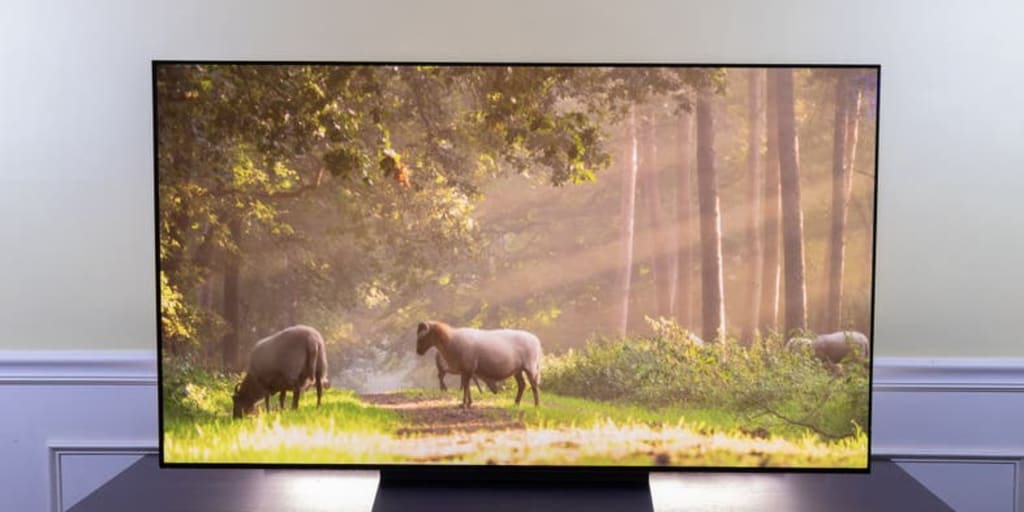
It is a ritual performed every November: the hypnotic glow of the showroom floor, the deep, ink-pool blacks of a flagship OLED, and the inevitable wince when you finally glance at the price tag. While standard LCDs are practically falling into shopping carts for under $500, a high-end OLED remains a luxury investment. The math behind this disparity is startling; by 2024, the manufacturing cost of a single 65-inch OLED panel had dropped to roughly $600—a figure that, on its own, exceeds the entire retail price of a 65-inch LCD television.
The "Yield Rate" Gamble
In the world of panel fabrication, the most expensive word is "yield." This represents the percentage of usable, defect-free panels harvested from a manufacturing batch. Because OLED production requires microscopic precision, the smallest impurity can render a screen worthless. When you purchase an OLED, you are paying for the perfection in your living room, but you are also subsidizing the "invisible" cost of every panel that failed on the factory floor.
The correlation between yield and your receipt is direct. Samsung’s QD-OLED yields sat at a mere 68% in 2022, but as they climbed to 84% in 2023, the manufacturing cost for 65-inch panels plummeted by 30%. However, improving the process is only half the battle. To understand why prices don't drop overnight, we have to look at the hidden burden of factory management:
"As for LG Display... the company saw costs drop by 30% after improving yields. Still, one of its OLED TV factories ran at only 50% of capacity as of 2022, but LG still had to pay for the same fixed costs."
When a factory runs at half capacity, the rent, electricity, and labor remain constant, forcing the manufacturer to bake those overheads into the price of every unit that actually makes it to a store shelf.
The Geometry of Waste (The Mother Glass Problem)
The price of a TV is often dictated by how well it fits onto "Mother Glass"—the massive Gen 8.5 Line sheets used in fabrication. The math is unforgiving: a single sheet can yield six 55-inch panels with minimal waste. However, if a manufacturer wants to produce 65-inch screens, that same sheet can only accommodate three panels.
This geometric inefficiency is why the jump from 55 to 65 inches feels like a financial leap rather than a step. It also explains the historical "prestige" pricing of larger sets. In 2016, for instance, a 77-inch OLED commanded a staggering $20,000 price tag because the material waste and production risks at that scale were astronomical. While efficiencies have improved, the physical constraints of the Mother Glass mean that OLED will likely always struggle to match the raw economy of scale found in the LCD market.
0.1 Milliseconds—The Price of Perfection
For the cinephile or the hardcore gamer, that price premium buys a level of performance that LCD technology, by its very design, cannot replicate. In an LCD, the back panel lights up in its entirety, pushing light through pixel filters to create an image. In contrast, OLED (Organic Light Emitting Diode) is self-emissive; every pixel is its own light source that can switch off completely.
This fundamental difference creates a performance gap that justifies the "OLED tax" for specific users:
Response Time: OLED offers a near-instant 0.1ms response, compared to the 3-5ms range of LCDs. For a gamer, this eliminates the distracting blur during high-frame-rate 4K sessions.
Contrast: OLED provides "infinite" contrast. For a movie lover, this means letterbox bars effectively disappear into the shadows of the room, rather than glowing with the "grayed" blacks common in backlit displays.
Energy Efficiency: A 65-inch OLED consumes about 150W during typical viewing, as it wastes no power lighting pixels intended to be black, whereas a similar LCD pulls a constant 200W to keep the backlight engaged.
The "97-Inch" Price Trap
As you move into the extreme high end, the OLED price curve doesn't just climb—it breaks. A 97-inch OLED currently retails for approximately $25,000. Contrast that with a 98-inch quantum-dot LCD, which can be found for a relatively modest $2,200.
This $22,800 gap is the ultimate "price trap." At 97 inches, a single panel likely occupies nearly an entire sheet of Mother Glass, meaning the manufacturer is betting the entire batch on one perfect piece of glass. If you think $25,000 is steep, it is worth noting that the next step up—MicroLED—is even more exclusive, with 89-inch units expected to command $80,000.
When OLED is Actually a Bad Investment
Despite its technical superiority, OLED is not always the smartest play. It is a specialized instrument, and there are environments where a standard LCD is the better "utility player."
If you are buying a TV for a bedroom where it will only be used for twenty minutes of news before sleep, the $1,200+ entry price of a 55-inch OLED is difficult to justify over a $500 LCD. Furthermore, in sun-drenched sunrooms or outdoor patios, LCDs have historically been the safer bet due to their higher raw brightness. LCD is also the preferred choice for static viewing habits—such as a dedicated sports or news display—where a permanent ticker might eventually cause pixel "burn-in." While OLED is the king of the living room thanks to its much wider viewing angles for family movie nights, the LCD remains the pragmatic choice for direct, bright, or static environments.
Conclusion: The Future of the Living Room
The gap between the "dream TV" and the average budget is finally beginning to shrink. Technological leaps like Micro Lens Array (MLA) are pushing OLED brightness levels to 1,300–1,500 nits, finally matching the punchy highlights of high-end LCDs. As yield rates stabilize and manufacturers move past the era of half-empty factories, the price of entry will continue to soften.
Ultimately, the decision rests on your priorities as a viewer. Are you searching for "perfect blacks," "true black" depth, and instantaneous motion, or are you looking for the most screen real estate your money can buy? In the world of premium displays, you aren't just paying for the picture—you’re paying for the incredible precision required to make it.
About the Creator
Mohammad Hamid
Big Dream Work Hard and Achieve 💪
Keep reading
More stories from Mohammad Hamid and writers in Futurism and other communities.
Stop Paying for SaaS: How Gemini 3.0 and ‘Five-Coding’ Are Changing the Solo-Builder Game
The Death of Subscription Fatigue In 2025, the professional landscape is drowning in "rented" software. We are currently suffering from acute SaaS fatigue, bleeding monthly fees for a fragmented stack of specialized tools: CV builders, application trackers, cover letter generators, and AI headshot services. This isn't just a budget drain; it’s a bottleneck to true productivity.
By Mohammad Hamid4 days ago in Futurism
How Market Structure and Utility Influence Long-Term Crypto Valuations?
As the cryptocurrency market matures, discussions around value are becoming more nuanced. Early market cycles were often driven by speculation and short-term narratives, but today’s environment reflects a growing emphasis on structure, utility, and sustainability. Investors and observers alike are paying closer attention to how blockchain projects fit into broader economic and technological systems.
By Muhammad Talha Ahmad6 days ago in Futurism
Lubricant Additives Market Outlook: Engine Performance Enhancement and Growth Opportunities
According to IMARC Group's latest research, The global lubricant additives market size reached USD 17.8 Billion in 2024. Looking forward, IMARC Group expects the market to reach USD 23.9 Billion by 2033, exhibiting a growth rate (CAGR) of 3.15% during 2025-2033.
By Michael Richard4 days ago in Futurism


Comments
There are no comments for this story
Be the first to respond and start the conversation.