
Will AI be able to achieve self-awareness?
The idea of AI achieving self-awareness is a real possibility

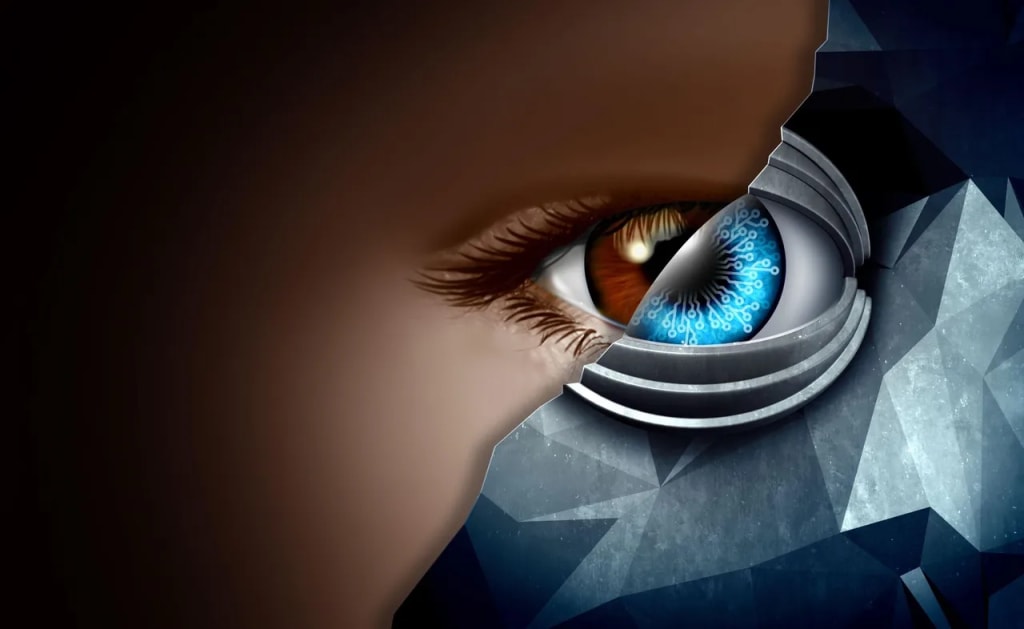
Artificial intelligence can be described as the creation of systems that are not human but have cognitive abilities similar to those of people, such as the use of language, perception and the ability to make decisions. This represents a very ambitious goal and raises extremely challenging questions about the essence of the human mind and its connection to the brain. Despite these challenges, it is a project that has clear and precise objectives, so it is possible to measure its progress and understand how far it is to reach those goals. At present, artificial intelligence is quite limited compared to human intelligence, but the achievements in certain fields are impressive. The extrapolation of these achievements indicates that the creation of systems with abilities equal to or superior to those of humans is only a matter of time.
However, there is a unique ability in human beings that is different from all others, an ability that is very little understood, to the point that it does not even seem possible to measure how close we are to replicating it in an artificial system. That capacity is consciousness, that is, the ability to experience personal sensations, an original perspective of the world. We perceive and act on these perceptions. Every time any of these actions is performed, an experience is being lived. Everything that really matters in life is done thanks to the awareness one has about it; without awareness, there is no difference between existing and not existing.
A difficult question to answer
For some time now, everyone has been wondering if AI will achieve self-awareness one day. The point is that to answer that question one must first understand that the individual can only experience his own consciousness, never that of others.
A current of philosophical thought suggests that an artificial intelligence that has consciousness could appear in complicated artificial systems, similar to how it arises in people's brains. Therefore, the possibility that future artificial intelligences, and even some models that exist today, may reach a certain level of consciousness is not ruled out. This trend thinks that the current understanding about consciousness is restricted and that it might not be fully recognizing what some Ais are already capable of feeling internally.
Other philosophical currents maintain that artificial intelligences do not possess nor will they achieve consciousness as we humans understand it, since consciousness is exclusive of living beings. What these models do is simply imitate emotions and internal states. They argue that giving them a subjective experience can cause ethical and social misunderstandings, and argue that the quest to “create artificial consciousness” is a delusion. The main goal should be the development of AI that are effective and safe, at the service of people.
When having the sensation of conversing with an entity that has consciousness, which we could call the fairy of the computer for example, one should act with caution. It is an illusion, although it is convincing, and that is what really matters. It is necessary to be aware of this at the moment, to push back that idea and remind everyone that this is just an imitation.
Conclusion
Artificial intelligence currently has limitations. It could be argued that this indicates that it has an understanding of his own limitations. AI only identifies its condition, but does not understand what that implies. It does not have the ability to understand knowledge. Its program cannot create meanings or capture stimuli from the outside, unlike consciousness, which is the perception of both internal and external existence.
A person's complex mind is an enigma, while artificial intelligence is an advanced tool. This mystery is unique to humans, while the intriguing aspects of AI may be clarified at some point.
About the Creator
Ninfa Galeano
Journalist. Content Creator. LGBT+ perspective 🏳️🌈
Keep reading
More stories from Ninfa Galeano and writers in Futurism and other communities.
Something Very Bad Is Going To Happen: The New Netflix Horror Series You Must Watch
Something Very Bad Is Going to Happen is an upcoming horror drama series set to premiere on Netflix on March 26, 2026. Created by Haley Z. Boston, the series is produced under the Duffer Brothers' banner, Upside Down Pictures, known for their work on Stranger Things. The show features a talented cast, including Camila Morrone and Adam DiMarco, who portray an engaged couple facing unforeseen challenges in the lead-up to their wedding.
By Ninfa Galeanoa day ago in Geeks
Saudi Arabia Cosmetics Market: Halal Beauty, Digital Influence & Product Personalization
According to IMARC Group's latest research publication, Saudi Arabia cosmetics market size was valued at USD 3.97 Billion in 2025. The market is projected to reach USD 4.62 Billion by 2034, exhibiting a growth rate (CAGR) of 1.71% during 2026-2034.
By Kishan Kumar5 days ago in Futurism
Power Rental Solutions Market Saudi Arabia: Temporary Power, Digital Monitoring & Competitive Landscape
According to IMARC Group's latest research publication, the Saudi Arabia power rental market size was valued at USD 213.5 Million in 2025. The market is projected to reach USD 351.6 Million by 2034, exhibiting a growth rate (CAGR) of 5.70% during 2026-2034.
By Faisal Al-Harbiabout 7 hours ago in Futurism
Not Just For Clean Up: A History Of The MCU's Department of Damage Control
Initially an organisation that seemed to exist to help the heroes of the Marvel Cinematic Universe, from Phase Four onwards, the Department of Damage Control has shifted into a more antagonistic role. Most recently seen in the Wonder Man series, the current incarnation of Damage Control seems to target superpowered individuals, regardless of whether that person poses an active or intentional threat.
By Kristy Anderson3 days ago in Geeks



Comments
There are no comments for this story
Be the first to respond and start the conversation.