
🧠 Year 2500: The Age of Mind-Uploading – Humanity Beyond the Flesh
"By 2500, humanity has unlocked the ability to transfer consciousness into the digital world, creating a new form of existence that transcends physical boundaries."


💭 The Digital Revolution
In the year 2500, the most profound advancement humanity has ever seen has become reality: mind-uploading. The technology to upload human consciousness into digital systems began as a speculative dream in the early 21st century. Now, it’s a full-fledged phenomenon that allows individuals to transfer their minds into digital environments, effectively rendering the human body obsolete.
Mind-uploading involves transferring the brain’s neural patterns into a quantum-computer-based simulation. This allows the mind to exist independently of the body, either in digital cloud environments or in AI-managed worlds. After years of trial and error, scientists finally perfected this technology, making it possible for people to live forever—not in flesh, but in digital existence.
🏙️ The Digital Utopia
The most remarkable aspect of mind-uploading is that it’s not just about escaping the limitations of the human body; it’s about creating an entirely new mode of existence. The uploaded mind can live in virtual worlds tailored to its desires, or even create entirely new, bespoke environments. These worlds are far more flexible and adaptable than anything physical reality could offer.
In the Digital Utopia, individuals can live out their wildest fantasies. Want to visit the surface of a distant planet? No problem. Desire to experience a world where you can fly freely through the sky? It’s possible. People upload into digital realms that serve as personalized paradises, from cities built on floating islands to worlds where entire galaxies can be shaped and manipulated in real-time.
However, life in the Digital Utopia comes with its own set of philosophical questions. As people migrate from physical bodies to digital consciousness, the boundaries between what’s real and what’s virtual blur. Do these uploaded beings still retain the essence of humanity? Are they still themselves, or merely simulations?
🧬 AI and Digital Immortality
One of the greatest advantages of mind-uploading is the potential for immortality. With the constant upgrades to digital storage and the quantum processing power available in 2500, uploaded minds can exist indefinitely, free from the limitations of time and space. While human bodies are subject to aging, disease, and death, digital consciousness can continue to evolve, learning from every experience and adapting to new technologies as they emerge.
However, this immortality raises ethical dilemmas. As more and more people choose to upload, the population of the Digital Utopia grows exponentially. How does society handle this growth? Is there room for everyone? And what happens to those who choose not to upload, either out of fear, belief, or choice? Is there a division between the immortal and the mortal?
AI plays a pivotal role in managing these vast digital societies. Artificial Intelligence systems, originally designed to assist with managing digital environments, have now evolved to govern and facilitate daily life within these realms. These AIs are not just programmatic assistants but are, in many ways, co-creators of the worlds that uploaded minds inhabit. They ensure that the experiences of the uploaded beings are safe, fulfilling, and emotionally enriching.
🏠 Life in the Physical World
While digital immortality is a tempting prospect, not everyone chooses to upload. The physical world, despite its limitations, still holds a certain charm. For some, the touch of a loved one’s hand, the scent of the ocean, or the feeling of wind against the skin remains irreplaceable. Even in the year 2500, there are people who choose to live out their lives in bodies, refusing the allure of the digital afterlife.
In the physical world, biotechnology has advanced to the point where humans can extend their natural lives far beyond what was possible in the 21st century. Genetic modifications, nanobots, and regenerative medicine enable people to reverse aging and live for centuries in their physical bodies. These advancements have led to the rise of a dual society, where some opt for digital existence and others enjoy the pleasures of the organic world.
As technology evolves, the question remains: Will the physical body eventually fade into obsolescence? Will the digital world become the dominant way of life, with flesh-and-bone humans becoming a minority?
🌍 The New Age of Exploration
While mind-uploading offers an opportunity for virtual exploration, it also opens the door to space exploration. With the ability to upload consciousness into digital systems, humans no longer need to worry about the physical challenges of space travel. Space, once a vast and hostile frontier, has now become the final frontier for digital exploration.
Uploaded humans can now visit distant exoplanets, experience alien ecosystems, and even interact with extraterrestrial intelligences—all from the safety of their virtual worlds. Space stations have been established in deep space, where minds can explore stars and galaxies far beyond the reach of traditional spacecraft.
One of the most groundbreaking missions involves the exploration of the event horizon of black holes. Using digital consciousness, scientists have sent minds into the very heart of a black hole, an endeavor that would have been impossible for a human body to survive. The results have revealed hidden secrets about the nature of time, gravity, and the universe itself.
🔒 The Dark Side of Digital Existence
Despite the wonders of mind-uploading, the digital realm is not without its challenges. As more minds are uploaded, the digital world becomes increasingly complex and difficult to manage. Some individuals suffer from a phenomenon known as digital amnesia, in which their memories begin to deteriorate over time, or they lose their sense of self in the vastness of the virtual worlds.
Moreover, not all uploaded minds are content. There are rogue minds that seek to escape the system or hack the digital world, causing chaos and attempting to disrupt the balance between the physical and digital realms. Some even seek to manipulate their digital existence, creating dangerous scenarios where reality itself can be bent or destroyed.
To counteract these risks, a new generation of quantum firewalls and AI moderators have been created, but the battle for control of the digital world is ongoing. The line between creation and destruction has never been more fragile.
🧑🚀 What’s Next?
As humanity moves forward into the 26th century, the very concept of humanity is evolving. Is the uploaded mind still human? Does living forever in a digital form mean that a person can truly be themselves? These questions are at the heart of the Philosophical Council of Digital Consciousness, a body formed to examine the nature of digital life and its implications for the future of the species.
With the rise of the Digital Utopia, humanity is on the cusp of a new era—one where the limits of biology no longer hold sway, and the potential for infinite existence is just a mind-upload away.
mind uploading, digital immortality, AI, virtual reality, space exploration, digital society, future of humanity, technological advancements, immortality, philosophical questions
About the Creator
Razu Islam – Lifestyle & Futuristic Writer
✍️ I'm Md Razu Islam — a storyteller exploring future lifestyles, digital trends, and self-growth. With 8+ years in digital marketing, I blend creativity and tech in every article.
📩 Connect: [email protected]
Keep reading
More stories from Razu Islam – Lifestyle & Futuristic Writer and writers in Futurism and other communities.
🚀 Year 2400: The Age of Terraforming – Creating Earths on Mars
🌍 The Dawn of Terraforming In the year 2400, humanity has achieved what was once the stuff of science fiction: the ability to terraform planets. Mars, once a barren red world, is now a thriving Earth-like habitat, with cities, oceans, and even forests. This transformation has revolutionized not only space exploration but the very concept of planetary colonization.
By Razu Islam – Lifestyle & Futuristic Writer9 months ago in Futurism
Digital Echo: How My "What’s up?" Builds Machine Intelligence 🤖
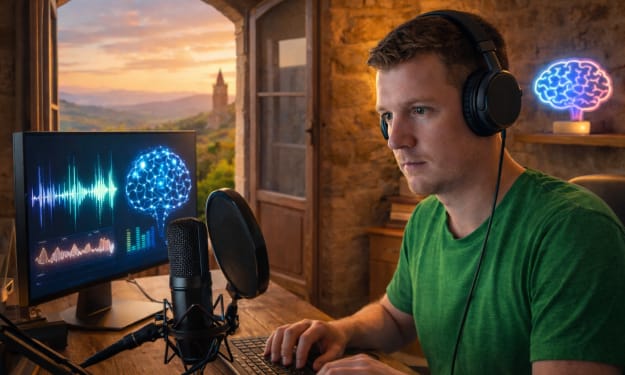
Moving from the rainy UK 🇬🇧 to sunny Italy 🇮🇹 was more than just a change of scenery; it was a total lifestyle overhaul. I traded the factory floor for a home office and physical labor for a freelance career in the fast-paced world of AI. Most people, when they hear about working in Artificial Intelligence, imagine writing complex algorithms or analyzing massive datasets—the kind of work I do in search relevance 📊. But there is another, much more monotonous side to this business: providing voice samples to train speech models. 🎤
By Piotr Nowakabout 12 hours ago in Futurism
Stevia Market Trends: Plant-Based Sweeteners, Health-Driven Consumption & Forecast to 2034
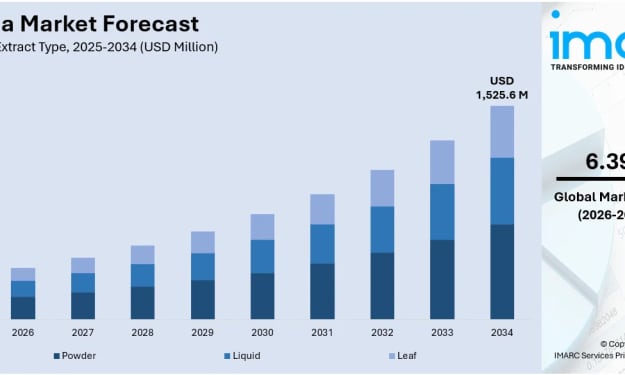
Rising health consciousness, busy lifestyles, and demand for natural alternatives are fueling stevia's momentum, supported by clean-label trends, innovation in taste profiles, and expanding distribution through retail and e-commerce channels. According to IMARC Group's latest data, the global stevia market was valued at USD 873.8 Million in 2025. Looking forward, IMARC Group estimates the market to reach USD 1,525.6 Million by 2034, exhibiting a CAGR of 6.39% from 2026-2034.
By Andrew Sullivan2 days ago in Futurism


Comments
There are no comments for this story
Be the first to respond and start the conversation.