
Chasing the Sky: Northern Lights Forecast Guide
There is something deeply human about looking up at the night sky and hoping for a sign. Long before satellites and space agencies, people watched the heavens for meaning.

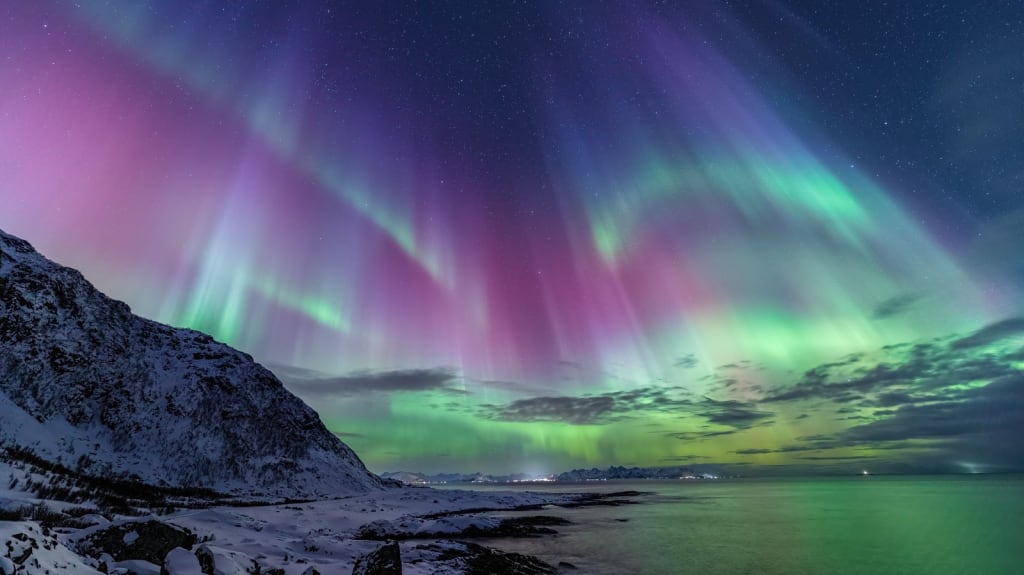
There is something deeply human about looking up at the night sky and hoping for a sign. Long before satellites and space agencies, people watched the heavens for meaning. Today, that same sense of wonder returns when we hear about a northern lights aurora borealis forecast. It feels like a secret invitation from the universe. A chance to see green ribbons of light drift across darkness. But catching the aurora is not just luck. It takes timing, patience, and understanding how forecasts work. Many travelers plan entire trips around it. Others step outside in freezing air at midnight because an alert says conditions are right. This guide explains how forecasts work, where to go, and how to prepare for a night you may never forget.
What Is the Northern Lights?
Before diving into a northern lights aurora borealis forecast, it helps to understand what the aurora borealis actually is.
The northern lights appear when charged particles from the sun collide with gases in Earth’s atmosphere. These particles travel through space in what scientists call solar wind. When they reach Earth, our planet’s magnetic field directs them toward the poles.
The result is a glowing display of light.
Oxygen produces green and red colors. Nitrogen can create blue or purple tones. The most common color people see is green.
This natural phenomenon is most visible in high-latitude regions near the Arctic.
Why the Forecast Matters
Unlike a sunrise or sunset, the aurora does not follow a daily schedule.
This is where the northern lights aurora borealis forecast becomes important.
A forecast predicts the likelihood and intensity of auroral activity based on solar conditions. Scientists monitor solar flares, coronal mass ejections, and geomagnetic storms. When these events send strong bursts of particles toward Earth, auroral activity increases.
Without checking the forecast, you might miss the show entirely.
Many travelers have experienced disappointment because skies were cloudy or solar activity was weak. Understanding forecasts helps reduce that risk.
Understanding the KP Index
What Is the KP Index?
One key term in any northern lights aurora borealis forecast is the KP index.
The KP index measures geomagnetic activity on a scale from 0 to 9. Higher numbers indicate stronger geomagnetic storms and greater chances of seeing the aurora further south from the poles.
For example:
A KP of 1 or 2 means weak activity, usually visible only in far northern regions.
A KP of 5 or higher indicates a stronger storm, potentially visible in parts of northern Europe, Canada, or the northern United States.
Why It Is Not Everything
Many beginners assume that a high KP guarantees bright lights overhead.
That is not always true.
Local weather plays a major role. Even if the northern lights aurora borealis forecast shows high geomagnetic activity, heavy cloud cover can block the view.
Light pollution also reduces visibility. City lights make faint auroras difficult to see.
A clear, dark sky can sometimes reveal moderate auroras better than a high KP under cloudy conditions.
Best Places to Watch the Aurora Borealis
Location is just as important as timing.
Alaska
Alaska is one of the most famous destinations for aurora viewing. Cities like Fairbanks sit under the auroral oval, the region where activity is most frequent.
Cold winter nights in Alaska often provide clear skies, increasing your chances when the northern lights aurora borealis forecast looks promising.
Northern Canada
Regions in Yukon, Northwest Territories, and northern Manitoba offer excellent viewing conditions.
Churchill, Manitoba, is especially popular. It combines low light pollution with regular auroral activity.
Iceland
Iceland’s dramatic landscapes add another layer of beauty. Watching green lights dance over waterfalls or lava fields creates unforgettable memories.
Because Iceland’s weather changes quickly, checking the northern lights aurora borealis forecast frequently is essential.
Norway, Sweden, and Finland
Scandinavian countries offer reliable aurora experiences.
Northern Norway, including Tromsø, is well known for winter aurora tours.
In Finland, glass igloos allow visitors to watch from warmth indoors, though stepping outside often provides a clearer view.
Best Time of Year to See the Northern Lights
The aurora occurs year-round, but visibility depends on darkness.
Winter Months
In most northern regions, September through March offers the best conditions.
Long nights increase viewing windows. Snow-covered landscapes also reflect aurora light, creating a brighter atmosphere.
Shoulder Seasons
Early autumn and early spring can also be good times. Nights are still dark, and temperatures may be milder.
Checking the northern lights aurora borealis forecast during these months can help identify sudden bursts of activity.
Summer, however, is not ideal in high-latitude regions due to midnight sun and short nights.
Best Time of Night
Auroras can appear anytime during dark hours.
However, activity often peaks between 10 PM and 2 AM local time.
This does not mean you should ignore earlier or later hours.
Sometimes the strongest display happens just after sunset or before dawn.
Many experienced watchers monitor the northern lights aurora borealis forecast throughout the evening rather than relying on a single update.
Patience matters.
How to Read a Northern Lights Forecast
Understanding the details of a forecast makes planning easier.
Solar Wind Speed
Higher solar wind speeds often indicate stronger activity.
If you see readings above 500 kilometers per second, conditions may be favorable.
Bz Component
The Bz value measures the direction of the solar magnetic field.
When it is negative, Earth’s magnetic field connects more easily with solar particles. This can increase auroral intensity.
While these terms may sound technical, many forecast platforms present them clearly for beginners.
Even a simple northern lights aurora borealis forecast summary usually highlights whether conditions are quiet, active, or storm-level.
Preparing for an Aurora Hunt
Seeing the aurora often requires waiting outdoors in cold conditions.
Dress Properly
Layering is essential.
Thermal base layers, insulated jackets, gloves, hats, and warm boots make long waits more comfortable.
Even in relatively mild climates, standing still at night can feel colder than expected.
Bring Essentials
Hot drinks help during long viewing sessions.
A flashlight with red light mode preserves night vision.
If you plan to photograph the aurora, bring a tripod. Long exposure photography captures colors more vividly than the naked eye.
Manage Expectations
Sometimes, even when the northern lights aurora borealis forecast looks promising, nothing appears.
Solar activity can shift.
Clouds can move in unexpectedly.
Approach the experience with patience rather than pressure.
Photographing the Aurora
Cameras often capture auroras more vividly than human eyes.
Camera Settings
Use manual mode.
Set a wide aperture, high ISO, and exposure times between 5 and 20 seconds depending on brightness.
A tripod prevents blur.
Smartphone Photography
Modern smartphones have night modes that can capture faint auroras.
However, darker locations still produce better results.
If the northern lights aurora borealis forecast predicts strong activity, you may capture vibrant colors even without professional equipment.
Safety and Comfort Tips
Aurora chasing sometimes involves remote areas.
Check Road Conditions
In Arctic regions, winter roads can be icy.
Always check weather updates before driving.
Avoid Isolated Risks
Tell someone where you are going if heading into remote areas.
Carry emergency supplies in your vehicle.
While the northern lights aurora borealis forecast may guide you to promising spots, safety should remain the priority.
Emotional Impact of Seeing the Aurora
No forecast fully prepares you for the feeling of witnessing the lights in person.
At first, you might notice a faint green arc.
Then it moves.
It ripples like fabric in the wind.
For some, the moment feels spiritual.
For others, it feels grounding. A reminder that Earth is connected to the sun in ways we rarely consider.
Travelers often describe silence during strong displays. Conversations pause. Cameras lower.
The northern lights aurora borealis forecast may bring you to the right place at the right time, but the emotional impact belongs entirely to you.
Common Myths About the Northern Lights
Myth: They Are Always Bright Green
Sometimes auroras appear pale or white to the naked eye.
Cameras often reveal stronger colors.
Myth: Cold Weather Causes Auroras
Cold weather does not create auroras.
They are caused by solar activity.
Cold regions simply provide dark skies where they are easier to see.
Myth: You Need a Massive Solar Storm
While large geomagnetic storms produce dramatic displays, moderate activity can still create beautiful lights under clear skies.
This is why checking the northern lights aurora borealis forecast regularly is important.
Planning a Trip Around the Forecast
Some travelers plan flexible itineraries.
They monitor forecasts and travel to nearby dark-sky areas when conditions improve.
Others book guided tours with local experts who understand both forecasts and weather patterns.
If your schedule is limited, choose destinations within the auroral oval during peak months.
The more nights you spend in a viewing region, the higher your chances.
A single night may not be enough, even if the northern lights aurora borealis forecast looks promising.
Final Thoughts on Reading the Sky
Chasing the aurora requires more than checking an app.
It requires curiosity.
It requires stepping outside when others stay indoors.
A northern lights aurora borealis forecast is a tool, not a guarantee. It gives you a map, but the sky decides the rest.
When conditions align, the reward feels worth every cold minute.
Green waves ripple overhead. Stars seem closer. The world feels quieter.
In that moment, forecasts fade into the background.
You are simply standing beneath a living sky, watching light travel from the sun to Earth, realizing how small and connected we truly are.
And that feeling stays long after the lights disappear.
About the Creator
Muqadas khan
Hi! Welcome to my Vocal page. I’ll be sharing fresh articles every day covering stories, ideas, and a bit of inspiration to brighten your feed. Thanks for reading and supporting daily writing! 📖💫
Keep reading
More stories from Muqadas khan and writers in FYI and other communities.
Weather Winter Storm Warning: The Quiet Signal Before Chaos
Winter rarely announces itself loudly at first. It arrives in small ways. A colder morning. A darker sky. A sense that something is shifting. Then a weather winter storm warning appears, and suddenly the mood changes. That short phrase carries weight. It speaks of snow piling faster than expected, ice turning roads into traps, and cold pressing into homes and routines. For some, it brings memories of long nights without power or dangerous drives that should have been avoided. For others, it feels easy to dismiss. This article looks closely at what a weather winter storm warning really means, why it deserves attention, and how it quietly shapes safety, choices, and daily life long before the first snowflake hits the ground.
By Muqadas khan4 days ago in FYI



Comments
There are no comments for this story
Be the first to respond and start the conversation.