Latest Stories
Most recently published stories in FYI.
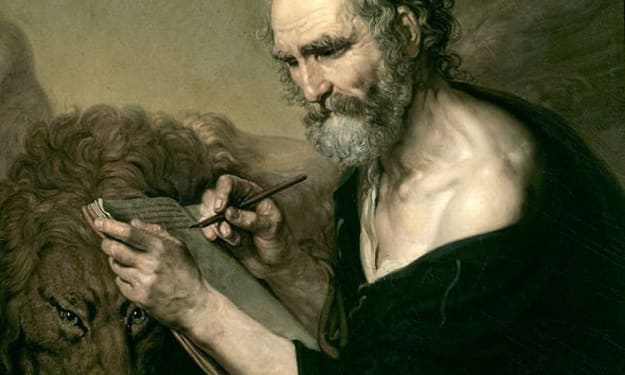
History of St. Mark the Evangelist
Mark the Evangelist is the author of the earliest written gospel, the Gospel of Mark, which appeared within about 30 years of the crucifixion of Jesus in the late AD ’60s. His feast day is April 25 for Catholic and Eastern Orthodox churches. He is significant historically both as the writer of the earliest Gospel and as the patron saint of Venice.
By Bill Petro5 years ago in FYI
Cosmetic and Genetic Surgical Fixes
Let’s say you’re attracted to the most beautiful girl at your school or workplace. She has a cute, delicate nose and perfect teeth. In every way this sweet gal exceeds even the high standards of beauty, brains, and loving personality as that imaginary princess from your dreams. She has been magically transformed into a real, live woman and she is as attracted to you as you are her! You two start dating and eventually marry. Six. Nine, a full year, or five years later, she gives birth to a baby girl, your lovely little daughter, with an enormous hook nose, crooked alligator teeth, and an elbow growing out of her forehead. Trying to comfort you, a friend at work shows you a photo from a medical book he has at home. At first, you thought it was a picture of your new infant daughter, but then realized it was much older than that. It was a photo of your wife taken shortly after she was born. There was another photo of her taken when she was 18 years old and showing how corrective surgery was successful. The surgical procedures to correct her alligator teeth, hook nose, and forehead elbow made medical news worldwide. Now your baby girl will need to undergo the same expensive, painful, and time-consuming surgery and orthodontal work as her mother did two-and-a-half decades ago. Your wife had a secret past she never told you about and now it has come home to roost and feed on your innocent daughter’s sure to be painful and unhappy childhood as well as your bank account.
By Charles Belser5 years ago in FYI
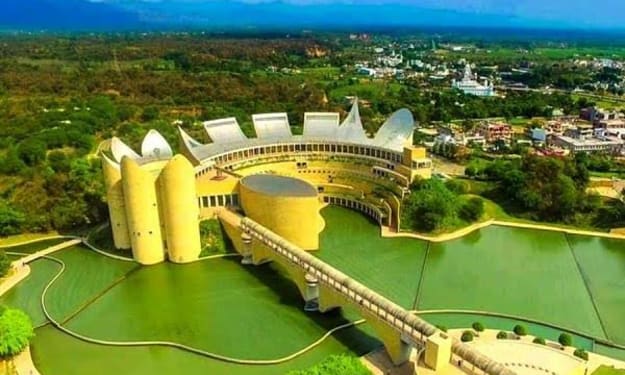
Resource rich Punjab
Start writing... Ancient Punjab formed part of the vast Indo-Iranian region. In later years it saw the rise and fall of the Maurya, Bacterias, Greeks, Sakas, Kushans and Gupta's. Medieval Punjab saw supremacy of the Muslims. Ghaznavi was followed by the Ghoroa, the slaves, the Khilji So, the Tughlakabad, the Lodhis and the Mughals. Fifteenth and sixteenth centuries marked a period of watershed in the history of Punjab. Through teachings of Guru Nanak, Bhakti movement received a great impetus. Sikhism began as a sociology-religious movement, which was more interested in fighting evils in religion and society. It was Guru Gobind Singh, the tenth Guru, who transformed the Sikhs into the Khalsa. They rose to challenge tyranny and after centuries of servitude, established a humane Punjabi Raj based on secularism and patriotism. Maharaja Ranjit Singh, in the works of a Persian writer, changed Punjab from Madam Kada to Bagh-Bahut (from the abode of sorrow to the garden of paradise). But soon after his death the entire edifice collapsed due to internal intrigues and British machinations. After two abortive Anglo-Sikh wars, Punjab was finally annexed to the British Empire in 1849.The fight against the British rule had begun long before Mahatma Gandhi's arrival on the scene. The revolt found expression through the movement of a revivalist or reformist character. First, it was the Namdhari sect, which believed in self-discipline and self-rule. Later, it was Lala Lajpat Rai who played a leading role in the Freedom Movement. Punjab was in the vanguard of India's freedom struggle on all fronts in India and abroad. Punjab's hardships did not end with Independence. It had to face the misery of Partition with large-scale bloodshed and migration. Besides their rehabilitation, there was the task of reorganization of the State.Eight princely states of East Punjab were grouped together to form a single State called PEPSU (Patiala and the East Punjab States Union) with Patiala as its capital. PEPSU state was merged with Punjab in 1956. Later in 1966, Haryana was carved out of Punjab and during the same year the erstwhile capital of Punjab was shifted from Shimla to Chandigarh.Situated in the north-western corner of the country, Punjab is bound on the west by Pakistan, on the north by Jammu and Kashmir, on the north-east by Himachal Pradesh and on the south by Haryana and Rajasthan. There are 13 Members of Parliament from Punjab and 117 Members of Legislature are elected to form the State Government.Agriculture.Punjab has accorded top priority to the development of Agriculture sector and has achieved about 3 per cent growth in the first for years of the 11th year Plan. sustenance of cereal production and productivity is not only important for the State but also for the food security of the nation. The State has been consistently contributing about 45 per cent of wheat and 25 per cent of or rice towards the central pool thereby ensuring the national food security. In the year 2010-11, the State produced 162 lakh MT paddy, out of wheat, out of which 108 lac MT has been procured. Similarly, the State produced 152 lakh MT of wheat, out of which 108 lakh MT has been procured. Only 10 districts of the State are covered under National Food Security Mission for rice even though state is its leading producer.DUSTRYThe State has 83% of its total geographical area (50.36 lakh hectares) under cultivation. The cropping intensity is around 189.69% with over 97% of the cultivable area being under assured irrigation. The State produces 19.50% of the country's wheat, 11% rice, 10.26% cotton and contributes significantly to the Central Pool with about 50% wheat and 40% rice. The paddy and wheat productivity in the State is 4022 kg/ha and 4462 kg/ha against the national average of 2178 kg/ha and 2907 kg/ha respectively. Fertilizer consumption is at 223.46 kg/ha. The State's farm economy is highly mechanized.INDUSTRY.New Industrial Policy, 2009 of Punjab has been implemented, under which special package of concessions has been provided for Information Technology of Knowledge based industries, agro based industries and food processing industries. In order to promote the IT units, new scheme relating to reimbursement of stamp duty provision of capital subsidies etc. have been included in the Annual Plan 2011-12 with an outlay of Rs.19 crore.IRRIGATION.The total Geographical area of the State is 50.36 lakh hectares, out of which about 41.74 lakh hectares area is under cultivation. After partition of the country in 1947, Indus water treaty of 1960 between India and Pakistan restricted India's right to usage to only three eastern rivers Satluj, Beas and Ravi. The State has three dams namely Bhakra Dam with storage capacity of 5.60 MAF constructed on River Satluj, Pong Dam with storage capacity 1.90 MAF constructed on River Ravi. At present the area under irrigation is 40.77 lakh hectares, which is 97.68% of the area under cultivation. The canal surface water distribution System consists of 14500 km of Canals/ Distributaries covering six major systems in the state namely: Sirhind Canal system, Bhakra Main Line, Bist Doab Canal, Upper Bari Doab Canal, Sirhind feeder and Eastern canal. Contrary to common perception only 27% area is irrigated by canal surface water and 73% area is irrigated by tubewells in Punjab. This has resulted in depletion of ground water table. As many as 112 out of 141 blocks have been categorized as over exploited or "dark blocks". The canal water and electricity are being provided free of cost to the farmer in the State.Rural Development.In its earnest endevour towards rural transformation and rejuvenation in State, government has adopted a two pronged strategy, empowerment of the Panchayati Raj Institutions through greater functional and financial autonomy and all round improvement of the rural habitats through the provision of basic amenities. Outlay for rural development has been increased by 148 per cent i.e. from Rs.209 crore in 2010-11 or Rs.516 crore for 2011-12.POWER.SThe present generation capacity of Punjab is 6900 MW including central share of 1940MW, where a peak unrestricted demand is about 10435 MW. Thus there is shortfall of 34 per cent of peak demand. The power demand is likely to go up to 11000 MW by the end of the 11th Five Year Plan.TRANSPORT.Roads: Public Works Department (Building and Roads) has been responsible for roads, bridges and buildings. The State has big network of 70528 km of roads comprising of 1749 km of national highways, 1462 km State highways, 2112 km major district roads, 4482 km of other district roads, 51059 km of rural link roads, 8130 km urban roads and 1534 km project roads.Aviation: The Department of Civil Aviation was set up in Punjab in the year 1962 with a view to make people of the State conversant with a aviation and flying.There are four Flying Clubs at Ludhiana, Patiala, Amritsar and Jalandhar. There is a domestic Airport at Chandigarh and Pathankot, an International Airport at Rajajasansi (Amritsar) and two aerodromes at Patiala and Ludhiana (Shahnewaj). Two Flying Clubs are coming up at Faridkot and Talwandi Sabo. To set up a green field International Airport near Macchiwara in Ludhiana at an estimated cost of Rs.17,500 crore on PPP mode, MoU has already been signed between Bengal Aerotropolis Projects Ltd. (BAPL) and PSIDC.Fairs and Festivals.Besides festivals of Dussehra, Diwali, Holi, other important festivals/fairs/Melas are Maghi Mela at Mukatsar in January, Rural Sports at Kila Raipur in February, Basant at Patiala in February, Holla Mohalla at Anandpur Sahib in March, Baisakhi at Talwandi Saboo in April, Urs at Rauza Sharif at Sirhind in August, Chappar Mela at Chappar in September, Skeikh Farid Agam Purb at Faridkot in September, Ram Tirath at Village Ram Tirath in November, Shaheedi Jor Mela at Sirhind in December, Harballah Sangeet Sammelan Baba Sodal at Jalandhar in December. In addition to above Fairs and Festivals three heritage festivals at Amritsar, Patiala, Kapurthala are also celebrated every year and are very popular among the tourists.Tourism.Golden Temple, Amritsar.The State has a large number of places of tourist interest some of which include Golden Temple, Durgiana Mandir, Jallianwala Bagh and the Wagah Border in Amritsar, Takht Sri Kesgarh Sahib and Khalsa Heritage Complex at Anandpur Sahib, Bhakra Dam, Qila Androoni, Moti Bagh Palace and Chattbir Zoo at Patiala, Wetland at Harike Pattan, Sanghol (district Fatehgarh Sahib) and Roopnagar archeological Musem at Roopnagar, Shaheed Bhagat Singh Memorial at Village Khatkar Kalan, SBS Nagar for archeological importance, Mughal Complex at Aam Khas Bagh, Rauza Sharif of Sheikh Ahmed at Graves of Afghan Rulers at Sirhind and Sodal Temple at Jalandhar, commemorative of Maharishi Balmiki Heritage.Bhangra - Folk Dance, Punjab.The origins of traditional Bhangra are speculative. According to I.S. Dhillon, Bhangra is related to the Punjabi dance 'bagaa' which is a martial dance of Punjab.Being a seasonal dance, traditional Bhangra is practiced in the month leading up to the festival of Vaisakhi. During this month, the harvest, especially wheat crop, is reaped. Local fairs mark the festival of Vaisakhi. After days of harvesting and at Vaisakhi fairs, Bhangra is performed, as a dance of men alone.
By Zarinabanu Zarinabanu5 years ago in FYI
African American Heritage: The Great Black Heroes and Patriots
When we study the Black history of the United States, we typically just look back to the last 50 years to the time of the great civil liberties activists such as Martin Luther King Jr., Malcolm X, and the Freedom Riders. Nevertheless, African American heritage extends beyond the Civil Rights Movement of the 1960s. As early as the very first slave ships docked in the New World, the African American struggle also started. During the Revolutionary War, African American patriots side by side with their white comrades. The American Civil War saw the United States Colored Troops played a significant role in the success of the Union Army. During the Reconstruction Era, African American politicians fanned the flames of desire for equality and recognition.
By John Limbo5 years ago in FYI
Are Men More Vulnerable to Corona?
Since the early stages of the pandemic, it has been clear that men are more vulnerable to Covid-19: they have fallen ill more frequently than women, and their death rates too have been higher. But a new study has found that the societal backgrounds play a greater role in disease outcomes than gender does.
By Aryan Pandey5 years ago in FYI
Hitler: The Rise Of A Madman
Anti-Semitism in society, abusive father, service in World War 1, family tragedy. All of these can be short and long term reasons for Adolf Schicklgruber, a.k.a Adolf Hitler, to become to man he was. Once a man with great potential became a man of great hate and anger. He lived his life the way he saw fit, this eventually led to his brutal end by his own hands.
By M.P.S Tonks5 years ago in FYI
Are You Camera-Ready?
Imagine living in a society in which your next door neighbor, your Uber driver or random citizens reading your social media posts can affect what school you may attend, what career path you may choose or whether you can travel to visit far-off relatives and friends. In China, this is becoming the norm for the entire population.
By Juliette McCoy Riitters5 years ago in FYI
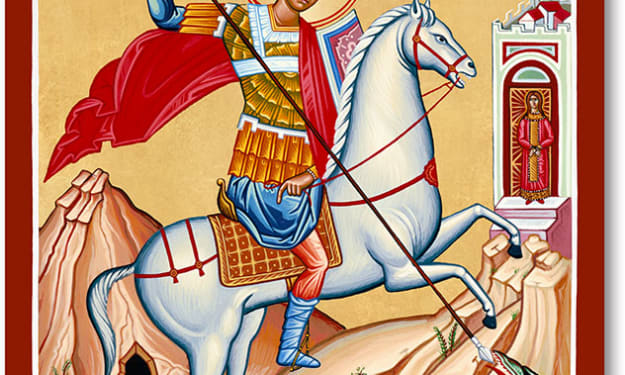
History of St George and the Dragon
Saint George’s Day is April 23, likely the day of his martyrdom. He is often depicted as a knight in armor. He is the patron saint of England, and his day has been celebrated there from the 9th century and more recently throughout the British Commonwealth… though he was not English and never visited England.
By Bill Petro5 years ago in FYI
Joseph Hansom and the Hansom Cab
Until a few years ago, the signs that welcomed visitors to the town of Hinckley in Leicestershire declared it to be the “Home of the Hansom Cab”. This might be thought to be a strange claim to make, given that Hansom cabs had not been seen on the streets of Hinckley or anywhere else for about a century, and most people would have very little idea what a Hansom cab was.
By John Welford5 years ago in FYI
How I Healed Myself of Fibromyalgia
Fibromyalgia sucks! There really isn't a good description for it. Everything about this horrible disease sucks. Fibromyalgia is defined as a chronic disorder characterized by widespread musculoskeletal pain, fatigue, and tenderness in localized areas. That definition sucks! Anyone who suffers from this disease can tell you that fibromyalgia is so much more than that. It affects every muscle of your body from the top of your head to the bottom of your feet. Experts estimate that there are about 700 muscles in the human body. One expert, Paul Ingraham, a science writer in Vancouver, Canada, states that "there are about 100 muscles that might get discussed in a gym (and of course only 20% of those get 80% of the shop talk), ~200 more muscles that are more obscure, roughly 400 more muscles that are really danged obscure, several million hair-raising muscles, several billion smooth muscles cells blended together, and exactly 1 heart muscle. He estimates that there are approximately 50,100,000,701 muscles, accurate to within 99%.
By Jackie Murray5 years ago in FYI