Historical
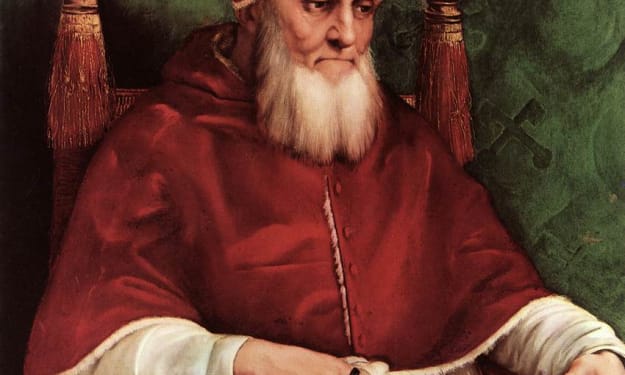
Pope Julius II
Giuliano della Rovere was elected to the office of Pope on 1st November 1503, taking the title of Julius II. Despite the corruption, double-dealing and other very worldly activities of which he was doubtless guilty, Julius’s reign would leave some remarkable legacies that have lasted to the present day.
By John Welford5 years ago in FYI
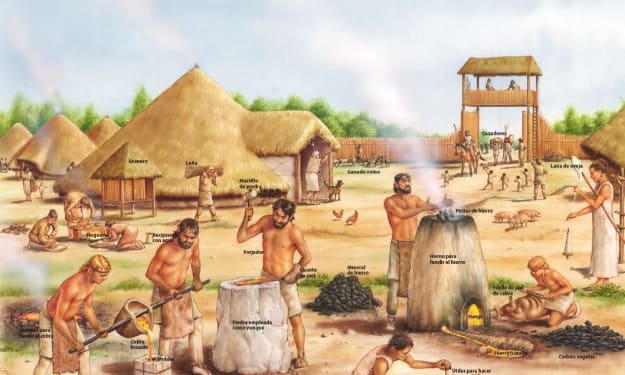
Greece in Neolithic times
The Neolithic (New Stone Age) era in ancient Greece must be reckoned to date from around 6800 BCE to 3200 BCE. Climatic changes made it possible for groups of people to settle in fixed locations and for the hunter-gatherer economy of the Palaeolithic and Mesolithic eras to give way to more settled ways of life, including farming, stock-rearing, and the creation of pottery. Around 1,000 sites have been identified that show signs of occupation in the Neolithic period.
By John Welford5 years ago in FYI
"God Save the Queen": the UK national anthem
The British national anthem was the first in the world to be adopted as such, with every other country subsequently following suit with its own anthem, sometimes even using the same tune as the British one. Like many British institutions it was a matter of evolution rather than deliberate creation, coming about almost by accident.
By John Welford5 years ago in FYI
Napoleon Bonaparte: a short dictator?
There is a general belief that Napoleon Bonaparte was unusually short, and that he is therefore part of the common perception that dictators tend to be short people who make up for it by being particularly unpleasant to everybody else and conquering as many countries as they can. But, in Napoleon’s case, is this true?
By John Welford5 years ago in FYI
Way down yonder in the Pawpaw patch
When I was a little girl, my maternal great grandmother used to sing various songs throughout the day. One of the lines she often sang was to the tune of Ten Little Indians and was the chorus from a folk song called The Pawpaw Patch. The chorus was:
By Cheryl E Preston5 years ago in FYI
How wheellock weapons worked
Early firearms worked by the direct application of heat to gunpowder, an operation that was clearly fraught with danger, especially as this took place a few inches in front of the gunman’s face. The earliest such weapons used the “matchlock” system, in which the heat was supplied by a naked flame in the form of a smouldering piece of cord brought into direct contact with gunpowder in an open pan, a process that was not only dangerous but unreliable. The way forward was to use friction as the heat source, and the first method to do so was the wheellock, which was used on weapons from around 1550 to 1650, although weapons from both before and after these dates can be found.
By John Welford5 years ago in FYI
Radiance: The Brilliant Career of Marie Curie. Top Story - May 2021.
AN AILING François Mitterrand, in the final weeks of his last term as French president, finally made amends for centuries of Gallic sexism. At an April 1995 ceremony in the Panthéon, the great monument to French national heroes, he enshrined the ashes of Marie Curie — the first woman to be so honoured for her achievements.
By Wilson da Silva5 years ago in FYI