Pop Culture
Pop Culture
Why some bike shares work and others don't
set of iconic photos from 2017 show brightly coloured fields which, at first glance, look like meadows filled with flowers in full bloom. It takes a while to register that the images aren't of verdant fields, but ones filled with bicycles: hundreds and thousands of two-wheelers, stacked end-to-end in what came to be called China's bicycle graveyards.
By Gu Wei Di Qi3 years ago in FYI
The city of sustainable skyscrapers
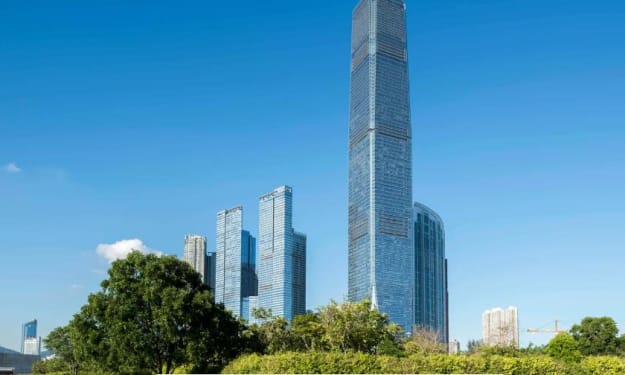
Looking out over Hong Kong's iconic skyline from the viewing deck of its tallest skyscraper, the 118-storey International Commerce Centre (ICC), it's clear why Hong Kong is known as the world's most vertical city. In every direction you look, countless high-rise buildings are stacked side by side, clustered together, like a real-world version of the game Tetris.
By Gu Wei Di Qi3 years ago in FYI
The device that reverses CO2 emissions
he year is 2050. Walk out of the Permian Basin Petroleum Museum in Midland, Texas, and drive north across the sun-baked scrub where a few remaining oil pumpjacks nod lazily in the heat, and then you'll see it: a glittering palace rising out of the pancake-flat ground. The land here is mirrored: the choppy silver-blue waves of an immense solar array stretch out in all directions. In the distance, they lap at a colossal grey wall five storeys high and almost a kilometre long. Behind the wall, you glimpse the snaking pipes and gantries of a chemical plant.
By Gu Wei Di Qi3 years ago in FYI
The rivers that 'breathe' greenhouse gases
At first glance you would assume the New Territories were one of Hong Kong's greenest areas – the region that borders the Chinese mainland and makes up the bulk of Hong Kong's territory seems a world removed from the bustling streets and dense cluster of skyscrapers that tower over much of the city centre. By contrast, the New Territories are mostly rural and home to large swathes of farmland, rolling greenery, wetlands, mountains, parks and rivers.
By Gu Wei Di Qi3 years ago in FYI
How waste food can reduce our reliance on natural gas
t a large industrial facility not far south-west of Ireland's capital Dublin, one man says old food waste and pig manure can help Europe fight climate change – and reduce its reliance on Russia for energy. Billy Costello explains that decaying organic matter releases biogas, which firms like Green Generation, the one he directs, can collect and purify to produce methane, or biomethane as it's called when it comes from such sources.
By Holy horse3 years ago in FYI
The medieval Dutch solution to flooding
This July, gorged by days of rain, the Meuse River broke its banks, and the Belgian town of Liège was its victim. Waters the colour of old gravy raced through town, leaving residents floating in canoes as their homes vanished about them. In the city and its province, over 20 died, one man drowning in his basement.
By Holy horse3 years ago in FYI