
Australia Beauty Products Market: Cosmetics Innovation, Consumer Trends & the Future of Modern Beauty
How self-care culture, premium formulations and digital influence are shaping Australia’s beauty landscape

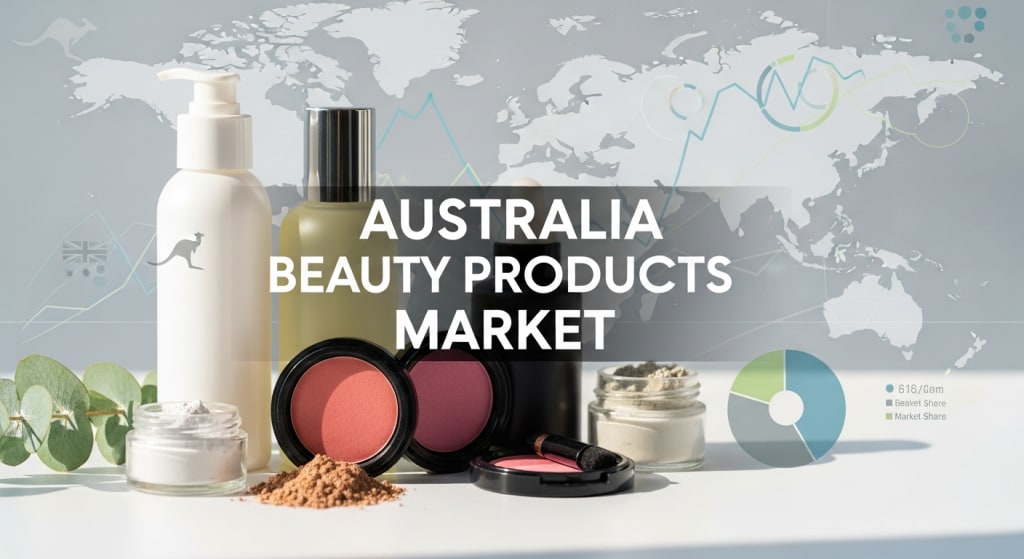
According to IMARC Group, the Australia beauty products market reached USD 14.83 Billion in 2024. Looking ahead, the industry is projected to grow to USD 21.64 Billion by 2033, expanding at a CAGR of 4.28% during 2025–2033. This upward trend reflects strong consumer interest in skincare, makeup, wellness-driven formulations and digitally influenced beauty purchasing habits.
As Australians become increasingly ingredient-aware, health-conscious and digitally connected, beauty products have evolved from simple cosmetics to powerful lifestyle and identity expressions — anchored in science, self-care and authenticity.
Why is the Australia Beauty Products Market Growing?
Shift Toward Skincare-Driven Beauty
Skincare has become the backbone of the beauty sector. Australian consumers are investing more in serums, moisturizers, sun protection and targeted treatments focusing on anti-ageing, hydration and skin-barrier repair. This shift toward “skin first, makeup second” is one of the strongest growth drivers boosting demand for functional beauty products supported by dermatological science.
Digital Influence & Social-Media-Driven Purchases
TikTok, Instagram and YouTube play a defining role in shaping beauty preferences. Viral product reviews, influencer-led tutorials and dermatologist content drive discovery and accelerate adoption. Social-media-first brands, in particular, benefit from fast market traction as consumers look for transparent ingredient lists, real-world reviews and visible results.
Clean Beauty, Natural Ingredients & Ethical Product Choices
Australia’s growing clean-beauty movement pushes consumers toward formulations that are free from parabens, sulfates, mineral oils and artificial fragrances. Products using botanical extracts, active naturals and eco-certified ingredients have gained strong momentum. Ethical and cruelty-free claims also carry significant weight, making sustainability a central purchase decision factor.
Rising Disposable Income and Premiumization
Consumers are increasingly willing to pay more for high-performance beauty products made with advanced actives, innovative textures and science-backed formulations. Premium fragrances, cosmeceuticals and clinically tested anti-ageing products continue to capture rising interest, especially among urban and middle-to-high-income groups.
E-Commerce Expansion & Multi-Channel Retail Growth
Online beauty platforms, pharmacy e-commerce, brand-owned websites and social-commerce features have made beauty products more accessible. Digital convenience mixed with personalized recommendations, virtual try-on tools and user reviews strengthens consumer confidence and shopping frequency. At the same time, specialty stores and pharmacies remain key touchpoints for experiential retail.
Recent News & Developments in the Australia Beauty Products Market
May 2025: A major pharmacy chain reported a 15% surge in purchases of science-backed skincare and anti-ageing products, driven by nationwide consumer interest in dermatologist-recommended routines. This reflects the increasing role of clinically proven formulations in everyday beauty habits.
August 2025: A popular Australian natural-beauty brand launched a new refillable product line, reducing plastic waste by up to 40% per product. Supported by local sustainability programs, the initiative saw rapid uptake among eco-conscious consumers seeking ethical beauty solutions.
October 2025: Beauty-industry reports highlighted a robust 18% increase in online beauty orders, driven by influencer-led campaigns and improved virtual try-on tools. This surge further confirms that digital engagement continues to shape beauty shopping behavior across all consumer segments.
Why Should You Know About the Australia Beauty Products Market?
Because Australia’s beauty industry is undergoing a major evolution — blending science, wellness, sustainability and digital influence. With the market projected to rise from USD 14.83 Billion in 2024 to USD 21.64 Billion by 2033, the sector offers strong long-term opportunities for brands, retailers, investors and innovators.
For beauty brands: Ingredient transparency, clinical performance and clean-beauty claims are winning consumer trust.
For manufacturers: Natural actives, sustainable packaging and high-efficacy formulations present strong innovation avenues.
For retailers: Hybrid retail — combining pharmacy, specialty beauty, and online platforms — creates new revenue streams.
For consumers: The market offers greater access to quality skincare, targeted treatments, inclusive beauty ranges and ethical options.
About the Creator
Kevin Cooper
Hi, I'm Kavin Cooper — a tech enthusiast who loves exploring the latest innovations, gadgets, and trends. Passionate about technology and always curious to learn and share insights with the world!
Keep reading
More stories from Kevin Cooper and writers in Geeks and other communities.
Australia Cybersecurity Market: Digital Protection, Threat Prevention & the Future of Secure Infrastructure
As of 2024, the Australia Cybersecurity Market was valued at USD 7.6 Billion. Looking ahead, it is projected to grow to USD 19.3 Billion by 2033, representing a CAGR of 10.85% from 2025–2033. This substantial growth is being driven by increased cyber threats, expanding digital infrastructure, regulatory pressure, and rising demand for robust security across sectors — from finance to utilities, government to SMEs.
By Kevin Cooper3 months ago in Geeks
No Other Choice (2025)
It is only February, so other films may well surpass “No Other Choice”, but I think this is the best film I’ve seen so far this year. And that surprises me, because, it is a subtitled film and while I am pretentious enough to choose to watch foreign-language films, I was also very tired and that was an extra commitment from me. But more importantly, let me warn you, this film is gruesome and violent. There were times I had to turn away from the screen to avoid the worst of it (including some self-inflicted dentistry).
By Rachel Robbins7 days ago in Geeks
How to Get Government App Contracts in San Diego?
For many technology companies, government contracts represent both opportunity and mystery. Unlike startup clients or enterprise customers, public sector agencies operate under structured procurement processes that can seem opaque from the outside. Teams often assume that winning a contract depends solely on offering the lowest price or the most advanced technology.
By Samantha Blake7 days ago in Geeks




Comments
There are no comments for this story
Be the first to respond and start the conversation.