Latest Stories
Most recently published stories in Geeks.
Hemingway, Steinbeck, and Faulkner
When people ask if I like Faulkner or Hemingay, like they’re Maryann and Ginger, it irks me. My answer is yes, and it’s not like, it’s love. And why are you neglecting Steinbeck? I reject the idea that a reader can only read one style and like it. Hemingway, Steinbeck, and Faulkner are my holy trinity, my neapolitan ice cream. At the risk of stating the obvious, Hemingway is vanilla, Steinbeck is strawberry, and Faulkner is chocolate. I love them all.
By Harper Lewis12 days ago in Geeks
The History of Sound
The History of Sound is a well-made, beautiful film with fine, touching performances. I defy anyone to disagree with that. It is a film that is difficult to fault. But it is also difficult to love. Ironic given that a central plot line is the difficulty of love for two young men, who should be made for each other.
By Rachel Robbins12 days ago in Geeks
The Biggest Fashion Betrayal of the ’80s: Andie’s Prom Dress
Pretty in Pink gave us iconic music, unforgettable characters, and a prom dress reveal that felt like a betrayal to many fans. Decades later, Andie’s dress still sparks debate, disappointment, and passionate Gen X commentary.
By Erica Roberts 12 days ago in Geeks
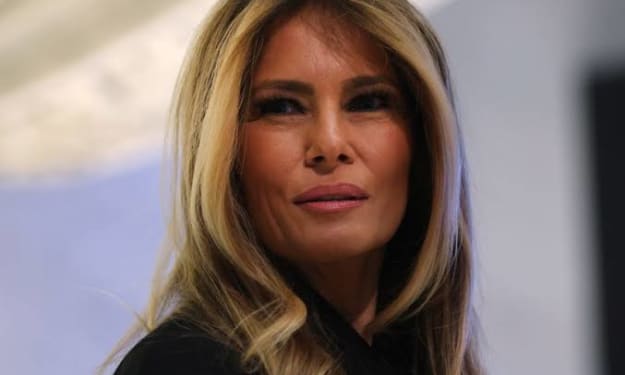
What to Know About the Melania Trump Documentary. AI-Generated.
Inside the first lady’s story and the film capturing her journey A new documentary about former First Lady Melania Trump has recently captured public attention, drawing both curiosity and debate. The film explores her life, experiences in the White House, and post-First Lady ventures, providing viewers with a personal and professional look at one of America’s most visible public figures. The documentary has been promoted through various high-profile events, including Melania ringing the NYSE opening bell, signaling a unique blend of media, business, and celebrity engagement. But what exactly does this documentary cover, and why has it sparked so much interest? Who Is Melania Trump? Melania Trump served as the First Lady of the United States from 2017 to 2021, married to former President Donald Trump. Born in Slovenia, she was a model before entering the political and public sphere. Her tenure as First Lady was marked by initiatives on children’s welfare, online safety, and anti-bullying campaigns, particularly through her “Be Best” campaign. Despite her high-profile role, Melania has often maintained a private personal life, which has contributed to public fascination. The documentary aims to provide insights into her experiences that the public rarely sees. What the Documentary Covers The film combines interviews, archival footage, and behind-the-scenes perspectives to tell the story of Melania’s journey from Slovenia to the White House. Key themes include: Early Life and Career – The documentary highlights her upbringing in Slovenia, her modeling career, and her transition to life in the United States. Role as First Lady – Viewers see her approach to public service, her initiatives, and the challenges of living in one of the world’s most scrutinized households. Personal Reflections – Melania shares her perspective on the media coverage she received, her family life, and her efforts to balance privacy with public duties. Post-White House Projects – The film also explores her current initiatives, including media projects and public appearances, like her NYSE opening bell ceremony, which coincided with the documentary’s promotion. The documentary seeks to humanize a figure often defined by headlines, giving audiences a chance to see her side of events during and after her time in the White House. Media and Public Reaction The documentary has generated a range of reactions. Supporters praise it as a candid look into a misunderstood public figure, appreciating the focus on her personal and professional achievements. Critics, however, question whether the film is too curated or promotional, noting that some segments appear designed to enhance her public image rather than present an objective account. Despite these debates, the documentary has succeeded in generating widespread discussion, a sign of its impact. Promotion and Publicity Strategy One of the most notable moments in the documentary’s promotion was Melania ringing the opening bell at the New York Stock Exchange. This event was symbolic, signaling that the film was not just a media project but also a strategic public engagement. Marketing experts have pointed out that using high-profile events for promotion is an effective modern strategy. The combination of celebrity, media attention, and financial institutions creates a broad audience reach, ensuring the documentary is visible to both traditional viewers and new audiences. Social media has amplified the film’s exposure, with clips, interviews, and promotional material circulating widely. Public engagement online has become a key part of how documentaries connect with audiences today. Cultural Impact Melania Trump’s documentary highlights broader cultural conversations about the roles of First Ladies, celebrity influence, and media representation. Historically, First Ladies have balanced public expectations with personal privacy, often becoming symbols rather than individuals. This documentary contributes to a trend of exploring behind-the-scenes perspectives of high-profile figures, providing audiences with a nuanced view of their experiences. It also sparks discussion about the intersection of politics, media, and celebrity culture, especially in a polarized social climate. Key Takeaways for Viewers For anyone considering watching the documentary, here are a few points to keep in mind: Perspective Matters – The film presents Melania’s personal viewpoint, giving insight into her experiences rather than a neutral historical account. Public and Private Life – The documentary explores the tension between her public duties and personal privacy. Historical Context – Understanding her role during the Trump presidency can help viewers see the film’s significance in a broader political and cultural framework. Media Awareness – Viewers can consider how media coverage influences public perception and how the documentary attempts to address those narratives. By framing the documentary in this context, audiences can better appreciate both the personal story and its place in contemporary culture. Conclusion The Melania Trump documentary offers a unique look at the life of a former First Lady, combining personal reflection, public service, and media strategy. While reactions vary, the film has succeeded in engaging audiences, sparking conversation, and providing a deeper understanding of a high-profile figure who has often been defined by public perception rather than personal narrative. Whether viewed as a biographical account, media project, or cultural artifact, the documentary highlights the challenges of living in the public eye and the strategies used by figures like Melania to shape their own story. It also reflects a broader trend in media: using high-profile events, social media, and strategic publicity to bring attention to personal stories in innovative ways. For viewers interested in politics, media, and celebrity culture, this documentary offers both insight and discussion, making it a noteworthy addition to the evolving landscape of public storytelling.
By Fiaz Ahmed 13 days ago in Geeks
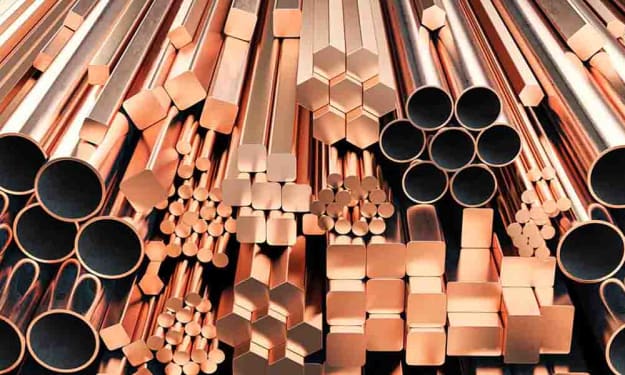
Copper Price Today. AI-Generated.
Copper, often referred to as the backbone of modern infrastructure, has once again captured global attention as prices surge to historic levels. The metal plays a critical role in construction, power grids, renewable energy systems, electronics, and transportation. Because of its widespread industrial use, copper prices are widely considered a barometer of economic health. Today’s price movements suggest not only short-term volatility but also deeper structural changes shaping the future of commodities. Current Copper Price Snapshot As of late January 2026, copper prices have climbed to record highs across major global exchanges. The London Metal Exchange (LME) three-month copper contract recently rose about 6.6% to roughly $13,953.50 per metric ton, after briefly touching nearly $13,967. Meanwhile, the most-traded contract on the Shanghai Futures Exchange jumped over 6% to 108,740 yuan (about $15,652 per metric ton), also reaching an all-time high. The rally reflects a strong shift in investor sentiment toward physical assets, fueled by geopolitical tensions and a weakening U.S. dollar that has made dollar-denominated commodities more attractive internationally. Analysts have responded by raising their expectations for the year ahead. A recent poll indicates the average copper price forecast for 2026 has moved above $11,000 per ton for the first time, with estimates near $11,975 amid supply disruptions and speculative trading. What Is Driving Copper Higher? 1. Supply Disruptions and Market Deficits One of the most significant drivers behind the price surge is constrained supply. Mine disruptions and operational setbacks have tightened availability, prompting analysts to increase projections for a global market deficit to more than 238,000 tons. Longer-term research echoes this concern. J.P. Morgan projects a refined copper deficit of roughly 330,000 metric tons in 2026, suggesting the imbalance between supply and demand could persist. 2. Structural Demand From Technology and Energy Copper is essential for electric infrastructure, smart grids, data centers, and electric vehicles—sectors expanding rapidly as economies modernize. Each electric vehicle requires significantly more copper than traditional combustion models, reinforcing long-term demand growth. Additionally, investments in artificial intelligence infrastructure and renewable energy projects are strengthening consumption trends, creating a durable foundation for higher prices. 3. Macro Forces and Investor Behavior Commodity markets rarely move in isolation. The Federal Reserve’s decision to keep interest rates unchanged has contributed to a weaker dollar, which typically supports metals prices by making them cheaper for overseas buyers. At the same time, geopolitical uncertainty has encouraged investors to diversify into hard assets, aligning copper with other metals that have recently set records. Recent Price Momentum Market data shows that copper has been steadily climbing since early 2025, rallying more than 20% amid tightening supply conditions. On India’s Multi Commodity Exchange, futures recently traded near Rs 1,330 per kilogram, approaching lifetime highs after rising sharply from earlier lows around Rs 913. Such upward momentum suggests the current rally is not merely speculative but tied to the metal’s growing industrial relevance. Forecasts: Will Prices Stay Elevated? Forecast opinions vary, but most institutions agree that copper will remain historically strong. J.P. Morgan expects prices to reach about $12,500 per ton in the second quarter of 2026, averaging near $12,075 for the year. Bank of America estimates an annual average near $11,313 per ton, citing supply squeezes and steady demand. Goldman Sachs anticipates prices largely staying within $10,000–$11,000, arguing that a modest surplus could prevent sustained spikes beyond that Taken together, third-party forecasts generally span $9,800 to $12,500 per ton, highlighting both opportunity and uncertainty in the copper market. Risks That Could Slow the Rally Despite bullish sentiment, analysts remain cautious. Weak industrial demand—particularly from major manufacturing economies—could limit further gains if economic growth slows. Goldman Sachs also notes that although long-term demand from power infrastructure is strong, the market may remain balanced rather than deeply undersupplied, reducing the likelihood of runaway prices. Another risk is substitution. As copper becomes more expensive, manufacturers may gradually shift toward alternative materials such as aluminum, though this process typically unfolds over longer timelines. Why Copper Matters Beyond Commodities Copper’s influence extends far beyond trading floors. Because it is used in nearly every form of electrical transmission, the metal is central to the global energy transition. Expanding grids, renewable power installations, and electrified transportation systems all rely heavily on copper wiring and components. This connection has transformed copper from a cyclical industrial metal into a strategic resource tied to technological progress. Analysts increasingly view it as a cornerstone commodity for the 21st-century economy. Trading Activity and Market Signals Recent futures trading data underscores the market’s heightened activity. Estimated daily volume on COMEX reached over 81,000 contracts, with open interest near 282,690, reflecting substantial participation from institutional and retail traders alike. Such engagement often signals strong conviction about future price direction, though it can also amplify short-term volatility. The Bigger Picture Today’s copper price surge is more than a headline—it reflects a convergence of supply constraints, technological transformation, and macroeconomic uncertainty. While short-term corrections are always possible, the long-term narrative points toward sustained relevance for the red metal. Whether prices ultimately stabilize near current levels or retreat slightly, copper’s strategic importance appears unlikely to fade. As the world electrifies and digital infrastructure expands, demand is poised to remain resilient. Conclusion Copper prices today illustrate a market in transition. Record highs highlight the growing value of materials that support modern life, from renewable energy systems to advanced computing networks. Yet the outlook remains balanced between optimism and caution, shaped by both structural demand and unpredictable global conditions. For investors, manufacturers, and policymakers alike, copper is no longer just another industrial commodity—it is a signal of where the global economy is heading. Monitoring its price movements offers insight into broader trends, including technological adoption, infrastructure investment, and geopolitical stability.
By Saboor Brohi 13 days ago in Geeks
Can You Work Out What Bloober Team Is Teasing?. AI-Generated.
Bloober Team: A Reputation for Mystery Bloober Team, known for its atmospheric horror games like Layers of Fear, Observer, and The Medium, has built a reputation for delivering unique, psychological horror experiences. With each release, the studio has captured the attention of gamers looking for innovative storytelling, immersive visuals, and tense gameplay.
By Aarif Lashari13 days ago in Geeks
Fallout Season 2 Episode 7 Review: “The Handoff” Explained
Fallout Season 2 Episode 7 is absolutely packed with wild moments, massive reveals, and game-changing Easter eggs straight from the Fallout universe. You can really feel how close we are to the finale because every storyline is spiraling into chaos.
By Bella Anderson13 days ago in Geeks
Game of Thrones: Knight of the Seven Kingdoms Episode 2 Review
This is my full breakdown of Game of Thrones: Knight of the Seven Kingdoms Episode 2, and wow — there is a lot to unpack. From deep book references to major Targaryen reveals, this episode is absolutely packed with Easter eggs, political context, and character development. So everybody grab your tournament gear, because the Targaryens have officially arrived.
By Bella Anderson13 days ago in Geeks
Philippines Kid Apparel Market: Household Spending, Fashion Trends & Retail Expansion. AI-Generated.
Philippines Kid Apparel Market Overview The Philippines kid apparel market trend continues to develop steadily as population growth, urbanization and evolving consumer lifestyles shape clothing demand for children. Apparel for infants, toddlers and young children represents a recurring purchase category driven by rapid physical growth, school requirements and seasonal wardrobe replacement. The Philippines kid apparel market size reached USD 1.0 Billion in 2024. Looking forward, IMARC Group expects the market to reach USD 1.8 Billion by 2033, exhibiting a growth rate (CAGR) of 6.4% during 2025-2033. This growth reflects structural demand fundamentals rather than short-term fashion cycles.
By Manisha Dixit13 days ago in Geeks