literature
Geek literature from the New York Times or the recesses of online. Our favorite stories showcase geeks.
JK Rowling Has Revealed The Title of Her New Novel — But What Does it Mean?
As anyone with a Twitter account will know, Harry Potter creator JK Rowling is one of the most active celebrities on the site. She’s also one of the sassiest users, clashing with Piers Morgan, Trump supporters, and critics of her politics, leaving you whooping in the wonder of her whip-sharp wordplay.
By Max Farrow8 years ago in Geeks
The Vastness and Strangeness of Nature: Death, Loss, and Grief in Thoreau's 'Walden'
A primary resource for all things nature and experience, Thoreau’s 1854 narrative account of living two years alone on Walden Pond, Walden works to challenge the reader’s perspective on nature and to find one’s own narrative in it. Thoreau’s goals in the book seem to teeter on the edge of persuasion, though his eloquent accounts of his experiences leave the reader with no real advice—Thoreau has written a book defining the experience of living simply and naturally as truly his own, and through a particular passage in the book it is apparent that he has greater motives beyond retelling his reclusion into the Walden woods. This particular passage in the middle of the book ties in a possible underlying theme Thoreau was possibly unaware of: the effect of nature on the emotional and physical manifestations of grief. Through careful analysis of the text, it is likely that many of Thoreau’s experiences in the woods are unconscious reactions to the presence of loss, death, and inevitable change in his personal life. Along with the interdependence of nature and experience, another idea arises in Walden, wherein the integration of nature and environment in Thoreau’s writing complicates the underlying theme of his own grief, and grappling in particular with the death of his dear elder brother, John, and later, his father.
By Olivia Cyr8 years ago in Geeks
Who's Really to Blame for the Death of Romeo and Juliet?
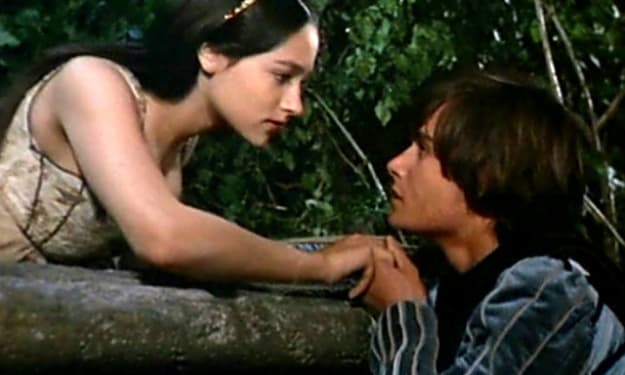
The story of Romeo and Juliet is one with many flaws and actions that took place, that lead to many tragic deaths, including the lives of the two young protagonists of the story. Many blame Romeo for the suicides of both himself and Juliet, who couldn’t live without the other. They believe that if Romeo hadn’t reacted to Juliet’s “death” so dramatically, the two could have survived and been together. Although that is an educated belief. However I believe there's someone else who could be blamed for the fate of the young couple, which is Friar Lawrence. The man who seems as if he tried “his best” to make the two a happily wedded couple. He was the one who got the two married in secret, gave Juliet an incredibly powerful potion which allowed her to fake her own death, failed to deliver and important letter to Romeo, and abandoned Juliet when she needed him the most.
By [email protected]8 years ago in Geeks
Of Mice and Meany
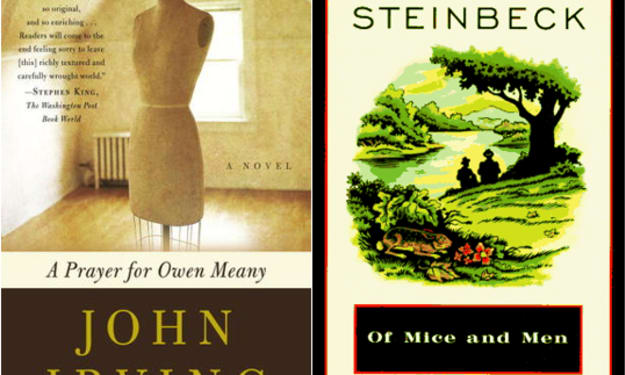
The most inconspicuous things can have the most significant meanings. An armless totem and soft mice are symbols that give the reader foresight into the futures of Owen Meany and Lennie Small. The stories Of Mice and Men and A Prayer for Owen Meany follow the lives of the characters, Lennie Small and Owen Meany, and their closest friends, George Milton and Johnny Wheelwright. Both Steinbeck and Irving incorporate the literary devices of symbolism, attributing a deeper meaning to an object, and foreshadowing, subtly hinting to the reader what events will transpire later throughout their books ("Symbolism”, “Foreshadowing – Examples...”). In A Prayer for Owen Meany, by John Irving, and Of Mice and Men, by John Steinbeck, the deaths of both Owen Meany and Lennie Small are foreshadowed by their unusual obsessions with very ordinary objects.
By Almárëa Laurësil8 years ago in Geeks
The Father of American Literature
Better known as Mark Twain, Samuel Langhorne Clemens is one of the most renowned authors in American literature. Ernest Hemingway once said, “All modern literature comes from one book by Mark Twain called Huckleberry Finn…. There was nothing before. There has been nothing as good since” (“Clemens”). Twain’s diverse life, many careers, and fascinating stories have captured the imagination of many and earned him numerous awards.
By Almárëa Laurësil8 years ago in Geeks
As Madness Grows, The Death Bell Ever Tolls
Hamlet, like many of Shakespeare’s notable plays, is a classic tragedy, intertwined with death and darkness. In The Embassy of Death: An Essay on Hamlet, G. Wilson Knight claims that the main theme of this somber story is death, demonstrated by “subsidiary incidents, persons, and detailed suggestion throughout.” Knight highlights this, citing the actions and characteristics of Hamlet and Claudius.
By Almárëa Laurësil8 years ago in Geeks
Heist Society: It'll Steal Your Bookworm Needs Away
First let me start off by explaining how Ally Carter is forever a favorite author of mine. I have loved all her series no matter when I've read them. Unfortunately, when I first picked up Heist Society in high school, I couldn't get into it. It killed me I wasn't sucked into Carter's book.
By Ashley Thompson8 years ago in Geeks
Phrases We Owe to Shakespeare
If you went to high school at any point in time after 1800, chances are you've read something by Shakespeare. Whether it be Julius Caesar, Romeo & Juliet, or Midsummer Night's Dream, William Shakespeare's words have graced your ears, eyes, and brains at some point in your life. Shakespeare's plays come with mixed reviews — they are often regarded highly by literature and theater geeks, while viewed with groans and eye rolls by the rest of society. However, Shakespeare was quite the wordsman, and loved to invent phrases in his writing. Many of these phrases are still used in everyday conversation! Here are the most common ones.
By Hayley Bonnett8 years ago in Geeks
Attaining Utopia
Some people love to read. They devour books in days, feasting upon them, one after the other like a box of chocolates left open in a room filled with hungry people. They are the speed readers, capable of interpreting 1,000 words a minute; they turn pages like a camera snapping pictures, but do they truly enjoy the beauty of the written words? Do they share the emotions of the characters and grasp the subtle connotations being so generously offered by the writer or do they simple read, following the Get it, Got it, Good, Moving On mentality.
By Cynthia Morgan8 years ago in Geeks