pop culture
Modern popular culture topics in the geek sphere.
The Importance of Film Within Korean Society
In order to define Korean cinema as it is now, it is important to place it into some sort of context given the country's century of oppression, division, and warfare. Historically, Korean cinema seems to have been non-existent, with nothing surviving from the era of silent films (1926-1935), and according to Adriano Apra (as cited by Rist, 1998, online) only three films have survived from before 1946 and these are not considered Korean but Japanese due to the World War II occupational force at the time. It was not until the 1960s that a significant film production could be seen in Korea’s cinema industry. Now Korea is experiencing a "new wave" of film making and cinema fanaticism, which in the Korean language is called "Hal-u" and has been likened to France in the 1960s, Hollywood in the 1970s and Hong Kong in the 1980s in their leap into world cinema. The very fact that the people of Korea have their own term for this phenomenon and are therefore recognising its existence as a part of their society suggests that it has a firm place in their everyday lives. To give an idea of just how popular cinema in Korea is becoming, it has been noted that in the south the number of cinema screens has almost tripled in the last eight years and the attendance is still steadily rising all the time. With these successes within Korea itself, a further key to its expanding popularity is tapping into the international sales. Korea is now exporting at the very least ten times as many films compared with the early 90s. In an interview for Subway Cinema, Korean film director Kim Jee-Woon stated, "Looking at the Korean film industry, they are dealing with a variety of subjects and different genres, and that’s one of the strengths of the current Korean film market" (Kim Jee-Woon 2001, online). He is saying that unlike places such as Hong Kong, where their films are primarily martial arts orientated, and therefore introduced to the rest of the world as such, Korean films have a wider base. This I have learnt is largely due to the wide selection of backgrounds and origins of the directors, as mentioned by Jonathan Ross in his recent documentary series on Asian cinema, Asian Invasion shown on BBC4, January 2006. I will go into greater detail of these varied backgrounds and the reasons for them in the social political context chapter. This fully encompassing genre industry means that so far, Korean films have yet to be classified by the rest of the world, like Hong Kong films have been, and to an extent Japanese films have been classified as that of mainly the horror genre thanks largely to the many Hollywood remakes such as The Ring and Dark Water.
By Ruth Esca Bowmer8 years ago in Geeks
Reboot or Nah?
TV shows in the 90's were amazing. Not to say the ones today aren't great, but there is something about what we call the classics, among our generation that leave no room for competition. There's no denying that. Even 20 years later, some of us can still recount episodes of
By C. Nicole Pierce8 years ago in Geeks
Exploring the Otaku Culture
Japan is the dream land of every otaku in the planet. Especially, places like Akihabara and Nakano Broadway can be called as the holy land of otakus. Ever since anime revolutionized the entertainment industry, otaku culture has become more and more popular, and Japan has become a gathering place, a hub for otakus from all over the world.
By Otaku Writer8 years ago in Geeks
What's the Difference: Grammy, Emmy, Golden Globe, SAG, Tony, Academy or People's Choice Award?
There are so many different award shows on television that it is hard keeping up with all of them. Some people don't know who the award show honors until it is aired.
By Margaret Minnicks8 years ago in Geeks
DC Comics Posthumous James Bond Comics
There have been several males who have portrayed James Bond: Sean Connery, the late Roger Moore, George Lazenby, Timothy Dalton, Pierce Brosnan, and Daniel Craig. There may even be another Bond after Craig leaves the role of James Bond and former Wolverine actor Hugh Jackman is looking to be the second Aussie to play the role.
By Heather Wilkins8 years ago in Geeks
An Anthem of Nineties Sentiment
Something happened around 1992 that was more gripping to the young anklebiters or, dare I say, rugrats of the world, than Bill Clinton’s presidency or the separation of Prince Charles and Princess Diana or the birth of Miley Cyrus. True, the gelatinous, green substance known as “slime” had existed since the days of You Can’t Do That On Television, starring the glorious, pocketed-hand Alanis Morissette. But it was around this time that the youth of America began to cling to a Gak-laden era dressed in stirrupped leggings and Blossom hats.
By Candace Neal8 years ago in Geeks
Mark Hamill Reads Donald Trump's 'Wire Tapping' Tweets as the Joker and It's Everything
In addition to being known around the world as #LukeSkywalker since 1977, #MarkHamill has been a prolific voice actor for over forty years and his talented throat has been the home of the menacing voice of #TheJoker for #DC Comics since 1992. He has been a staple in the #Batman video games as well and most recently voiced the Joker for the Batman: Arkham VR.
By Ghezal Amiri8 years ago in Geeks
Good Intentions Gone Wrong
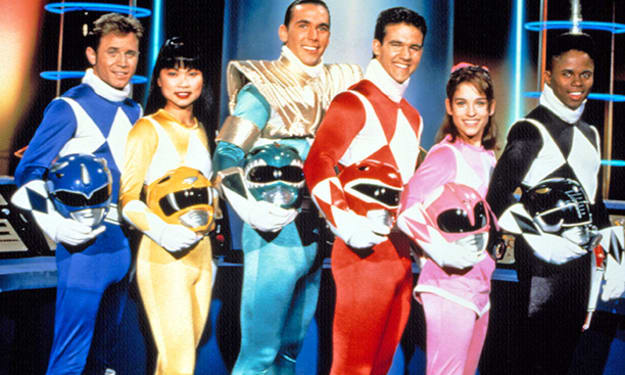
As a kid, the Mighty Morphin Power Rangers was my favorite show to watch. I would race home after school, get my mom to turn on Fox Kids, and enjoy the next 30 minutes of karate-chopping, sword-wielding, back-flipping teenagers fighting against the forces of evil. The show premiered on August 28, 1993 and was the first entry to the Power Rangers franchise in the US. The series was popular enough to get a feature film, Mighty Morphin Power Rangers: The Movie, released by 20th Century Fox on June 30, 1995.
By Yarn Goddess Cosplay8 years ago in Geeks