
Understanding White Label Cryptocurrency Exchanges: Structure, Function, and Industry Role
A practical examination of how pre-built exchange infrastructure shapes digital asset trading platforms

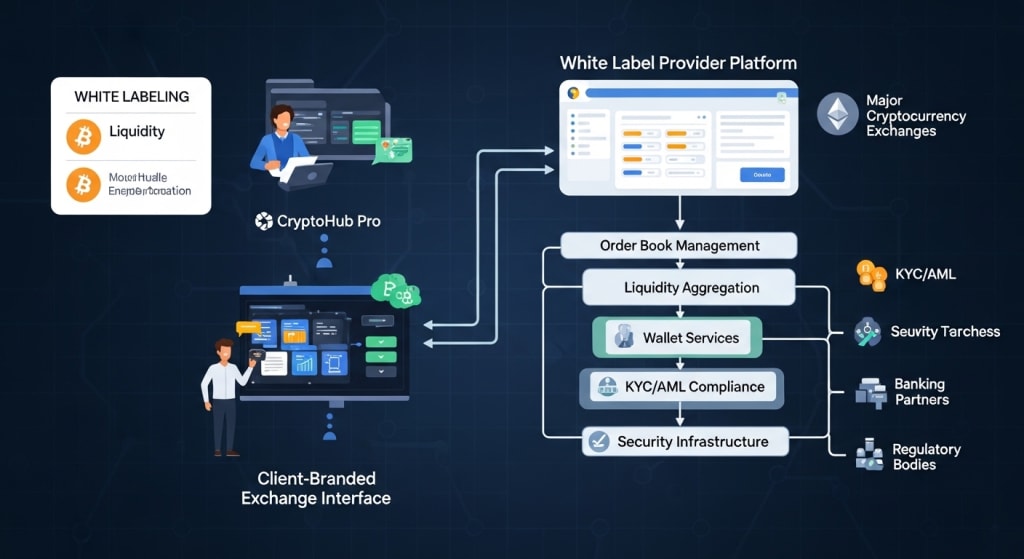
Cryptocurrency trading platforms have expanded rapidly over the past decade, reflecting growing participation in digital asset markets across retail, institutional, and enterprise segments. Alongside this expansion, the technological complexity required to operate an exchange has also increased. Security frameworks, liquidity management, compliance infrastructure, and high-performance trading engines demand significant technical and operational expertise.
Within this environment, white label cryptocurrency exchanges have emerged as a structural model for launching trading platforms using pre-developed infrastructure. Rather than building every component independently, organizations can deploy a customizable framework that already includes essential exchange functionality.
This article examines white label cryptocurrency exchanges from an analytical perspective. It explains how they are structured, how they operate, and what role they play in the broader digital asset ecosystem. The focus remains on understanding mechanisms and industry dynamics rather than evaluating specific providers or commercial offerings.
What Is a White Label Cryptocurrency Exchange?
A white label cryptocurrency exchange is a ready-built trading platform framework that can be configured and branded by the organization operating it. The underlying software architecture is developed in advance, allowing operators to deploy a functional exchange without building core systems from the ground up.
Although implementations vary, most white label exchanges provide the foundational components required for digital asset trading.
Core Functional Characteristics
Common structural elements include:
- Order matching engine for executing trades
- User account management system
- Wallet infrastructure for digital asset storage
- Administrative controls and monitoring tools
- Trading interface for market interaction
- Security and authentication mechanisms
The operator typically configures the platform’s visual identity, supported assets, fee structures, and operational policies while relying on the pre-built technical framework.
Conceptual Distinction from Custom-Built Exchanges
It is useful to distinguish white label infrastructure from fully custom exchange development.
- Custom platforms involve designing and building trading architecture from first principles.
- White label platforms provide an existing technological base that can be adapted.
The difference lies primarily in development origin rather than operational function. Both models can support trading activity, but their development pathways differ significantly.
Structural Architecture of White Label Exchanges
Understanding how white label exchanges function requires examining their layered architecture. Most platforms operate through interconnected modules that collectively support trading activity.
1. Trading Engine Layer
The trading engine forms the computational core of an exchange. Its primary responsibilities include:
Matching buy and sell orders
Maintaining order books
Processing trade execution logic
Updating market data in real time
Performance at this layer directly influences platform responsiveness and market stability.
2. Asset Custody and Wallet Infrastructure
Digital asset custody is a critical operational component. White label exchanges typically include integrated wallet systems that manage deposits, withdrawals, and internal transfers.
These systems often use combinations of:
- Hot wallets for active transaction processing
- Cold storage mechanisms for offline asset protection
- Transaction verification protocols
Security controls at this level are essential for safeguarding user funds.
3. User Management Systems
Exchange platforms must maintain structured records of user activity. This includes:
- Account creation and authentication
- Identity verification procedures
- Transaction histories
- Access control permissions
These systems support both operational oversight and regulatory compliance requirements.
4. Administrative and Monitoring Interfaces
Operational supervision requires tools that allow administrators to:
- Monitor trading activity
- Manage asset listings
- Configure fees
- Review system alerts
- Maintain platform stability
These interfaces function as the control layer of the exchange.
Operational Workflow of a White Label Exchange
Although technical details vary across implementations, most white label exchanges follow a similar operational sequence during trading activity.
Step 1: Account Registration and Verification
Users create accounts and complete required verification processes. Depending on jurisdiction, identity confirmation procedures may be required before trading access is granted.
Step 2: Asset Deposit
Users transfer digital assets or supported currencies into platform wallets. The exchange verifies incoming transactions before crediting balances.
Step 3: Order Placement
Participants submit buy or sell orders through the trading interface. Orders are recorded within the platform’s order book.
Step 4: Matching and Execution
The trading engine identifies compatible orders and executes transactions according to matching rules.
Step 5: Settlement and Record Updating
Balances are updated to reflect completed trades, and transaction records are stored for auditing and reporting.
This workflow mirrors the operational structure of many financial trading environments, though implemented through digital asset infrastructure.
Role in the Cryptocurrency Industry
White label exchanges occupy a specific position within the digital asset ecosystem. Their presence influences how trading platforms emerge and operate across different markets.
Lowering Technological Barriers to Entry
Building a fully functional exchange requires expertise in distributed systems, cybersecurity, financial infrastructure, and regulatory compliance. Pre-developed exchange frameworks reduce the technical burden associated with platform deployment.
This structural accessibility has contributed to the geographic and organizational diversification of cryptocurrency trading venues.
Supporting Market Expansion
As more exchanges become operational, asset accessibility increases. Expanded access can affect:
- Market liquidity distribution
- Regional trading availability
- Competition among platforms
White label infrastructure therefore contributes indirectly to market development by enabling broader participation.
Standardization of Exchange Functionality
Pre-built platforms often incorporate established design patterns and operational workflows. This can lead to partial standardization in:
- User interface structures
- Security implementation methods
- Trading mechanics
Standardization may improve familiarity for users interacting with multiple exchanges.
Regulatory and Compliance Considerations
Operating a cryptocurrency exchange involves regulatory responsibilities that vary by jurisdiction. White label infrastructure may provide technical tools for compliance, but legal obligations remain with the platform operator.
Common Compliance Areas
Regulatory frameworks may require:
- Identity verification procedures
- Transaction monitoring systems
- Reporting mechanisms
- Data protection safeguards
Implementation requirements depend on local financial regulations and digital asset policies.
Operational Responsibility
While infrastructure can support compliance processes, responsibility for regulatory adherence typically rests with the exchange operator. Governance policies, reporting practices, and legal oversight remain organizational functions rather than purely technical features.
Security Implications
Security is a defining concern for cryptocurrency exchanges due to the irreversible nature of digital asset transfers.
White label platforms typically incorporate multiple protective mechanisms.
Typical Security Measures
These may include:
- Multi-factor authentication systems
- Encryption protocols for data protection
- Access control frameworks
- Network monitoring tools
- Withdrawal authorization procedures
The effectiveness of these measures depends not only on technical design but also on operational management.
Advantages and Limitations as an Infrastructure Model
White label exchanges offer structural benefits, but they also introduce certain constraints.
Structural Advantages
- Reduced development complexity
- Faster deployment timelines
- Access to established technical frameworks
- Pre-configured operational modules
Structural Limitations
- Limited architectural flexibility compared to fully custom systems
- Dependence on underlying software design
- Potential uniformity across multiple platforms
- Ongoing reliance on external technical maintenance in some cases
Evaluating these characteristics requires examining specific operational goals and technological requirements.
Broader Economic and Technological Context
The emergence of white label exchanges reflects broader trends in digital infrastructure development. Many technology sectors adopt modular frameworks that separate core engineering from operational deployment.
Examples appear across:
- Payment processing systems
- Content management platforms
- Financial trading software
Within cryptocurrency markets, this modular approach has influenced how trading environments are constructed and maintained.
Conclusion
White label cryptocurrency exchanges represent an infrastructural model that enables the deployment of trading platforms through pre-developed technical frameworks. Their architecture typically includes trading engines, asset custody systems, user management modules, and administrative controls operating in coordinated layers.
By lowering technological barriers and facilitating platform deployment, these exchanges contribute to the expansion and diversification of digital asset markets. At the same time, operational responsibility, regulatory compliance, and security management remain central considerations for organizations implementing such systems.
Understanding white label exchanges requires viewing them not as standalone products, but as structural tools within a broader financial and technological landscape. Their significance lies in how they shape the formation, accessibility, and operational mechanics of cryptocurrency trading environments across the global market.
About the Creator
gabrielmateo
Shaping the future of AI-powered communication tools that empower organizations to deliver smarter, faster, and more personalized experiences.
Keep reading
More stories from gabrielmateo and writers in Geeks and other communities.
Key Considerations When Setting Up a White Label Cryptocurrency Exchange
Launching a cryptocurrency exchange has traditionally required significant technical expertise, capital investment, and regulatory preparation. A white label cryptocurrency exchange model reduces some of these barriers by providing a ready-built trading infrastructure that businesses can customize and operate under their own brand. However, while the technology may be pre-developed, setting up a functioning exchange still involves careful planning, compliance preparation, and operational design.
By gabrielmateo a day ago in Geeks
No Other Choice (2025)
It is only February, so other films may well surpass “No Other Choice”, but I think this is the best film I’ve seen so far this year. And that surprises me, because, it is a subtitled film and while I am pretentious enough to choose to watch foreign-language films, I was also very tired and that was an extra commitment from me. But more importantly, let me warn you, this film is gruesome and violent. There were times I had to turn away from the screen to avoid the worst of it (including some self-inflicted dentistry).
By Rachel Robbins5 days ago in Geeks
Celebrities You Forgot Starred on 'ER'
The original hit medical drama, ER, sure has had its fair share of actors walk through the doors of County General Hospital. Over the course of 15 seasons, the amount of patients, doctors, nurses, medical students, and secondary characters to appear on the show are endless. Whether you know it or not, ER served as a stepping stone for some actors and actresses that went on to become some of the biggest stars in Hollywood.
By Jenika Enochabout 13 hours ago in Geeks
Mismatch Challenge Winners
Blending genres isn’t about stacking elements side by side. It’s about what happens when two sets of expectations refuse to cooperate. The strongest entries in the Mismatch Challenge understood that tension and leaned into it. Rather than smoothing the edges, these stories let their chosen genres complicate one another, creating friction that carried through voice, structure, and consequence.
By Vocal Curation Team6 days ago in Resources




Comments
There are no comments for this story
Be the first to respond and start the conversation.