
10 Incredible Historical Figures Who Changed the World in the Early 1900s
Historical Celebrities in the Early 1900s

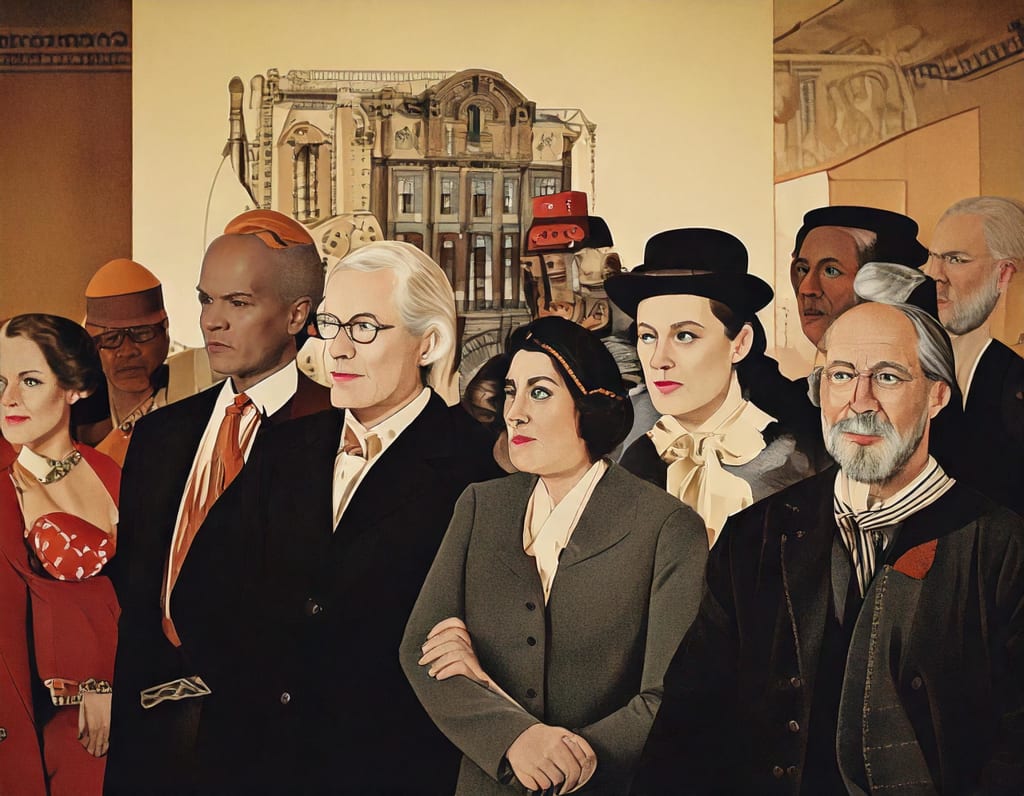
The early 1900s were a time of immense transformation across the world. Technological breakthroughs, revolutionary scientific discoveries, and social upheavals redefined the way people lived, worked, and thought. During this period, several influential figures emerged, leaving a lasting legacy on politics, science, art, and society. Here are 10 amazing historical celebrities from the early 1900s who profoundly shaped their respective fields and made their mark on history.
1. Theodore Roosevelt: The Progressive President
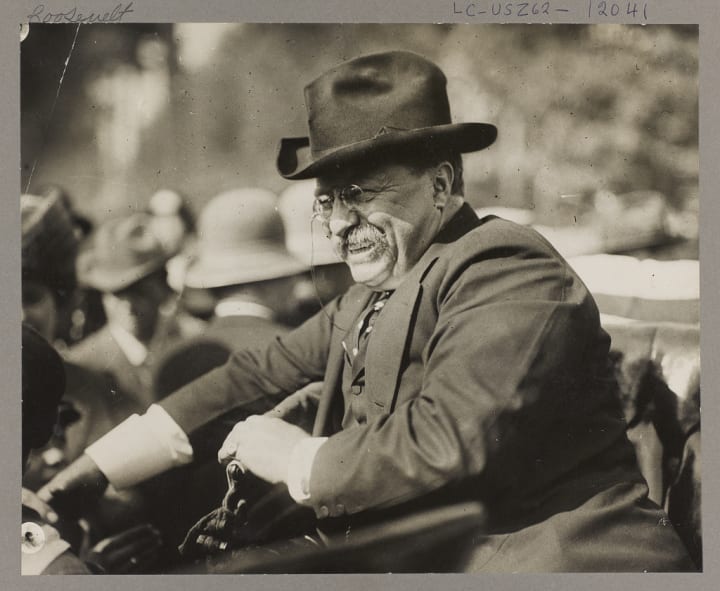
Theodore Roosevelt, the 26th President of the United States (1901-1909), was known for his dynamic leadership and progressive reforms. A larger-than-life figure, Roosevelt championed trust-busting, taking on big corporations to regulate unfair business practices. He also laid the groundwork for the modern conservation movement, establishing numerous national parks, forests, and wildlife refuges. Roosevelt’s foreign policy, often summed up in his phrase “speak softly and carry a big stick,” also marked his presidency as he worked to position the U.S. as a global power. His legacy of environmental preservation and government reform remains influential to this day.
2. Marie Curie: The Pioneer of Radioactivity
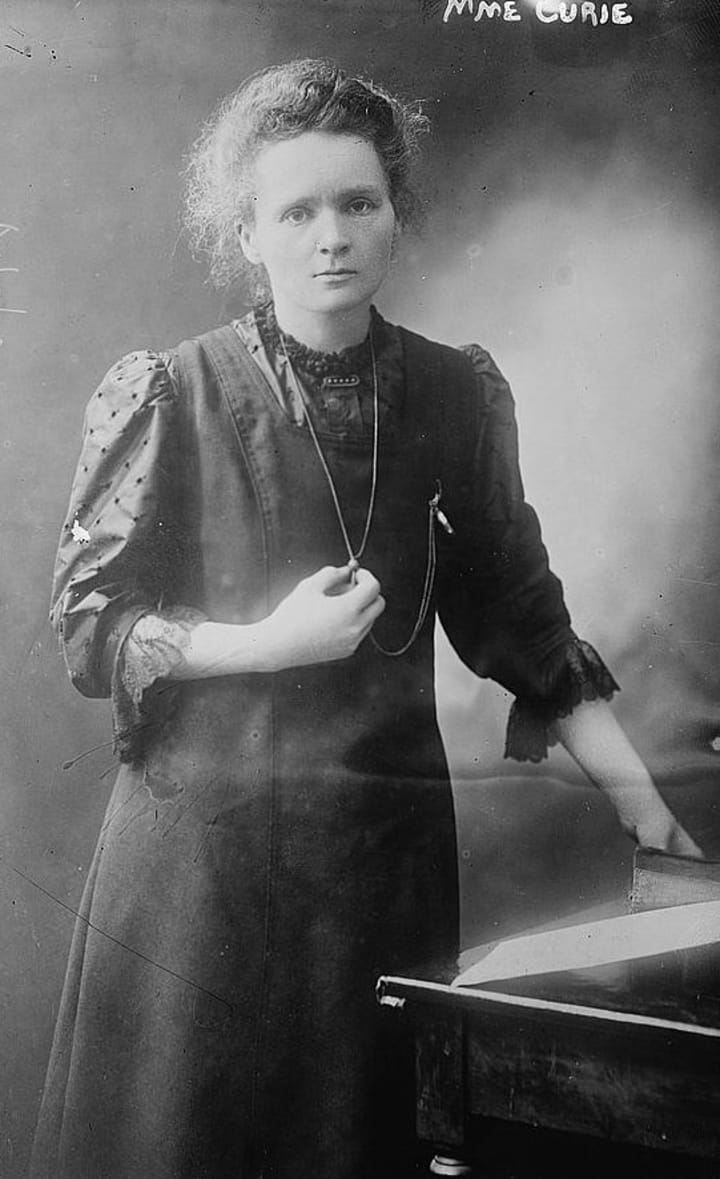
Marie Curie, a Polish-born physicist and chemist, became the first woman to win a Nobel Prize in 1903 for her groundbreaking work on radioactivity. Curie, alongside her husband Pierre, discovered two new elements, polonium and radium, and introduced the concept of radioactivity—a discovery that revolutionized the field of physics and medicine. Her research was critical in advancing cancer treatment and medical imaging. In 1911, Curie won a second Nobel Prize in Chemistry, making her the first person to win two Nobel Prizes in different scientific fields. Her courage and determination in the male-dominated world of science made her a symbol of women’s intellectual empowerment.
3. Henry Ford: The Father of Mass Production
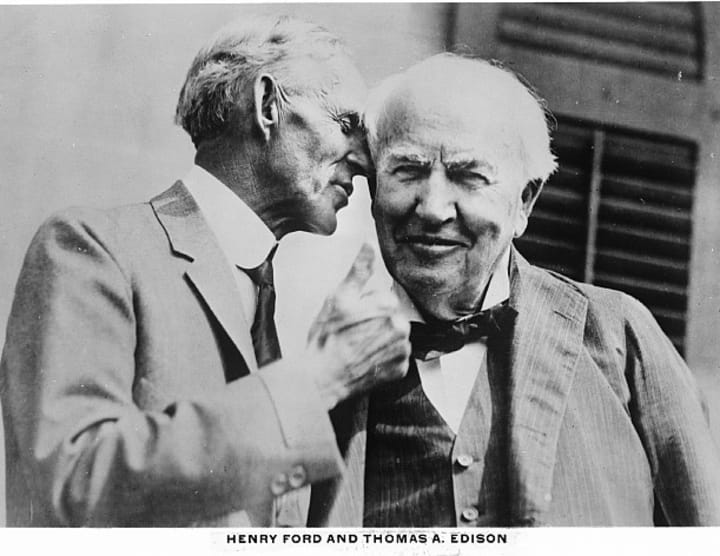
Henry Ford didn’t invent the automobile, but he did revolutionize how it was made. In 1908, Ford introduced the Model T, an affordable car that forever changed the American landscape. But his true innovation was the introduction of the moving assembly line in 1913, which allowed for mass production at an unprecedented scale. This method not only made automobiles accessible to millions but also influenced manufacturing processes across various industries. Ford’s vision of affordable transportation and efficient production methods paved the way for the modern automobile industry and laid the foundation for consumerism in the 20th century.
4. Mark Twain: America’s Literary Voice
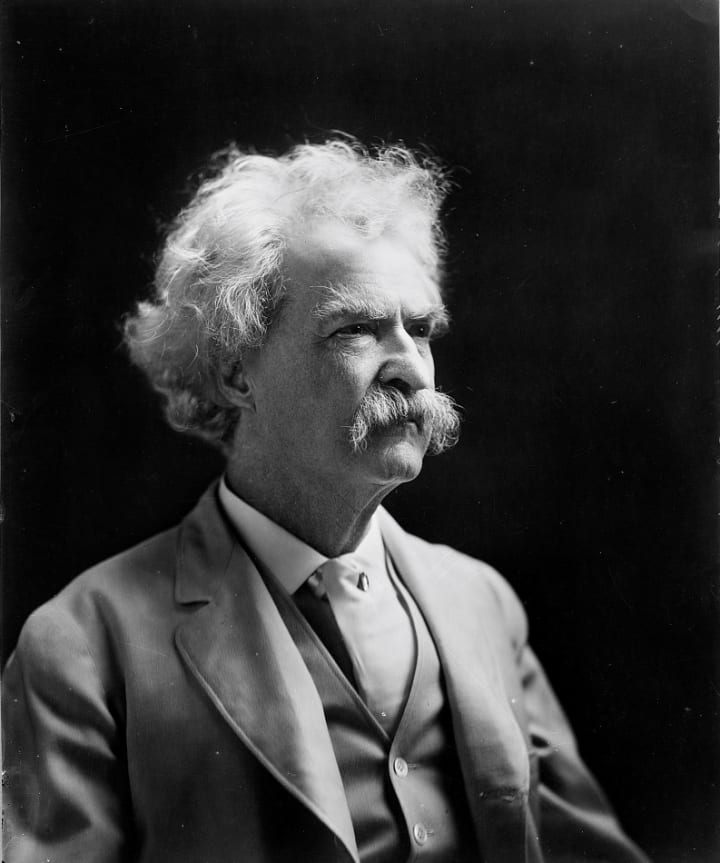
Mark Twain, born Samuel Clemens, was already a household name by the early 1900s, but his influence continued to grow as he published thought-provoking works like What Is Man? in 1906. Known for his wit and keen observations of human nature, Twain’s satirical works, including The Adventures of Huckleberry Finn and The Adventures of Tom Sawyer, are considered classics of American literature. His commentary on society, race, and politics remains relevant today, and his distinct voice shaped the literary landscape of his time. Twain’s ability to blend humor with deep social critique made him one of America’s most important literary figures.
5. Wright Brothers: The Pioneers of Flight
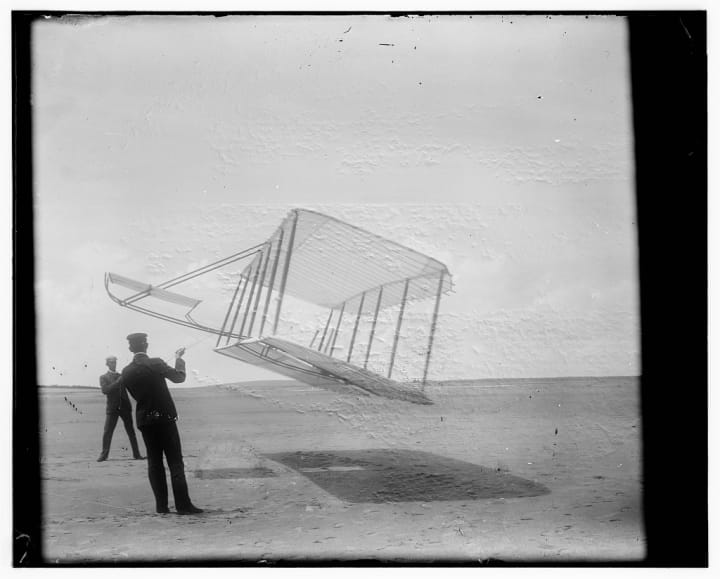
Orville and Wilbur Wright made history on December 17, 1903, with the first controlled, sustained flight of a powered aircraft in Kitty Hawk, North Carolina. Their success in achieving powered flight marked a turning point in transportation and ushered in the era of modern aviation. What started as bicycle mechanics’ fascination with gliders grew into one of the most significant technological advancements of the 20th century. The Wright Brothers’ ingenuity and perseverance opened the skies to humanity, forever changing how people travel and connect across the globe.
6. Pablo Picasso: The Revolutionary Artist
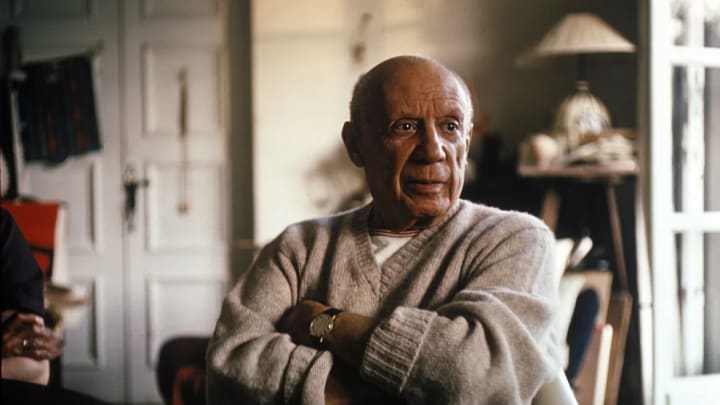
Pablo Picasso, one of the most influential artists of the 20th century, began developing Cubism in the early 1900s. This avant-garde movement, co-founded with Georges Braque, broke away from traditional artistic techniques and explored new ways of representing reality. Picasso’s Les Demoiselles d’Avignon (1907) is often cited as the first major work of Cubism, challenging artistic conventions and influencing countless artists. Picasso’s ability to evolve his style, from realism to abstraction, made him a driving force in modern art, and his works from this period still inspire contemporary artists today.
7. Albert Einstein: The Father of Modern Physics
Albert Einstein was a relatively unknown scientist in 1905 when he published his groundbreaking paper on the theory of relativity. This revolutionary theory redefined the fundamental principles of physics, challenging Newtonian mechanics and introducing the famous equation E=mc². Known as Einstein’s “miracle year,” 1905 saw him publish four major papers that transformed our understanding of light, energy, and motion. His work laid the foundation for quantum mechanics and modern physics, and Einstein’s legacy as one of the most brilliant minds in history continues to influence science and technology today.
8. Sigmund Freud: The Pioneer of Psychoanalysis
Sigmund Freud, often regarded as the father of psychoanalysis, was already making waves in the field of psychology by the early 1900s. His 1900 publication, The Interpretation of Dreams, introduced the idea that dreams were a window into the unconscious mind, offering insights into human desires, anxieties, and motivations. Freud’s exploration of the human psyche through techniques like free association and dream analysis revolutionized psychology. Although many of his theories remain controversial, Freud’s work laid the groundwork for modern psychotherapy and continues to shape our understanding of human behavior.
9. Emmeline Pankhurst: The Leader of the Suffragettes
Emmeline Pankhurst was a fearless advocate for women’s rights and the leader of the British suffragette movement, which fought for women’s right to vote in the early 20th century. In 1903, she founded the Women’s Social and Political Union (WSPU), known for its militant tactics, including protests, hunger strikes, and civil disobedience. Pankhurst’s unwavering dedication to the cause helped pave the way for women’s suffrage in Britain. Her efforts were instrumental in securing the vote for women in 1918, and she remains a symbol of the global fight for gender equality.
10. Vladimir Lenin: The Revolutionary Leader
Vladimir Lenin was a pivotal figure in the Russian socialist movement in the early 1900s. As a revolutionary leader, Lenin’s ideas laid the foundation for the Bolshevik Revolution of 1917, which led to the establishment of the Soviet Union. Though his rise to power occurred later in the decade, Lenin’s political activism and writings in the early 1900s were critical in mobilizing the working class and promoting Marxist ideology in Russia. His leadership and vision fundamentally altered the political landscape of the 20th century, influencing global communist movements for decades to come.
A Legacy That Shaped the Modern World
The early 1900s were a time of remarkable change, with visionary leaders, scientists, artists, and activists pushing the boundaries of human thought and achievement. From the assembly lines of Detroit to the skies above Kitty Hawk, and from the streets of London to the halls of academia, these ten extraordinary figures helped shape the world we live in today. Their contributions in their respective fields—politics, science, literature, art, and social reform—continue to influence and inspire us, proving that their legacies are as enduring as they are profound.
About the Creator
Paul Austin
Paul is a noted freelance writer with hundreds of articles online and in print. Paul is motivated by regional foods. His most recent project is cataloging unique events in Michigan History. You can find more of his work at Michigan4You.com
Keep reading
More stories from Paul Austin and writers in History and other communities.
The Story of Hotel Harvey
In the heart of Minden City, Michigan, stood a landmark that encapsulated over a century of community life, business, and local politics—the Hotel Harvey. Originally constructed in the late 1890s, this iconic building, which also went by names such as the West End Hotel, Hotel Lankin, and Kowalski Hotel, represented a pivotal piece of local history before its demolition in 2002. The Minden City Herald makes a point of placing historic photos of the area each week. This is from their post on the Hotel Harvey
By Paul Austin2 years ago in History
U.S. Navy Ships Collide
Collisions involving U.S. Navy ships are rare, but when they occur, they draw immediate attention. Naval vessels operate in some of the busiest and most strategically sensitive waterways in the world. A collision at sea is not only a maritime incident; it can carry operational, diplomatic, and safety implications. Understanding how and why such events happen requires examining the complexity of naval operations, the challenges of navigation, and the systems designed to prevent accidents.
By Saboor Brohi 3 days ago in History
Why Are Vestments for Priests Essential in Modern Worship?
Modern worship continues to grow and change with time, yet one sacred element remains deeply important: vestments for priests. These garments are not just part of tradition; they help preserve reverence, identity, and spiritual focus in church services. Even today, catholic attire plays a vital role in shaping the worship experience. Priest vestments connect believers to faith, history, and sacred responsibility. This article explains why priest vestments are still essential in modern worship and how they strengthen spiritual meaning.
By Sameera eclergys6 days ago in History
I Don't Need My Phone... Wait, Is That Actually True?
My parents gave me my first cell phone when I was twelve years old. It wasn't a fancy iPhone or anything, not even close. Just a simple black flip phone for when I needed to call or text them after school.
By Madison "Maddy" Newton2 days ago in Humans




Comments
There are no comments for this story
Be the first to respond and start the conversation.