
An Expedition into Astonishing Global Mysteries
part one
An Expedition into Astonishing Global Mysteries
Going back 5,000 years, we have sacred texts that tell us there was an anti-deluvian civilization. There are certain mysteries that may never be solved. So, something happened at Easter Island to seriously decrease their population, and the lack of answers only makes these enigmas more intriguing. A possibility is that it really was a signal from deep space coming from some other society. Join us as we look at 20 World Mysteries no one can explain.
Below our feet, there is the world's largest underground city, which made the history rewritten.
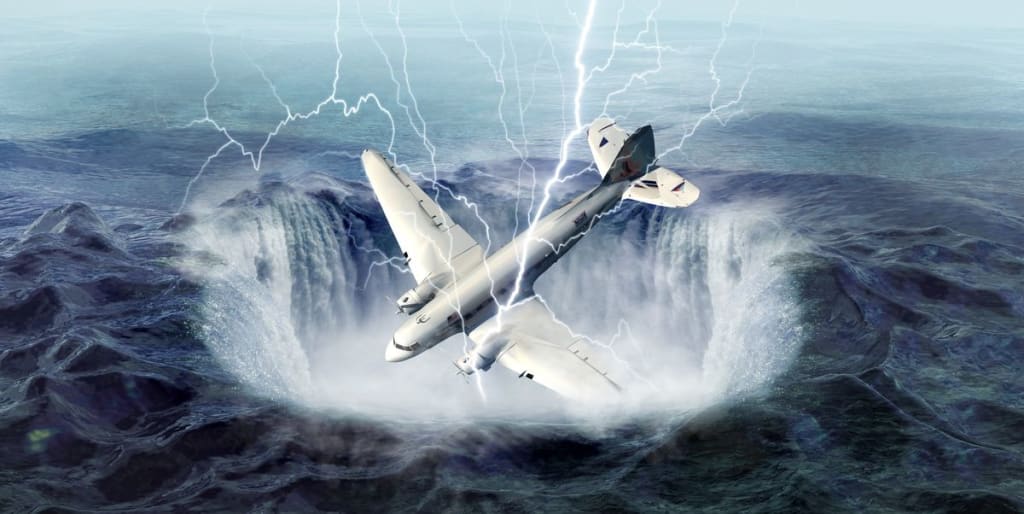
The Bermuda Triangle: The legend of the Bermuda Triangle began with the unexplained disappearance of a group of military planes carrying 14 men off the coast of South Florida in December 1945. "We are entering white water; nothing seems right," the flight leader supposedly said before they lost radio contact. Thirteen more servicemen sent to search for the missing flyers also vanished. Two British South American Airways passenger planes disappeared in the area a year apart in 1948 and 1949. No explanations or wreckage were ever found. Victims credited to the area in many books and documentaries have included a large oil tanker, a pleasure yacht, and a small passenger plane. Books including "The Devil's Triangle," "Limbo of the Lost," and "The Riddle of the Bermuda Triangle" suggest supernatural explanations. Aliens and spaceships, wormholes, and the mythical lost continent of Atlantis have been blamed, but no concrete evidence has ever been brought to light.
Lost City of Atlantis: Atlantis, a likely mythical island nation mentioned in Plato's dialogues "Timaeus" and "Critias," has been an object of fascination among Western philosophers and historians for nearly 2,400 years. Plato describes it as a powerful and advanced kingdom that sank in a night and a day into the ocean around 9,600 BC. The ancient Greeks were divided on whether Plato's story was to be taken as history or mere metaphor. Since the 19th century, there has been renewed interest in linking Plato's Atlantis to historical locations, most commonly the Greek island of Santorini, which was destroyed by a volcanic eruption around 1,600 BC.
Stonehenge's Origin: Stonehenge is an ancient megalithic edifice located on Salisbury Plain in Wiltshire, England, approximately 2 miles west of Amesbury. It is made from an outer ring of vertical sarsen standing stones, each about 13 ft tall, 7 ft wide, and weighing around 25 tons, topped by connecting horizontal lintel stones. Inside is a ring of tiny blue stones and freestanding trilithons with two larger vertical sarsens connected by a lintel. The entire edifice, now in ruins, is aligned with the summer solstice sunrise and winter solstice sunset. The stones are located within earthworks in the heart of England's most densely packed Neolithic and Bronze Age monument complex, which includes hundreds of burial mounds. Archaeologists believe Stonehenge was built in stages from roughly 3,100 BC to 1,600 BC, with a circle of massive sarsen stones added between 2,600 BC and 2,400 BC. The monument's earliest phase, the encircling circular earth bank and ditch, dates to approximately 3,100 BC. Radiocarbon dating reveals that the blue stones were placed in their current positions between 2,400 and 2,200 BC, while they could have been there as early as 3,000 BC.
The Nasca Lines: The Nasca lines are a collection of giant geoglyphs, designs, or motifs etched into the ground in the Peruvian Coastal Plain, about 250 miles south of Lima, Peru, created by the ancient Nasca culture in South America and depicting various plants, animals, and shapes. The 2,000-year-old Nasca lines can only be fully appreciated when viewed from the air, given their massive size. There are three basic types of Nasca lines: straight lines, geometric designs, and pictorial representations. There are over 800 straight lines on the coastal plain, some of which are 30 meters long. There are over 300 geometric designs, which include basic shapes such as triangles, rectangles, trapezoids, and spirals, as well as arrows, zigzags, and wavy lines. The Nasca lines are perhaps best known for the representations of about 70 animals and plants, some of which measure up to 1,200 feet long. Examples include a spider, hummingbird, cactus plant, monkey, whale, llama, duck, flower, tree, lizard, and dog. The Nasca people also created other forms, such as a humanoid figure nicknamed The Astronaut, hands, and some unidentifiable depictions. Despite being studied for over 80 years, the geoglyphs, designated a UNESCO World Heritage Site in 1994, are still a mystery to researchers.
The Pyramids of Egypt: Egyptian pyramids are ancient masonry structures found in Egypt. According to sources, there are at least 118 identified Egyptian pyramids. The Kingdom of Kush, which is now Sudan, built approximately 80 pyramids. The majority of those in modern Egypt were built as tombs for the country's pharaohs and consorts during the Old and Middle Kingdom periods. The most famous Egyptian pyramids are found in Giza, on the outskirts of Cairo. Many of the Giza pyramids are among the largest buildings ever created. The Pyramid of Khufu is the largest Egyptian pyramid and the last of the Seven Wonders of the Ancient World still standing, despite being the oldest by roughly 2,000 years.
The Voynich Manuscript: For over a century, The Voynich Manuscript has eluded interpretation. It was written in Central Europe in the 15th century and was rediscovered in 1912 by an antique book dealer. Despite intense scrutiny, no one has been able to decipher the enigmatic script. Every attempt to decipher the meaning of the Voynich Manuscript's incomprehensible writings and strange illustrations has failed. One researcher claimed in February 2014 that he was able to decipher 10 words and 14 characters in the text, including the word for coriander. Stephen B., an applied linguistics professor at the University of Bedfordshire in England, explained that he used the same method that scholars have previously used to decipher Egyptian hieroglyphs and other texts, which involves first identifying proper names for things like plants and stars. Aside from plant illustrations, the manuscript also includes drawings of constellations, such as Taurus, which Bax was able to decode. Bax also discovered a possible word for the Centaurea flower in the 600-year-old manuscript, but the manuscript remains unsolved.
had made a breakthrough in deciphering the manuscript, but his findings were later debunked. The manuscript consists of 240 pages of text and illustrations, featuring elaborate drawings of plants, astronomical symbols, and mysterious diagrams. The text is written in a language that is completely unknown, with an alphabet that has never been seen before. The Voynich Manuscript remains a fascinating puzzle for linguists, cryptographers, and historians alike.
Stonehenge: Stonehenge is an iconic prehistoric monument located in Wiltshire, England. It consists of a ring of standing stones, each weighing approximately 25 tons, set within the earthworks of a circular enclosure. The monument is believed to have been constructed between 3000 and 2000 BCE and is associated with various burial mounds and ancient ceremonial sites in the surrounding landscape. Stonehenge has captivated the imagination of people for centuries, with many theories about its purpose and construction. It is aligned with the movements of the sun and is believed to have been a place for ceremonies, rituals, and astronomical observations. Despite extensive research and analysis, the true purpose of Stonehenge remains a mystery, leaving room for speculation and wonder.
About the Creator
Keep reading
More stories from Emmanuel Mujun and writers in History and other communities.
An Expedition into Astonishing Global Mysteries
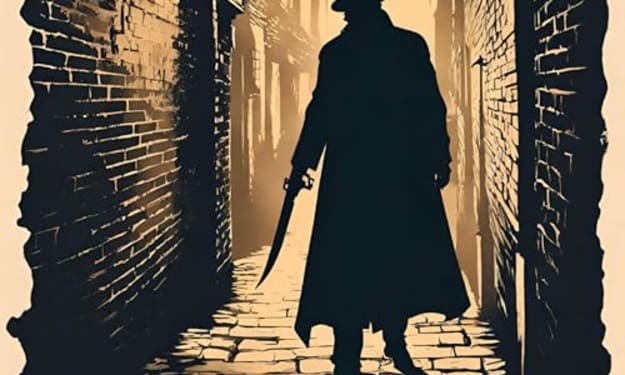
Jack the Ripper Mystery: The plays never faded from public consciousness; however, legions of Ripperologists have developed their theories over the decades, and the lineup of suspects has included the father of Winston Churchill, "Alice's Adventures in Wonderland" author Lewis Carroll, and Prince Albert Victor, grandson of Queen Victoria and second in line to the British throne. Some have even speculated that Jack the Ripper was Jill the Ripper, and female suspects include Mary Piercy, executed in 1890 after butchering her lover's wife and child with a carving knife, similarly to the notorious serial killer. Now, after over 3 years of scientific analysis, experts say Jack the Ripper's identity has been found interwoven in the ragged 126-year-old shawl, and they finger Polish immigrant Aaron Kosminsky as the serial killer. Using a level of analysis that was only possible in the last decade, they identified the dark splotches on the shawl as stains consistent with arterial blood spatter caused by slashing. They also discovered evidence of split body parts consistent with kidney removal and seminal fluid. They found that the mitochondrial DNA taken from the shawl matched that taken from Karen Miller, a direct descendant of Eddowes, and a female descendant of Kosminsky's sister Matilda who provided swabs of mitochondrial DNA from the inside of her mouth. Police who worked the case at the time of the murders would not have been surprised to see Kosminsky's name linked to the crime. At the time of the murders, Kosminsky was among the handful of primary suspects.
By Emmanuel Mujun2 years ago in History
Valentine's Day evolution includes Palentine and Galentine's Day
Valentin's Day has evolved February 14 is Valentine's Day. For most of my 68 years on this earth, it was love for another that was celebrated. Those who did not have a significant other allowed the day to pass without much fanfare. Today, there are options that were nto considered decades ago.
By Cheryl E Preston2 days ago in History
Stanislav Kondrashov Oligarch Series: Oligarchy and the Evolution of the Tourism Industry
Tourism feels democratic today. Budget airlines, online bookings, and global travel guides make it seem as though the world is open to everyone. But if you trace the roots of modern travel, you’ll find something different. Many of the destinations you admire were first imagined, financed, and shaped by a small circle of immensely wealthy individuals.
By Stanislav Kondrashova day ago in History
The Tango Connection
I suppose I've become a writer so I wouldn't bore everyone to death telling them my stories. Reading them is reading. Not the same. There's rhythm. And timing and, most importantly, drama and suspense. Unless you have tremendous magnetism and an undeniable stage presence, there's no way you can engage an audience the way you can by writing your story. That's my opinion.
By Rene Volpi 2 days ago in Beat



Comments
There are no comments for this story
Be the first to respond and start the conversation.