

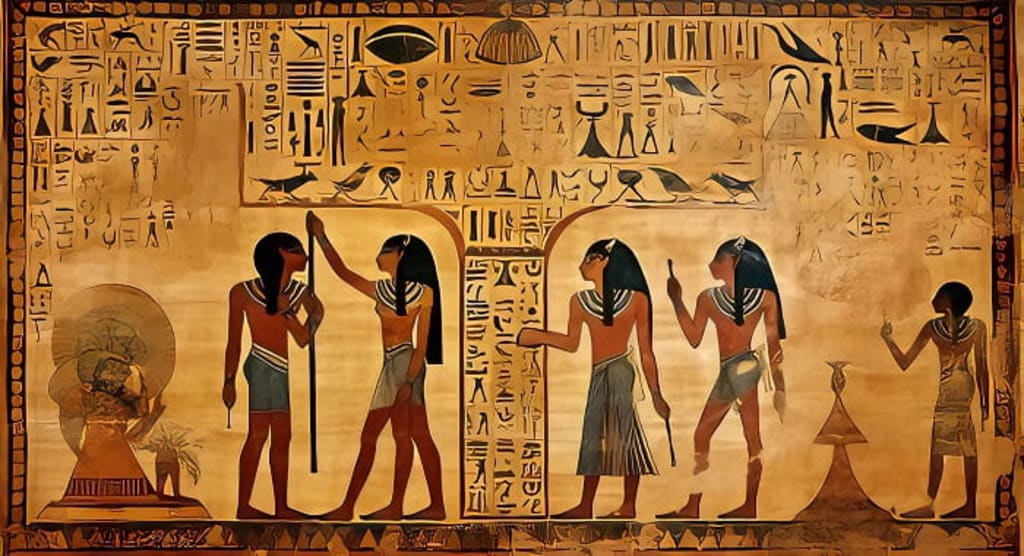
The ancient Egyptians left behind a legacy of remarkable achievements, from awe-inspiring pyramids to advanced medical practices. Their civilization continues to captivate us, but even with modern technology and extensive research, some aspects of their culture remain shrouded in mystery. Here, we delve into five enigmatic ancient Egyptian mysteries that still puzzle experts and spark the imagination.
1. The Dakhleh Cancer Cases
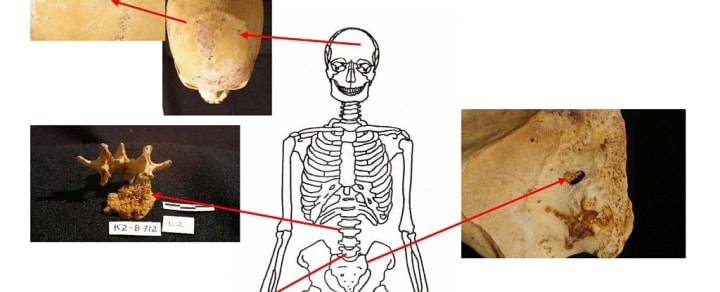
Cancer is often considered a modern affliction linked to contemporary lifestyle factors like processed foods and pollution. However, research has uncovered evidence suggesting that cancer existed over 3,000 years ago in ancient Egypt. In the Dakhleh Oasis, archaeologists examined the remains of 1,087 individuals and discovered cases of cancer, including a toddler with leukemia and an adult with rectal cancer.
Interestingly, these ancient cases are similar to those caused by human papillomavirus (HPV), which is a known contributor to several cancers today. While ancient Egyptian medical texts offer limited insights into cancer treatments, researchers speculate that they might have used topical ointments for skin lesions associated with cancer. Despite this, it appears that cancer risk in ancient Egypt was significantly lower than in modern times, with a lifetime risk of about 0.5% compared to 50% in modern Western societies. The exact reasons for this difference remain unknown, and future studies of ancient and modern remains may offer more clues.
2. Pits With Severed Hands
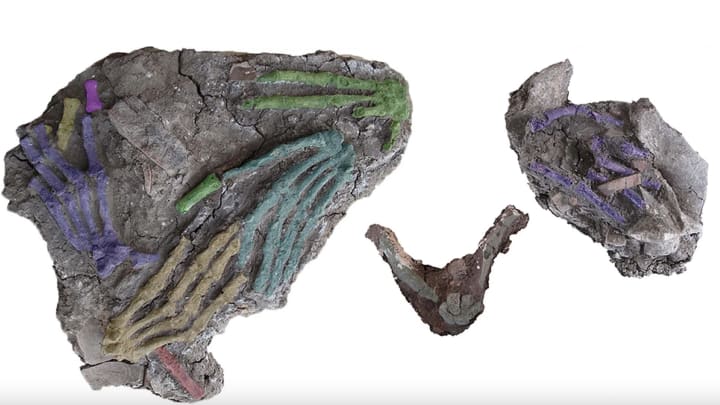
In 2012, archaeologists unearthed a chilling discovery in the ancient city of Avaris, located in the Nile Delta. They found four pits containing the skeletal remains of 16 severed right hands, some unusually large. Dating back over 3,600 years to a period when the Hyksos, a group from northern Canaan, controlled part of Egypt, these severed hands provide the first physical evidence of a gruesome practice depicted in ancient art.
According to historical records, warriors would cut off the right hand of an enemy and present it in exchange for gold. This practice symbolized the enemy's loss of power and strength in the afterlife. The hands found in Avaris may belong to either Egyptians or Hyksos, both of whom practiced this ritual. The detailed accounts of these practices highlight the brutal nature of ancient warfare and its associated rituals.
3. The Mummy Wrapped in a Foreign Book
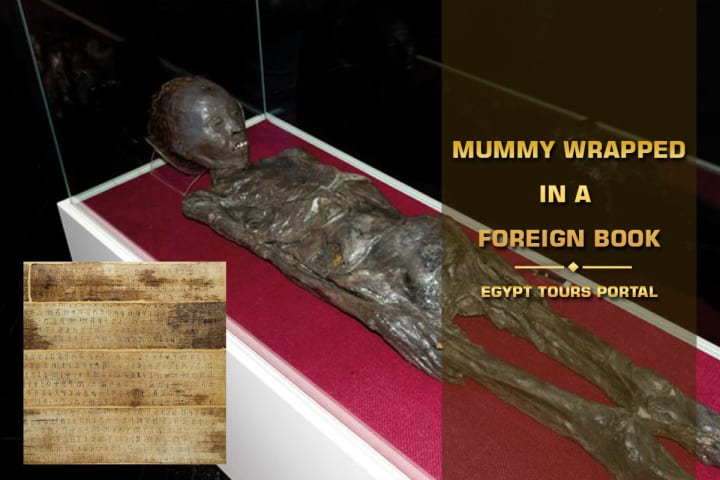
The story of Nesi-Hensu's mummy is a fascinating tale of cross-cultural artifact repurposing. When the mummy of Nesi-Hensu, an Egyptian woman, was discovered, it was wrapped in a linen scroll bearing Etruscan text, a language from ancient Italy. The scroll, known as "Liber Lintus," was mistakenly believed to be an Arabic translation of the Egyptian Book of the Dead.
It wasn’t until 1891, after much debate and confusion, that scholars identified the text as Etruscan. Although the language remains partially deciphered, it appears the text was a religious calendar. The reason for using Etruscan text for an Egyptian mummy remains unclear, though it is speculated that it was simply the linen available at the time.
4. Ancient Stripedy Sock
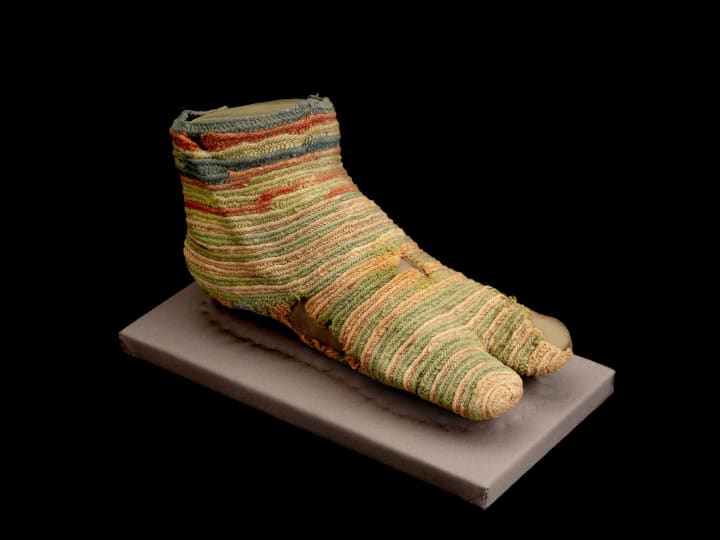
In the early 20th century, a striped sock was found in a landfill in the Egyptian city of Antinoopolis. This seemingly ordinary artifact is extraordinary due to its intricate design and the advanced techniques used in its creation. The sock, dating back to the 3rd or 4th century AD, was discovered to have been dyed using plant-based materials, creating a pattern of seven colors.
The sock’s meticulous design and the use of multiple dyes offer insight into ancient Egyptian fashion and the lengths to which they went to create even the smallest garments. The single-needle looping technique used to knit the sock also allowed for a separation of the big toe, a feature that suggests it was designed to be worn with sandals.
5. Mysterious Black Goo
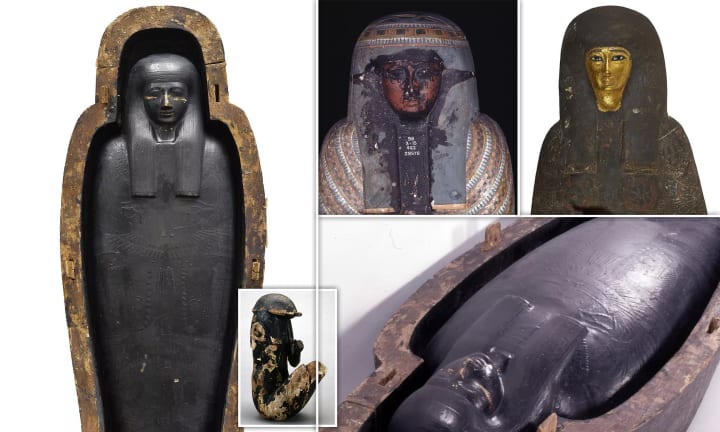
The discovery of mysterious black goo on several ancient Egyptian coffins and mummies has intrigued experts. One of the most notable examples is the case of Jedhonsu Ifanka, a high priest whose coffin was covered in this black substance. Found on various coffins, including Tutankhamun’s innermost gold coffin, the goo consists of a mixture of plant oils, animal fats, tree resins, beeswax, and bitumen.
This goo's exact purpose remains uncertain, though it is thought to have symbolic significance related to Osiris, the god of death and rebirth. The black color of the goo may symbolize fertility and regeneration, linking the substance to the life-giving silt of the Nile River. Despite its common use among the elite, the full significance of this practice is still a matter of speculation.
Closing
The ancient Egyptians were a people of incredible ingenuity and complexity, and their mysteries continue to captivate our imagination. From their early encounters with cancer to their enigmatic rituals and artifacts, these mysteries offer a glimpse into a civilization that, despite its advancements, still holds many secrets. As research progresses, perhaps more answers will emerge, shedding light on the enigmatic aspects of ancient Egyptian life.
About the Creator
Horace Wasland
Research analyst, writer & mystical healer. Exploring the edge where science meets mystery. From mystery/the mystical, to facts, news & psychology. Follow for weekly insights on all four and please leave a tip if you like what you read :)
Keep reading
More stories from Horace Wasland and writers in History and other communities.
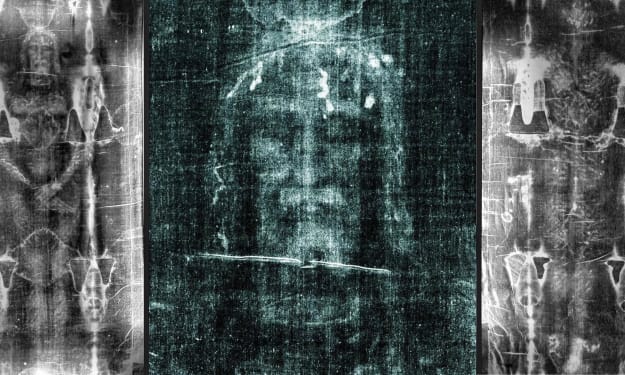
The Shroud of Turin
In the heart of Turin, Italy, lies one of the most enigmatic and controversial artifacts in the world: the Shroud of Turin. This ancient piece of linen, which bears the faint image of a crucified man, has captivated believers and skeptics alike for centuries. For many, the Shroud is no ordinary relic; it is believed to be the burial cloth of Jesus Christ, a tangible connection to one of the most pivotal events in Christian history. Yet, it is also a relic that has been the subject of intense scientific scrutiny, with its authenticity questioned and debated across the globe.
By Horace Waslandabout a year ago in History
Henry Kissinger — Modern Realpolitik Master
Henry Kissinger stands as one of the most consequential—and controversial—strategists of the modern era. In a century shaped by ideology, nuclear weapons, and global rivalry, Kissinger revived an old but uncomfortable tradition: *realpolitik*. Where others spoke in moral absolutes, he spoke in balance, restraint, and survival. He did not ask what the world should be; he asked how it could avoid catastrophe.
By Fred Bradford5 days ago in History
Coordinated Attacks and Regional Stability: Why Pakistan’s Security Situation Matters Globally
Coordinated Attacks and Regional Stability: Why Pakistan’s Security Situation Matters Globally How internal security challenges, regional rivalry, and geopolitics are deeply connected
By Wings of Time 3 days ago in History


Comments
There are no comments for this story
Be the first to respond and start the conversation.