
AUSTRALIA DEADLIEST COASTLINE
When sharks attack
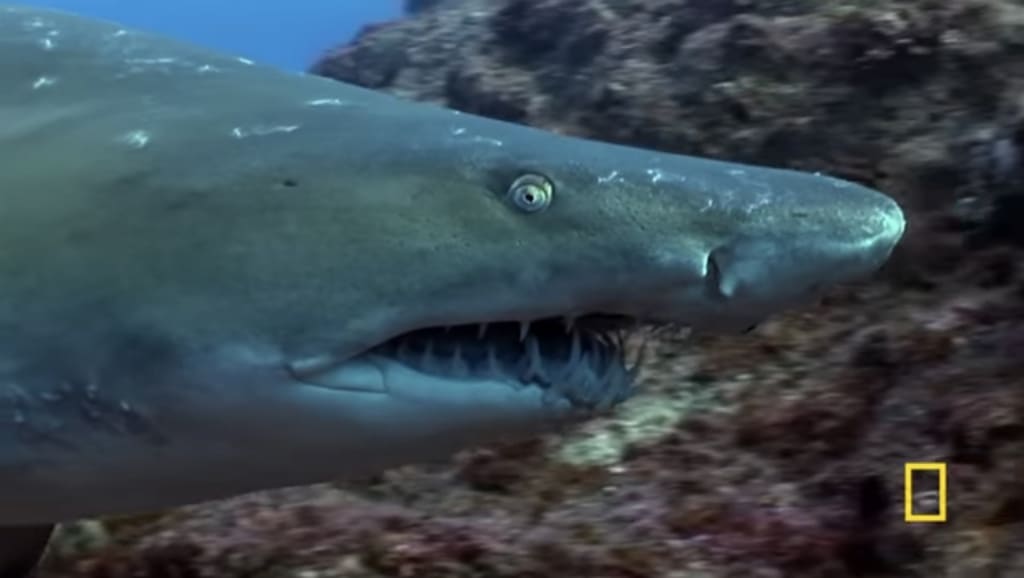
AUSTRALIA DEADLIEST COASTLINE
The great white is known as the sultan of the sea. It usually spends its days hunting, swimming, and jumping. However, in 2010, just off the coast of Australia, this apex predator began behaving strangely.
My right leg appears to have been reduced to a minced meat-like state. The occurrence of 64 alarming attacks has resulted in the transformation of Australia's western coast into a perilous location. I am currently contemplating measures that can be taken to prevent further incidents. The recent shark killing spree has prompted a shift in the species' behavior worldwide. It is crucial that we investigate the root cause of these attacks, as people are now apprehensive about returning to the water.
The state of Western Australia is renowned for its rugged natural beauty, which includes over twelve thousand miles of stunning shoreline. Throughout the year, this area attracts numerous swimmers and surfers. However, they are not the only ones who enjoy these waters. Various species of sharks also call Australia home, ranging from the sleek and slender blue shark, known for its indigo hue, to the wildly patterned Wobegon, renowned for its stealth, and the polka-dotted whale shark, famous as the largest fish in the sea. Although these species are considered harmless to humans, the world's most dangerous sharks also swim in these waters.
Elise, a nineteen-year-old, is currently employed as a dive guide. At the time of the incident, she was approximately three-quarters of a mile offshore. All the tourists under her guidance had been successfully immersed in the water.
A familiar marine mammal arrived to engage in play. It was a resident dolphin indigenous to the area. The experience of interacting with this creature had been enjoyable on numerous occasions throughout the years. Recently, the dolphin had given birth to a calf, which added to the excitement of the gathering tourists. However, Elise discerned that something was amiss.
The dolphins exhibited erratic behavior as they darted off and returned intermittently.
In actuality, it is possible that the calf was issuing a warning to me. Subsequently, an immense shark seized hold of my legs, causing my brain to enter into a fight or flight response. I attempted to strike and push the shark away, but its grip was too forceful. I was left in a state of complete shock. One of the other snorkelers observed my struggle and dove to my aid. He wrapped his arms around the shark and essentially wrestled it off of me, ultimately saving my life. I was pulled from the water, and it became apparent that my leg had been severely injured. My right leg appeared to be minced meat. I was airlifted to the hospital, where doctors performed a six-hour surgery in an attempt to save my mangled leg. The operation was successful, and I retained the ability to walk and swim in the water. This experience has taught me to have a greater respect for sharks and their true power and greatness.
Elise was subjected to an attack in the vicinity of the Western Australian coast, situated just south of the capital city of Perth. Although sharks have been a constant presence along this extensive shoreline, it was not until 2010 that they began to pose a significant issue.
Over the course of a decade, there have been in excess of 60 shark attacks in Western Australia, a figure that is three times higher than the number of incidents recorded in the previous decade. This unprecedented surge in shark attacks has transformed the region from one where such occurrences were rare to one where they are now almost commonplace. Furthermore, the spike in attacks has resulted in a staggering 11 fatalities, earning Western Australia the dubious distinction of being Australia's deadliest coast. The frequency and severity of these attacks have become a topic of widespread concern, with residents and tourists alike expressing fear and demanding action. In response, authorities have implemented various prevention measures, including aerial surveillance and beach enclosures, but these have proven ineffective in stemming the tide of attacks. Consequently, investigators have taken up the case in an effort to identify the root cause of the problem and prevent further loss of life and trauma. By conducting thorough research into the phenomenon, it is hoped that future fatalities and injuries can be avoided. The question remains, however, as to what has caused the sudden and alarming increase in shark attacks in Western Australia.
Shark expert Johann Gustafson posits that a crucial initial step in resolving this enigma is to identify the perpetrator. To this end, he turns to a piece of evidence from the attack on Elise, namely a fragment of tooth that was largely embedded in the victim. Gustafson believes that this tooth must belong to one of three species that are responsible for the majority of attacks worldwide. The first of these is the tiger shark. Gustafson examines a tiger shark specimen and observes that on one side of the jaw, the blades are pointing to the left, while on the opposite side, they are pointing in the opposite direction. This anatomical feature allows tigers to tear their prey from both sides of their teeth as they shake their heads back and forth. A second probable culprit is the bull shark. Gustafson notes that the bull shark's teeth have a completely different shape, with two quite pointed serrations that are quite sharp. The bull shark's powerful pointed teeth enable it to slice through its victim in one quick, lethal motion. However, Gustafson believes that the shape of the tooth fragment from Elise's wound indicates a different predator. It is perfectly triangular and quite serrated on both sides. Without a doubt, Gustafson concludes that this tooth came from a white shark. Great whites are the largest predatory fish on the planet, using their powerful tails to propel them through the water at speeds of up to 25 miles per hour, often striking their prey from below.
he behavior of great white sharks in the area. This phenomenon is not limited to the identification of Elise's attacker. In fact, of the more than 60 attacks where the species is known, the majority of culprits are white sharks. The question arises as to what is causing these great whites to act so strangely, and whether it could be indicative of a behavioral shift happening across the globe. Perhaps the answer relates to a booming industry that is centered around this iconic species, one that occurs in several locations.
The origins of this industry can be traced back to Australia, where cage diving has been a fixture of tourism for decades. Shark expert Dr. Dan Huber explains that the way cage diving operations work is that boats use chum to try and attract sharks to the area. People then get into cages, which are submerged in the water, to get much closer to very dangerous sharks than they would otherwise be able to. However, around 2010, something changed in the behavior of great white sharks in the area.
In 2010, there was a surge in shark attacks, which coincided with a doubling of the number of days that chumming occurred on the water compared to the previous year. The potential implications of this increase are explored by Marine educator Jess McLaughlin at the Aquarium of Western Australia. McLaughlin draws a parallel between cage diving and a process that occurs within the shark exhibit. The exhibit contains 15 sharks of seven different species, which are fed daily in a particular way. This process is called conditioning, whereby sharks recognize that a particular stimulus can lead to a meal. This conditioning can be so effective that it kicks in any time the stimulus is present, even when the food is not. McLaughlin demonstrates this by diving into the shark tank with an empty bucket, and the sharks approach in search of a meal, recognizing the bucket as a cue for feeding time. This conditioning may explain the role of cage diving in Australia's deadly spike in shark attacks, as tour operators are potentially conditioning sharks to make a dangerous association with the very hand that feeds them. There is a possibility that sharks have associated people with food because of cage diving in Australia, which could be to blame for the attacks in Western Australia and other incidents around the globe.
Australia has often been associated with shark attacks, however, historically, such incidents have been infrequent. This changed in 2010 when one state experienced a sudden and severe increase in shark attacks. Over the course of less than a decade, there were over 60 incidents and 11 fatalities, leaving residents of Western Australia understandably concerned. While some have theorized that diving has conditioned sharks to associate humans with food, shark expert Dr. Dan Huber believes there may be more to the story. Although cage diving is a popular activity in Southern Australia, it has been outlawed in Western Australia since 2012 due to concerns about its potential to negatively alter shark behavior. Therefore, it is clear that further investigation is necessary to fully understand the recent surge in shark attacks in Western Australia.
It is evident that the recent increase in shark attacks cannot be attributed to news diving. However, this theory does indicate that the behavior of great white sharks is heavily influenced by the presence of food. Therefore, it is possible that a different prey item may be linked to the issue at hand. Local videographer Blair Radford has identified a potential culprit, which is the Australian Salmon Run. This refers to the annual migration of large oceanic fish that head westward along the coast to spawn. The salmon run attracts fishermen and sharks alike, with the latter often seen following the schools of fish in large numbers. Sharks possess a finely tuned sensory organ, known as the lateral line, which allows them to detect the movements of their prey from over 300 feet away. This sense is particularly effective when the prey source is sizable, such as during the salmon run. While experts have suggested that the salmon may be attracting hungry sharks, it is important to note that the salmon have been migrating along the Australian coast for years, long before the recent spike in attacks. Therefore, the salmon run cannot be held responsible for the surge in shark attacks. The reason for the increase remains a mystery, but a frightening encounter may hold a clue.
Matt Palella has had a deep affection for the sea since his childhood. Growing up in Western Australia, he spent most of his time outdoors fishing, surfing, and simply enjoying the vast expanse of the ocean. In the year 2014, Matt devoted much of his leisure time to spearfishing, often accompanied by his close friend Jay Muscat. Despite Jay's mischievous nature, the two shared a strong bond and had experienced over 100 close calls together. However, the duo was well aware of the potential dangers lurking in the water, particularly the risk of encountering sharks. Although they were cognizant of this risk, they never anticipated it would become a reality until it did.
Just four days following Christmas, Matt and Jay embarked towards a protected cove that they deemed secure. Jay had scouted the area the day prior and had observed an abundance of quality fish. Their excitement was palpable, and they had no apprehensions whatsoever.
After being immersed in the water for approximately ninety minutes, we made the decision to reverse our direction and commence swimming back. However, prior to our departure, Matt executed a final dive. As our children looked on, a shark unexpectedly attacked me.
Whilst seated on my board, I patiently awaited the arrival of the final wave. It was at this point that the events unfolded. A great white shark collided with Nathan's board, causing a state of panic amongst his friends who were present. The situation was terrifying as the shark circled below Nathan. However, the surfer acted quickly and with great skill. Personally, I was aware of the urgency of the situation and my only thought was to reach the beach as quickly as possible. Nathan and his companions made a desperate attempt to reach the shore, all the while fearing for their lives. The gravity of the situation was not lost on anyone, as the outcome could have been fatal. Fortunately, everyone made it back to shore unharmed, although understandably shaken by the experience. It was a truly frightening event.
It can be considered a miraculous feat to emerge from such an incident unharmed. Over the course of the past decade, in excess of 60 individuals have been subjected to attacks off the coast of Western Australia. However, the observation of this particular attack presents a significant indication, one that has the potential to not only unravel the enigma but also serve as a cautionary message for tourists across the globe.
Western Australia is currently facing a significant challenge in the form of shark attacks. Over the course of the past decade, there have been more than 60 attacks, predominantly by great white sharks, resulting in 11 fatalities. This has made it the deadliest coast in the country. The public is understandably concerned, and there is a desire to understand the root cause of these attacks. Unfortunately, this remains unknown. However, recent evidence from the attack on Nathan Birch may provide a significant clue. On the day of the attack, there were multiple whale carcasses within three miles of the location. This is not an uncommon sight in the waters off Australia, where over 30 species of whales can be found. These majestic creatures migrate south along the coast of Western Australia in search of food, but not all survive the journey. The remains of these whales can be found littering the shoreline. Blair Radford, a local resident, notes that the number of beached whales has been increasing in recent years. This increase in whale carcasses may be attracting sharks to the area. Sharks have an incredibly strong sense of smell and can detect the odor of a decomposing whale from miles away. This may be drawing them closer to the shore and increasing the likelihood of encounters with humans. However, not all attacks have occurred in close proximity to a carcass, indicating that there may be other factors at play. Shark expert Johann Gustafson has identified a pattern in the timing of attacks, with the majority occurring in winter and spring. The reason for this remains unknown and could have implications for coastal residents worldwide.
The Great White shark has been causing significant damage in Western Australia, with over 60 attacks, including 11 fatalities, occurring in less than a decade. This has led to concerns that the species is exhibiting a disturbing new pattern. However, investigators may be close to solving this bloody mystery. Shark researcher Johann Gustafson has identified a crucial piece of information about the spike in attacks. The majority of the attacks took place during two seasons, winter and spring, which span the months of June through November in Australia. Gustafson believes that the shift in the sea during these seasons, where air temperatures are still warm enough to attract beachgoers but water temperatures have dropped, is the reason for the increased danger. Great White sharks are found throughout the world's oceans in climates ranging from the tropics to the Arctic, and cooler water temperatures are especially attractive to this species. Watch dogs are more commonly found in cooler borders because they have an adaptation that allows them to maintain a warmer body temperature compared to the surrounding waters. This process is called thermal regulation, and it enables white sharks to elevate their body temperatures to higher than that of the surrounding sea, allowing them to hunt in colder conditions. However, one pressing question remains: why the sudden uptick in attacks starting in 2010? Shark expert Dr Blake Chapman suggests that the answer may come down to a key factor: a population surge, not of sharks, but of people. The numbers of humans in Western Australia have been increasing rapidly, and the shift hasn't been slow. Between June of 2009 and the next year when the spike began, the number of inhabitants swelled by forty thousand. By June of 2018, this figure rose by another four hundred thousand, the fastest growth rate of all Australian states. The more people who are in the water, the more likely a chance of negative interaction with the shark. It seems that the combination of population surge, whale stranding, and the Salmon Run may have created a perfect storm that has led to an increase in shark attacks.
The Great White shark species is causing significant damage in Western Australia, with over 60 attacks, including 11 fatalities, occurring in less than a decade. This alarming trend has led some to believe that the species is exhibiting a chilling new pattern. However, investigators may be on the verge of unraveling this bloody mystery. Shark researcher Johann Gustafson has identified a crucial piece of information about the spike in attacks. The majority of the attacks took place during two seasons, winter and spring, which span the months of June through November in Australia. Gustafson believes that the shift in the sea during these seasons, where air temperatures are still warm enough to attract beachgoers but water temperatures have dropped, is the reason for the increased danger. Great White sharks are found throughout the world's oceans in climates ranging from the tropics to the Arctic, and cooler water temperatures are especially attractive to this species. Watch dogs are more commonly found in cooler borders because they have an adaptation that allows them to maintain a warmer body temperature compared to the surrounding waters. This process is called thermal regulation, which enables White sharks to elevate their body temperatures to higher than that of the surrounding sea, allowing them to hunt in colder conditions. However, one pressing question remains: why the sudden uptick in attacks starting in 2010? Shark expert Dr Blake Chapman suggests that the answer may come down to a key factor: a population surge, not of sharks, but of people. The numbers of humans in Western Australia have been increasing, and the shift hasn't been slow. Between June of 2009 and the next year when the spike began, the number of inhabitants swelled by forty thousand. By June of 2018, this figure rose by another four hundred thousand, the fastest growth rate of all Australian States. Chapman explains that most of the people moving in are also utilizing one of the state's prime resources, the beaches and waterways. This activity level has one clear and dangerous consequence: the more people who are in the water, the more likely a chance of negative interaction with the shark. It seems that we only have ourselves to blame, and it could be that the combination of population surge, whale stranding, and the Salmon Run may have created a perfect storm that has led to an increase in shark attacks.
As the surge persists, the authorities in Western Australia persist in their commitment to implementing preventive measures. Furthermore, beachgoers across the globe can find comfort in the fact that the conduct of the Ocean's Greatest Predator remains unaltered, as it does not engage in habitual attacks on humans. These remarkable creatures do not seek to harm or kill us unless we are perceived as prey.
About the Creator
Keep reading
More stories from Chisom Jennifer and writers in History and other communities.
SERVANT OF THE SERPENT GODDESS
SERVANTS OF THE SERPENT GODDESS In a subterranean tube, archaeologists are delicately removing the lid of a stone sarcophagus. Within its confines, the mummified remains of an Egyptian priest have been concealed for two and a half millennia. While the initial discovery is awe-inspiring, upon closer examination, the mummy's true nature is revealed to be deceptive. This unexpected revelation has led the team to a startling realization, causing them to question all that they have uncovered thus far. While the investigation may be ongoing, it is highly probable that further surprises await.
By Chisom Jennifer3 years ago in History
The Most Genius "Legal Robbery" In History
Ireland’s small village of Bellewstown still remembers a man who pulled off a $600,000 robbery in broad daylight. The shocking part? He had no gun and wore no mask. After the operation, he walked around freely, and the police couldn’t touch him—because everything he did was technically legal.
By Imran Ali Shah3 days ago in History
Echoes
I stepped carefully around the corner, the familiar sights and sounds hitting me like a brick to the face. My eyes watered. I could practically see us, all of us, back then, clustered around the outdoor tables in front of the pizza shop, the bar, the coffee shop. I could smell the various stalls from the events we’d been to on this street. I could taste the churros and nachos.
By Phoenixica243 days ago in Fiction




Comments
There are no comments for this story
Be the first to respond and start the conversation.